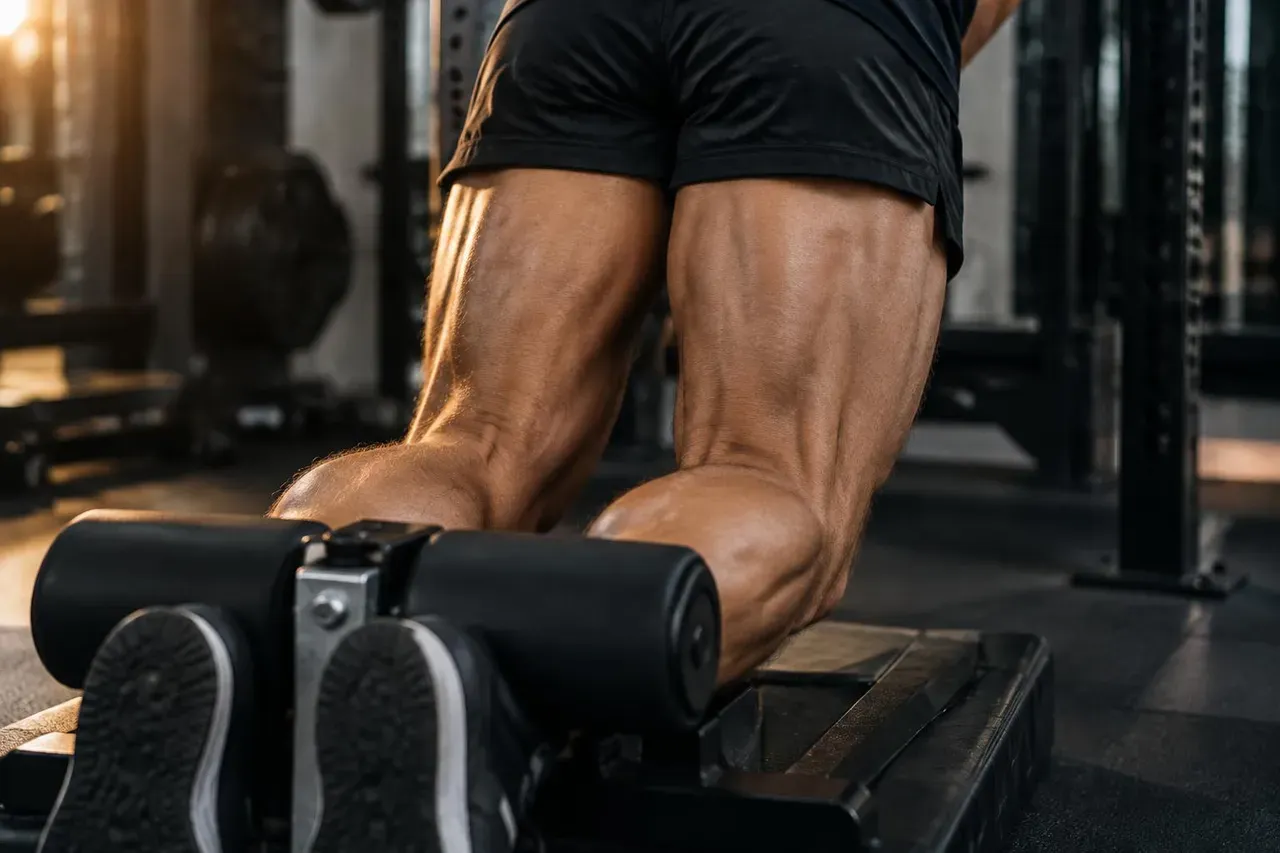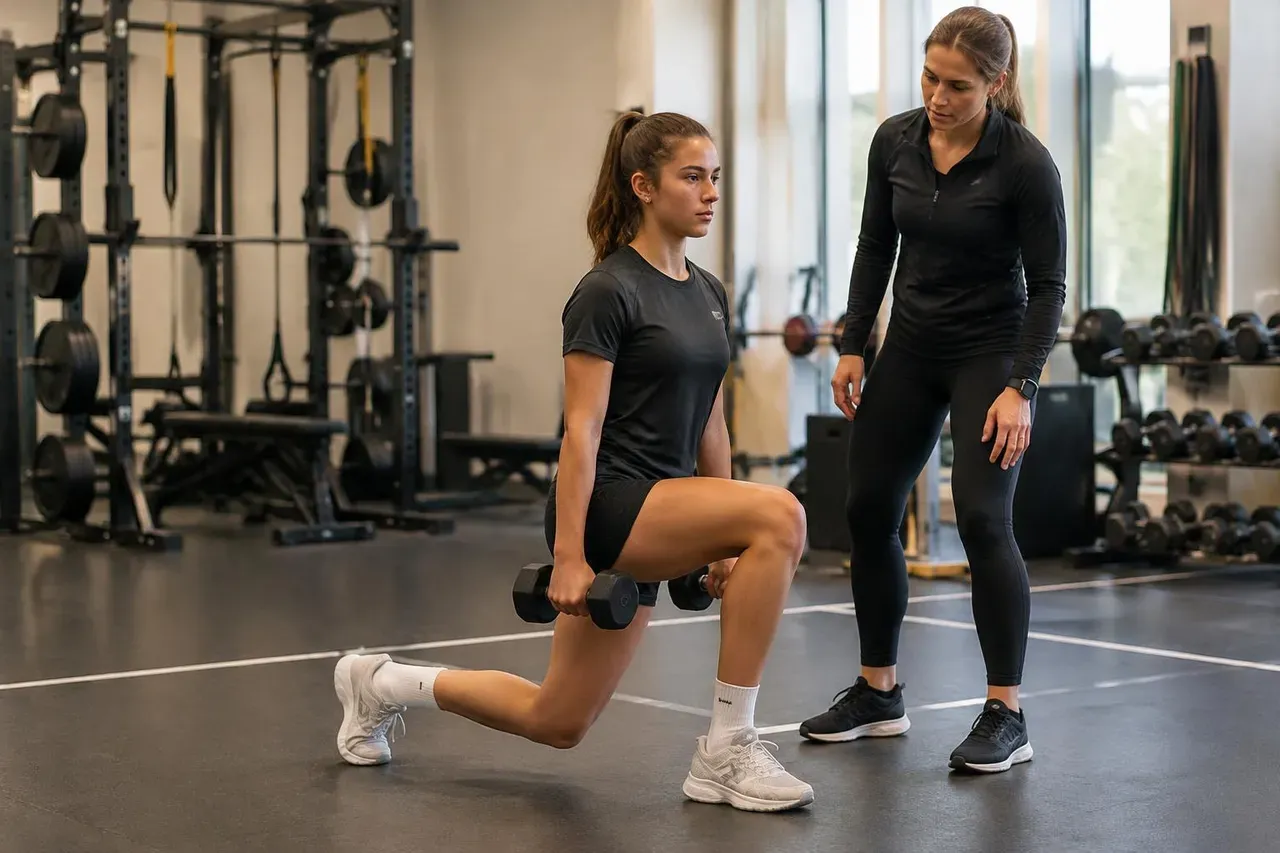
Strength training for teenage girls still triggers a lot of concern: fear of stunting growth, fear of injury, fear of loading a developing body too much. Yet the scientific literature tells a different story. Strength is not the problem. The problem is strength taught poorly, dosed poorly or added without logic.
Why this fear persists
For boys, strength training is often presented as a normal step in sport development. For girls, it is still sometimes framed as dangerous: fragile backs, fragile knees, fragile growth, fear of becoming “too muscular”. That difference in perception is rarely based on evidence. It mainly comes from confusing supervised strength training with random heavy lifting without coaching.
The NSCA position statement notes that resistance training can offer unique benefits to children and adolescents when it is appropriately prescribed and supervised. The international consensus published in the British Journal of Sports Medicine says the same: strength belongs in youth athletic development, provided it is matched to maturation, skill and technique.
Simple takeaway
- • Strength training is not inherently dangerous.
- • Risk rises when technique, dosage and recovery are ignored.
- • A teenage girl is not a miniature adult: the programme must respect age, maturation and sport demands.
What the 2026 study in young female football players shows
A study published in September 2026 in Sports Medicine - Open by Bousselmi and colleagues followed 22 highly trained female football players, around 15 years old. Over 12 weeks, one group added two strength sessions per week, using upper- and lower-body exercises, three sets of 12 repetitions and progressive intensity around 60 to 80% of 1RM. The other group continued normal football training.
The important finding is not only that strength improved. The strength group also improved on a football-specific task, the Loughborough Soccer Passing Test. In other words, well-structured strength work can support on-field performance, even in young players who are already highly trained.
Another 2024 study in elite young North African female football players had already shown that in-season strength training improved several physical qualities while paying attention to injury prevention. The message is consistent: strength is not the enemy of young female football. It becomes a problem only when it is dropped into the calendar without considering fatigue, technique and total load.
Assess before loading
Our Full Test measures strength, mobility, asymmetries, jumping, braking and movement quality before a programme is built. For a teenage athlete, it is often the best way to know what to strengthen, what to monitor and what not to overload.
Book the Full TestGrowth, hormones and biological markers: what to understand
In the Bousselmi study, the researchers also measured markers linked to neuroplasticity and development, including BDNF and IGF-1. Changes did not show a clear significant difference between groups. That matters because it avoids two opposite mistakes: claiming strength training is dangerous for development, or promising that it will automatically transform the brain and hormones in a few weeks.
The fairest position is simpler: in teenage girls, supervised strength training is a physical development tool. It teaches force production, position control, load tolerance, and better coordination between trunk, hips and knees. Those qualities matter for sport performance and injury prevention.
The real risk: the wrong programme
When a teenage athlete gets injured in the gym, the cause is rarely “strength training” in general. It is more often a progression that was too fast, loads copied from adults, technique that was not ready, fatigue that was ignored or a programme added on top of four practices and a match without removing anything else.
This is especially true for young female athletes. Their week already includes accelerations, braking, contact, changes of direction, school demands, sometimes insufficient sleep and growth-related changes. Adding two strength sessions can be excellent. But only if those sessions are part of the whole system, not another random layer.
The mistakes we correct most often
- • Doing only exercises that “burn”, with no measurable strength goal.
- • Chasing fatigue every session instead of movement quality.
- • Copying an adult or male programme without adaptation.
- • Forgetting the basics: squat, hinge, push, pull, brace and brake.
- • Never measuring asymmetries or landing capacity.
How to programme intelligently
A good session for a teenage athlete does not need to be spectacular. It needs to be clear. Start by teaching positions, then progressively add resistance. Loads can absolutely be used, but they must serve movement. Two weekly sessions are often enough to progress, especially during the season.
Phase 1 — Technique
Learn to squat, push, pull, brace the trunk and place the foot. Low load, high quality.
Phase 2 — Controlled strength
Add dumbbells, machines or barbells with a safety margin. The last reps still need to look clean.
Phase 3 — Braking and power
Introduce jumps, landings, changes of direction and accelerations according to sport and calendar.
Phase 4 — Monitoring
Reassess strength, fatigue, pain and movement quality regularly so the body does not compensate silently.
What parents and coaches should watch
The right indicator is not only the weight lifted. In a teenage girl, we also watch sleep consistency, new pain, loss of motivation, performance drops, changes in foot contact, technique that collapses late in the session and total weekly load. Strength training should make the athlete more robust, not permanently more tired.
Practical rule: if the strength session improves movement quality and leaves the athlete available for sport, it is probably helping. If it creates massive soreness, reduces speed, increases pain and sits on top of an already overloaded week, that is not toughness. It is poor dosage.
Our approach in Gland
At Off-Field, we are neither overprotective nor convinced that a teenage girl should train like a miniature adult. We start by making things objective: strength, mobility, control, asymmetries, injury history, sport, club volume and growth period. Only then do we build the programme.
For some young athletes, the main need is learning the basics. For others, it is strengthening hamstrings, quadriceps or calves. For others, it is braking better, landing better or tolerating repeated training. Strength training then becomes a precise tool, not an abstract fear.
Build a more robust young athlete
The Full Test identifies priorities before exercises are chosen. This is especially useful for teenage athletes, where progression must respect growth, calendar and performance goals at the same time.
Book the Full TestFAQ
Is strength training dangerous for teenage girls?
No, when it is supervised, progressive and adapted. The real risk is a poorly dosed or poorly supervised programme.
Can strength be trained during the season?
Yes. Two short, well-placed sessions can work, provided total weekly load is taken into account.
Should external loads be avoided?
No. Loads are possible when technique is clean and progression is controlled. Bodyweight is not mandatory, nor always sufficient.
Sources
- Bousselmi et al., Sports Medicine - Open, 2026
- Faigenbaum et al., NSCA Youth Resistance Training, 2009
- Lloyd et al., International Consensus on Youth Resistance Training, 2014
- Darragi et al., Sports Medicine - Open, 2024
Next article: “Why do teenage girls injure their knees differently?”.