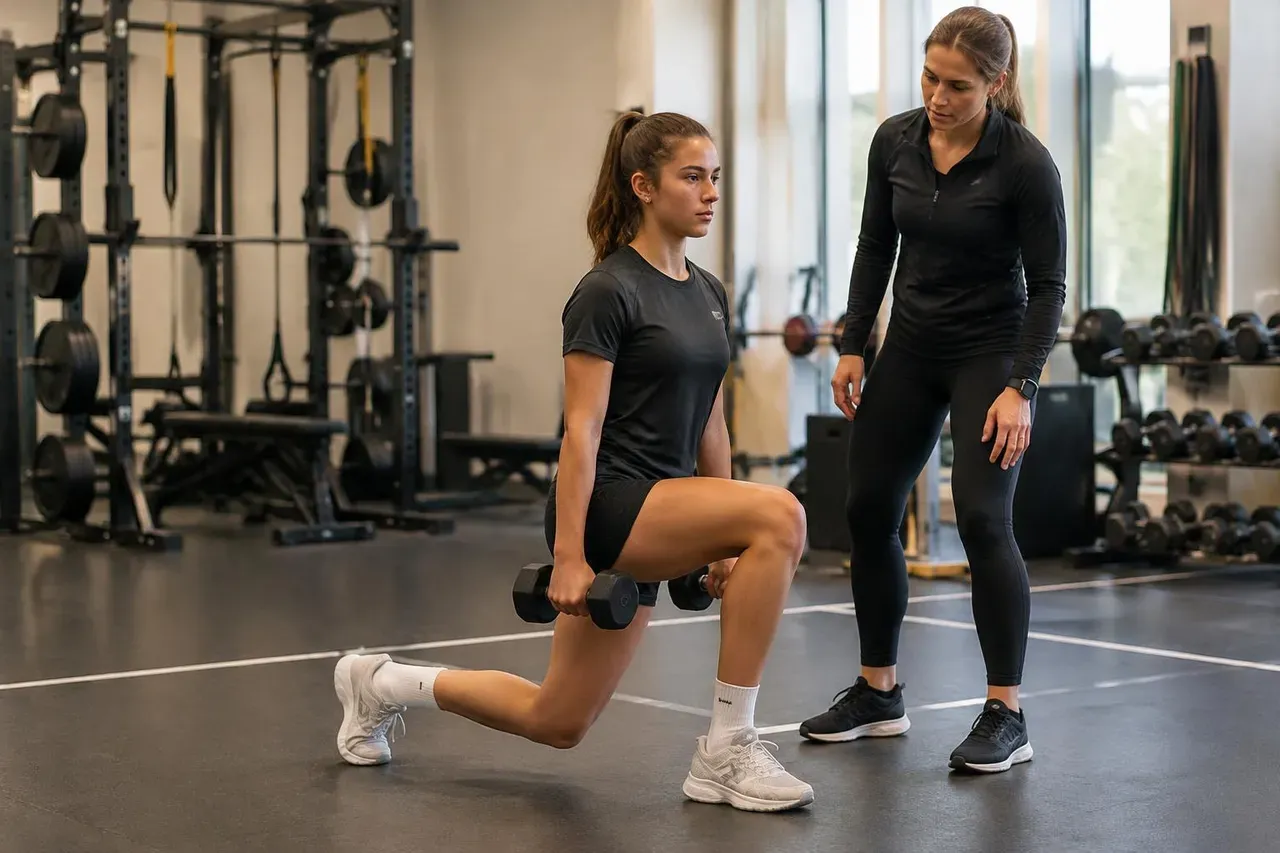
Many runners and triathletes think progress just means adding kilometres. True… until the knee, the Achilles tendon or the back says stop. Strength and conditioning is what lets your body tolerate training — and therefore truly progress.
The "I run, so I'm ready" trap
Running, swimming and cycling build the heart and endurance. But they don't strengthen muscles, tendons and joints enough for what we ask of them. In a marathon, each leg hits the ground more than 20,000 times. In an ultra-trail, add thousands of metres of descent.
The heart adapts fast, tendons much more slowly. That gap explains most endurance injuries: the engine is ready, the chassis isn't.
Fewer injuries: tendons, calves, knees
A large meta-analysis in the British Journal of Sports Medicine (Lauersen et al., 2014) shows strength training cuts sports injuries by roughly two thirds. Stretching alone has almost no effect.
Key takeaways
- • Strong calves protect the Achilles tendon.
- • Strong quads and glutes protect the knees.
- • A solid trunk keeps good posture when fatigue sets in.
Run more economically
Strength isn't only about avoiding injury. Several reviews (Blagrove et al., 2018; Balsalobre-Fernández et al., 2016) show that adding strength training improves running economy: you use less energy at the same speed. In practice, you hold pace longer and finish stronger.
Know where you stand
Our Complete Test measures your strength, asymmetries and jump capacity before building your preparation.
Discover the Complete TestWhat each discipline demands
Trail and ultra
Descents wreck the quads. You need thighs that can brake for hours, and solid ankles on uneven ground.
Triathlon
Core and shoulders for swimming, hips for cycling, fresh legs for running. Strength helps you link all three without fading.
Marathon and half
Calves and the Achilles tendon do most of the work. Their strength is what helps you avoid the muscular "wall" in the final kilometres.
For everyone
Single-leg work, power and core: three foundations shared by every endurance discipline.
When and how to start
The best time is now: winter, once races are over. You have time to build strength without competition fatigue. 1–2 sessions a week are enough, with simple exercises and a load that increases gradually.
Prepare your 2027 season
Start with a Complete Test to find your weak points, then build a preparation suited to your goal.
Book a Complete TestFAQ
Will strength training make me heavier?
No. With 1–2 sessions per week and plenty of endurance alongside, muscle gain stays small. You mostly gain strength and efficiency.
How many strength sessions per week?
1–2 sessions are enough. 2 in winter, then 1 maintenance session in season.
I already run a lot — is it really useful?
Yes. Running doesn't strengthen tendons and muscles enough to absorb thousands of impacts. Strength lets you tolerate the training.