Condition profile · Knee
ACL tear (anterior cruciate ligament)
Protocol from 4'060 CHF · ≈ 8 weeks
Understand
What is an ACL tear?
The anterior cruciate ligament (ACL) connects the thigh bone to the shin bone in the middle of the knee and stops the shin from sliding forwards. It usually tears without contact, during a pivot or a landing, in football, skiing, handball or basketball.
A torn ACL does not heal on its own. There are two routes: surgical reconstruction followed by long rehab, or rehab alone for people who do not play pivoting sports. Either way, rehab is what drives most of the result.
See a doctor promptly if…
- The knee is locked and no longer straightens fully
- Severe pain, deformity or complete inability to put weight on the foot
- After surgery: a swollen, hot and painful calf
Common causes
- A sudden pivot or change of direction with the foot planted
- Landing from a jump with the knee caving inwards
- A skiing fall or a direct blow to the knee
Symptoms
- A pop and sharp pain at the moment of injury
- Rapid swelling within hours
- The knee gives way, especially when pivoting
Timeline
How long does ACL rehab take?
Waiting at least 9 months after surgery and passing the return-to-sport tests clearly lowers the risk of a new tear. Progress is driven by criteria, not by the calendar.
- Normal walking, after surgery
- 2 to 6 weeks
- Straight-line running
- 3 to 4 months
- Rehab without surgery, non-pivoting sports
- 3 to 6 months
- Return to pivoting sports (football, skiing, handball…)
- 9 to 12 months
Diagnosis
Our approach
The first step is still to see a doctor for the diagnosis. Alongside this: specific ligament tests (Lachman, anterior drawer, pivot shift) by the physiotherapist and an MRI coordinated with Dr Massimo Donalisio. The choice between surgery and rehab alone is made with the surgeon, based on your sport, your age and any associated injuries (meniscus, cartilage).
Care at Off-Field
- Physiotherapy before surgery (settled knee, full extension, active quadriceps): it makes recovery easier
- Rehab after ACL reconstruction, or rehab alone if surgery is not chosen
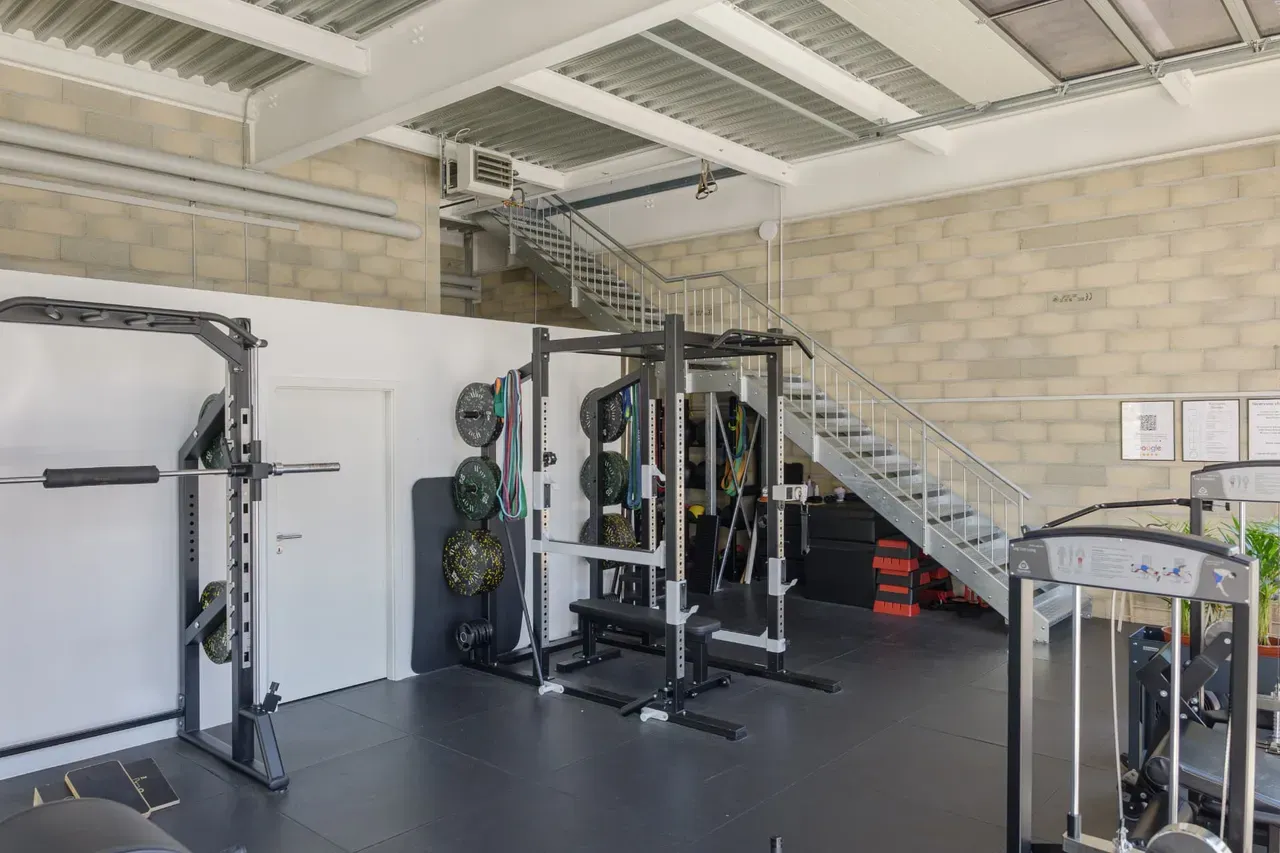
- Strength and conditioning and return-to-performance work, then strength and jump tests (VALD) to decide on the return to sport
Rehab
ACL rehab, step by step
- 01
Before surgery
Settle the swelling, regain full extension and wake up the quadriceps: a well-prepared knee recovers better.
- 02
Protect and reactivate
The first 6 weeks: swelling control, range of motion, walking without crutches, quad activation and cycling as soon as possible.
- 03
Strengthen
From about 6 weeks to 4 months: progressive, heavy strengthening of the thighs and hips, balance, then running once the criteria are met.
- 04
Return to performance
From 4 to 9 months and beyond: jumps, sprints, changes of direction and sport-specific movements, with regular strength and jump testing.
Exercises
Exercises for the first weeks
Quad set
Sitting with your leg straight, press the back of the knee down and hold for 5 to 10 seconds. 3 sets of 10, several times a day at first.
Straight-leg raise
With the thigh tightened, lift the straight leg 30-40 cm off the floor without bending the knee. 3 sets of 10.
Stationary bike
As soon as knee bend allows: 10 to 20 minutes without resistance, then increasing it gradually.
Progressive squat and leg press
With your physio, increasing load and depth over the weeks.
Examples to adapt with your physio after the assessment: pain during exercise should stay moderate and settle within 24 hours.
Return to sport
Returning to sport after an ACL tear: our criteria
- At least 9 months after an ACL reconstruction
- A dry knee and full range of motion
- Quadriceps and hamstring strength at least 90% of the other leg, measured with a dynamometer
- Jumps and changes of direction at least 90% of the other side, on force plates and timing gates
- Confidence in the knee restored, assessed with a validated questionnaire
Investment
Base protocol price
From
4'060CHF
≈ 8 weeks
Indicative price that may vary with the number of protocol weeks. It will be adjusted after the clinical assessment by the physician and physiotherapist, based on the actual protocol duration and specific needs.
Mandatory prerequisite (not included)
Initial consultation with a partner physician (entry assessment): mandatory prerequisite, not included in the package. If needed, our team handles the referral and booking.
Included in the package
- Private physiotherapy sessions (2× 1h / week)
- One-on-one personal training (1× 1h / week)
- Initial + follow-up consultation with a partner nutritionist
- Case coordination: premium orchestration across all experts, direct booking of appointments once your schedule is shared
Extras not included. Imaging (ultrasound, MRI), orthobiologics (PRP, hyaluronic acid, SVF, BMAC), injections, shockwave therapy, biomarker panels: billed on top, only when clinically indicated by the responsible practitioner.
Questions
Frequently asked questions about the ACL
Another question? We reply quickly on WhatsApp.
Message us on WhatsAppDoes an ACL tear always need surgery?
Why do physio before surgery?
How many physio sessions for an ACL?
When can I start running again?
Same area
Other conditions treated: knee
The diagnosis drives the protocol. Here are the other situations we treat in this area.
Fast booking
Book your physiotherapy session online.
Every condition is unique. Contact us for a personalised assessment.