You've probably noticed that on your team, some friends are already super tall and strong, while you (or others) are still smaller. Does that mean they're better? Absolutely not! Understanding how your body develops is key to becoming the best athlete possible.
Why Every Young Person Is Unique
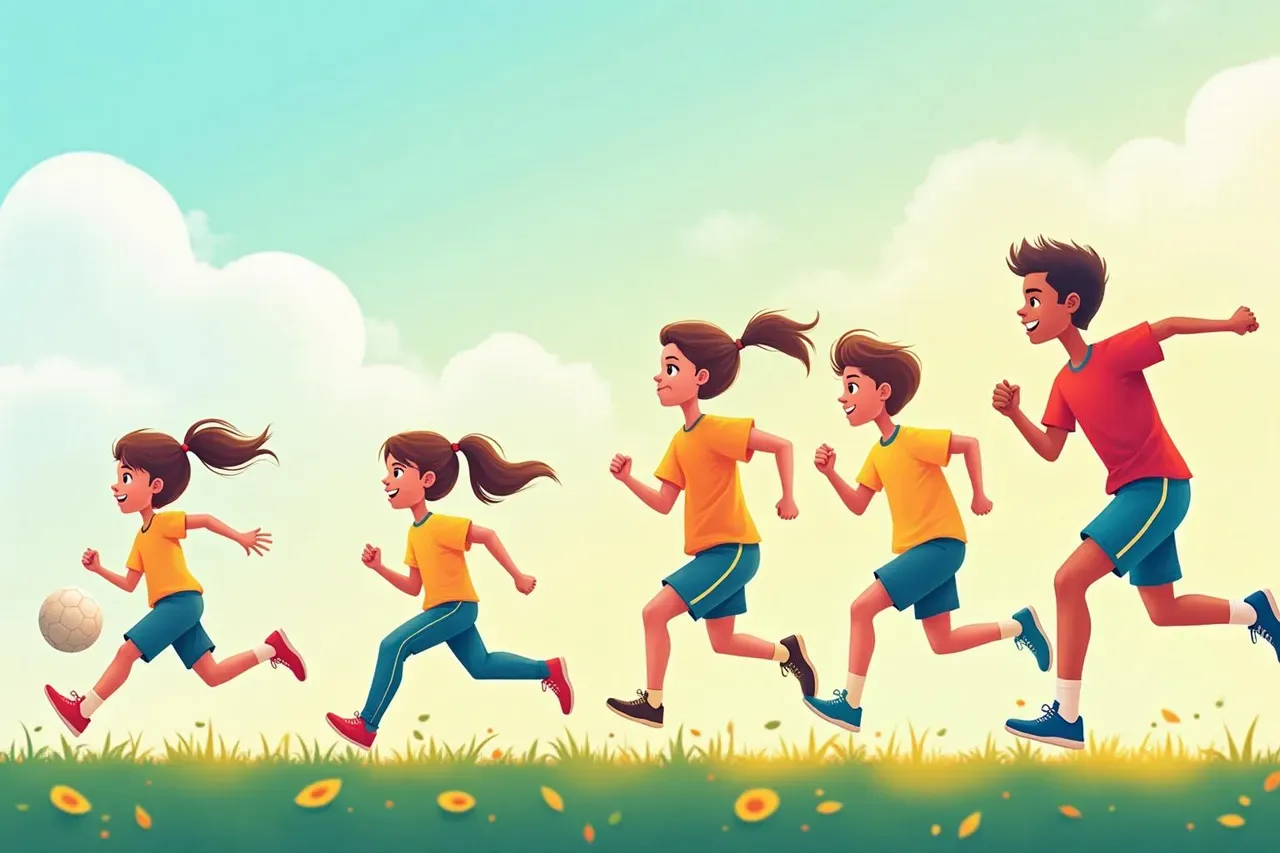
Imagine two friends who are both 13 years old. One is already 5'9" with facial hair, the other is 4'11" and still looks like a child. Do they really have the same "age" from a body perspective? No!
Scientists call this biological age (how your body develops) vs chronological age (how many years you've lived). It's super important for training!
The Difference Between Chrono Age and Bio Age
Chronological Age
The number of candles on your birthday cake. Everyone in your age group has about the same.
Biological Age
What stage of growth your body is at. Two people of the same chrono age can have 2-3 years difference in bio age!
Peak Height Velocity: Your Transformation Moment
There's a special time in your life when you'll grow super fast: it's called the Peak Height Velocity (PHV).
Generally, it happens:
- For girls: around 11-13 years old
- For boys: around 13-15 years old
But careful! These ages are just averages. You might be 2 years early or 2 years late, and that's completely normal!
"During your growth spurt, you can grow 3-5 inches in one year! It's like your body is a plant growing super fast in spring."
What Happens During Peak Height Velocity
When you grow very fast, your body changes proportions. Your arms and legs grow faster than your torso. It's like someone stretched a photo of you!
The problem? Your brain must relearn where your hands and feet are. That's why many teens temporarily become clumsy during this period. You trip more easily, you have trouble catching balls you caught easily before...
The good news? It's temporary! And with the right training, you can get through this phase more easily.
Mistake #1: Specializing Too Early
Many young people (and their parents!) think they must choose ONE sport very young and only do that to become pro. Big mistake!
Why Doing Multiple Sports is Better
Imagine your body is like a toolbox. If you only do one sport, you only learn to use a few tools. But if you do several:
- ✓You develop more skills: coordination, balance, agility, strength, endurance
- ✓You have fewer injuries: you don't always overuse the same muscles
- ✓You stay motivated: it's more fun to vary than do the same thing all year
- ✓You become better: skills from one sport help in others
🏆The Champions' Example
A study on Olympic athletes showed that most of them practiced 3 or more sports during their youth before specializing around 15-16 years old.
Roger Federer (tennis) did skiing and football. Serena Williams (tennis) did dance. Most NBA players did multiple sports before high school!
Dangers of Early Specialization
If you only do one sport from 8-10 years old, here's what can happen:
- ❌ Injury risk 3-5x higher (overuse of same areas)
- ❌ Mental burnout: you get tired of the sport you loved
- ❌ Early dropout: 70% of early-specialized youth quit before 13
- ❌ Limited development: you miss important skills
Strength Training for Youth: Myths and Reality
You may have heard that "strength training stops growth" or that "it's dangerous for young people." That's FALSE!
The Truth About Strength Training
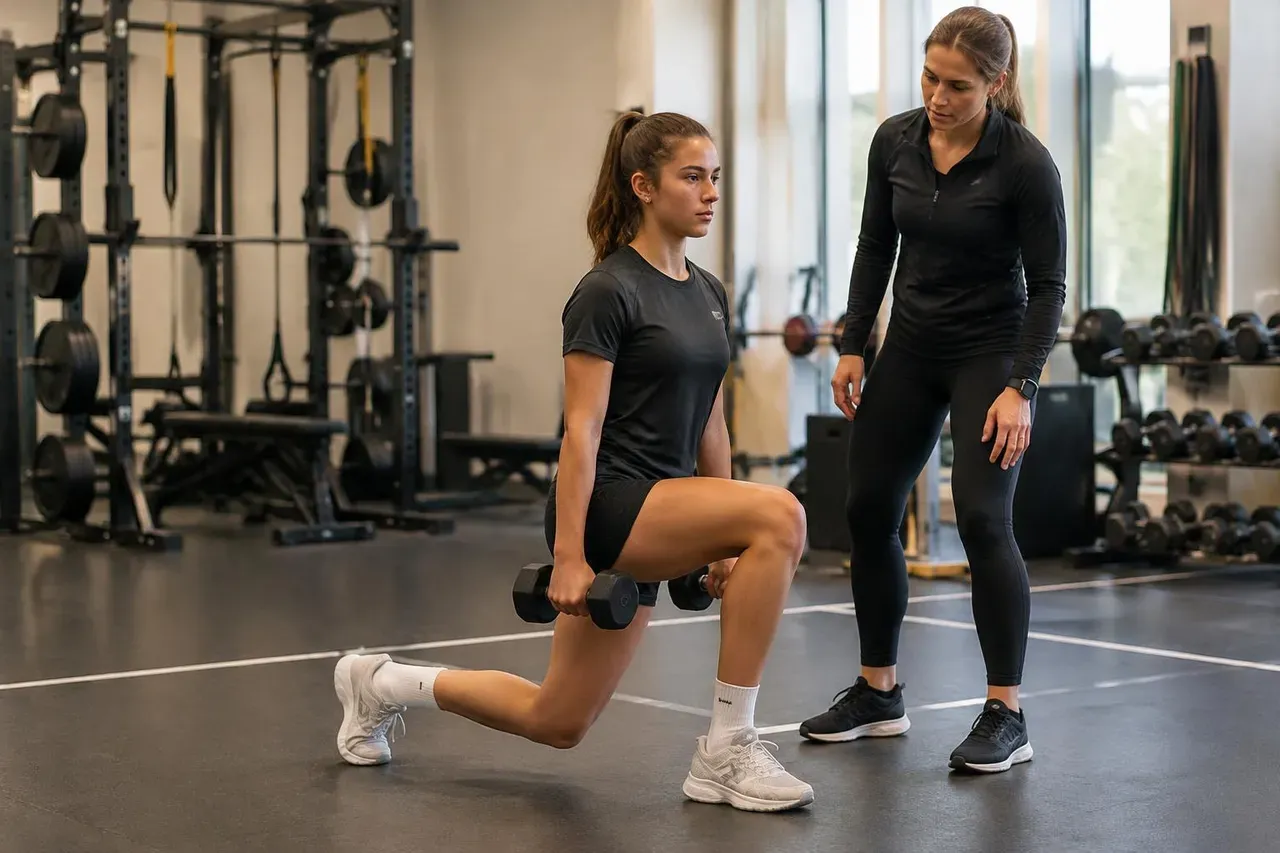
Hundreds of scientific studies have shown that strength training (with light weights and good technique) is:
- ✅
100% Safe from 7-8 years old
With professional supervision and adapted loads
- 💪
Makes you stronger and faster
Improves all sports performances
- 🛡️
Protects from injuries
Reduces injury risk by 30-50%
- 🦴
Strengthens bones
Prevents osteoporosis later in life
Most important: Training must be adapted to your biological age, not just your age. A young person who hasn't had their growth spurt shouldn't train like someone who already has!
Development Windows: The Right Time for What?
Your body has "perfect moments" to develop certain qualities. It's like windows that open at certain times in your life.
Development Windows
🏃 Speed & Coordination (6-11 years)
This is THE ideal time to learn new movements and develop coordination. Your brain is a sponge!
💨 Pure Speed (After growth spurt)
1-2 years after your peak is the best time to work on maximum sprint speed.
💪 Maximum Strength (12-18 months after peak)
When your body has finished growing in height, it can really focus on getting stronger.
🫁 Endurance (Late adolescence)
Cardiovascular endurance development can really take off after 15-16 years.
Psychological Environment: As Important as Training
A perfect training program is useless if you're stressed, unhappy, or feel worthless. The mental and emotional aspect is as important as the physical aspect.
The 3 Basic Psychological Needs
To thrive in sports (and in life), your brain needs 3 things:
1. 🎯 Autonomy
Feeling you have some control over what you do. You're not just a robot following orders. A good coach asks your opinion and explains why you're doing an exercise.
2. ⭐ Competence
Feeling you're progressing, getting better. That's why challenges must be neither too easy nor too hard.
3. 🤝 Belonging
Feeling accepted and appreciated by your team and coach. Friendship and support are essential!
How to Train Smartly According to Your Age
Childhood (6-11 years): Learning to Move
Objective: Develop "physical literacy" - knowing how to run, jump, throw, climb, swim, etc.
- Do at least 2-3 different sports
- Play freely and explore different movements
- Strength exercises with body weight (push-ups, pull-ups, squats)
- Focus on fun and learning, not competition
Pre-Adolescence (11-14 years): The Crucial Phase
Objective: Continue diversification but start building a solid base of strength and technique.
- Progressive introduction to strength training (2x/week)
- Work on coordination during growth spurts
- Maintain practice of 2-3 sports
- Learn recovery and body awareness
Adolescence (14-18 years): Progressive Specialization
Objective: Start specializing while maintaining a broad athletic base.
- Focus on 1-2 main sports (but keep varied activities)
- More structured strength program (3-4x/week possible)
- Maximum strength development post-growth spurt
- Introduction to specific speed work
🎯 Support Your Athletic Development With Experts
At Off-Field, we understand that each young person is unique. That's why we offer athletic development programs adapted to your biological age, not just your chronological age.
Our certified physical trainers assess where you are in your development (before, during, or after your growth spurt) and create a personalized program that:
- ✓ Respects development windows
- ✓ Prevents growth-related injuries
- ✓ Develops a solid athletic base
- ✓ Maintains fun and motivation
Key Takeaways
- ✓Your biological age (development stage) is more important than chronological age for training
- ✓Peak height velocity is a key moment: your training must adapt before, during, and after
- ✓Practicing multiple sports before 14-15 reduces injuries and improves long-term performance
- ✓Strength training is safe and beneficial from 7-8 years old with adapted supervision
- ✓There are optimal windows for developing speed, strength, and endurance
- ✓Mental well-being and positive environment are as important as physical training
Conclusion: Patience and Smart Progression
Athletic development is like building a house. If you want it to be solid and last long, you must first build wide and strong foundations. Only then can you raise the walls and roof.
The foundations = sports diversity, basic technique, general strength, and the joy of moving.
The walls and roof = specialization in your favorite sport, intensive training, competition performance.
If you start directly with the roof (early specialization, intensive training too young), your house will collapse. But if you build good foundations, you can build as high as you want!
Remember: Olympic champions aren't those who started earliest or specialized youngest. They're those who knew how to be patient and progress intelligently. Your turn to play!