
Imagine two people with exactly the same muscles (same size, same weight). Yet one can lift 220 lbs and the other only 155 lbs. How is that possible? The answer will surprise you: it's all in the head!
Strength: Not What You Think!
For years, everyone thought getting strong was just about having big muscles. Like in cartoons where the hero gets super muscular and can lift anything!
But modern science taught us something fascinating: strength is primarily a skill of your brain, not just muscle size.
"Your muscle is like an orchestra of musicians. Orchestra size matters, but what really makes the difference is the quality of the conductor (your brain)!"
Two Types of Strength: Understanding the Difference
To become strong, your body uses two different strategies:
The 2 Pillars of Strength
1. Neural Adaptations (The Conductor)
How your brain learns to better command your muscles.
- • Recruit more muscle fibers simultaneously
- • Synchronize muscles to work together
- • Reduce the "safety brake" your brain naturally applies
2. Hypertrophy (Musician Size)
When your muscles physically grow.
- • More proteins in muscle fibers
- • Muscles becoming more voluminous
- • More "material" to produce force
What Happens When You Start Weight Training
Here's something crazy: when you start training, you get much stronger in the first weeks... without your muscles really growing!
How? Your brain simply learns to better use what it already has. It's like having a car but only using 50% of its power. With training, your brain learns to use 70%, then 80%, then 90% of that power!
📊Timeline of Strength Gains
Weeks 1-4: 🧠 100% Neural
Your brain learns. Your muscles barely change, but you're already getting stronger!
Weeks 4-8: 🧠💪 Neural + Hypertrophy
Your brain continues learning AND your muscles start growing.
After 6 months: 💪🧠 Both Together
To keep progressing, you must work both aspects in parallel.
The Safety Brake: Why You Don't Use All Your Strength
Your body is equipped with a great safety system. Even though your muscles could theoretically produce enormous force, your brain puts a "brake" to protect you from injuries.
That's why you hear incredible stories of people who, in emergency situations (car accident, trapped child), manage to lift impossible weights. In these moments, adrenaline temporarily "deactivates" the safety brake.
Training Teaches Your Brain to "Release the Brake"
With smart and progressive training, you can:
- Teach your brain it's safe to use more force
- Improve coordination between your muscles
- Reduce "antagonist muscles" that brake movement
Concrete Example: The Squat
When you go down in a squat, your quadriceps (front thigh) pull to lift you back up. But your hamstrings (back thigh) can "brake" the movement for safety.
With training, your brain learns to deactivate this brake at the right time, allowing you to be stronger without your muscles growing!
Different Types of Strength
There's not just one strength! Depending on your sport or goals, you must develop different types:
🏋️ Maximum Strength
The heaviest weight you can lift once. Important for powerlifting, combat sports.
⚡ Explosive Strength (Power)
Producing lots of force very quickly. Essential for jumping, sprinting, striking.
🔄 Strength Endurance
Repeating force efforts without fatigue. Important for rowing, climbing, martial arts.
🛡️ Reactive Strength
Using elastic energy of muscles (like a spring). Crucial for running, racket sports.
How to Train Smartly for Strength
Basic Principles
To develop your strength effectively, you must respect a few golden rules:
- 1.
Progressive Overload
You must progressively increase difficulty (more weight, more reps, better technique)
- 2.
Specificity
If you want to get strong at squats, do squats. If you want to jump high, jump!
- 3.
Recovery
Your muscles and nervous system need rest to adapt. No rest = no progress!
- 4.
Technique First
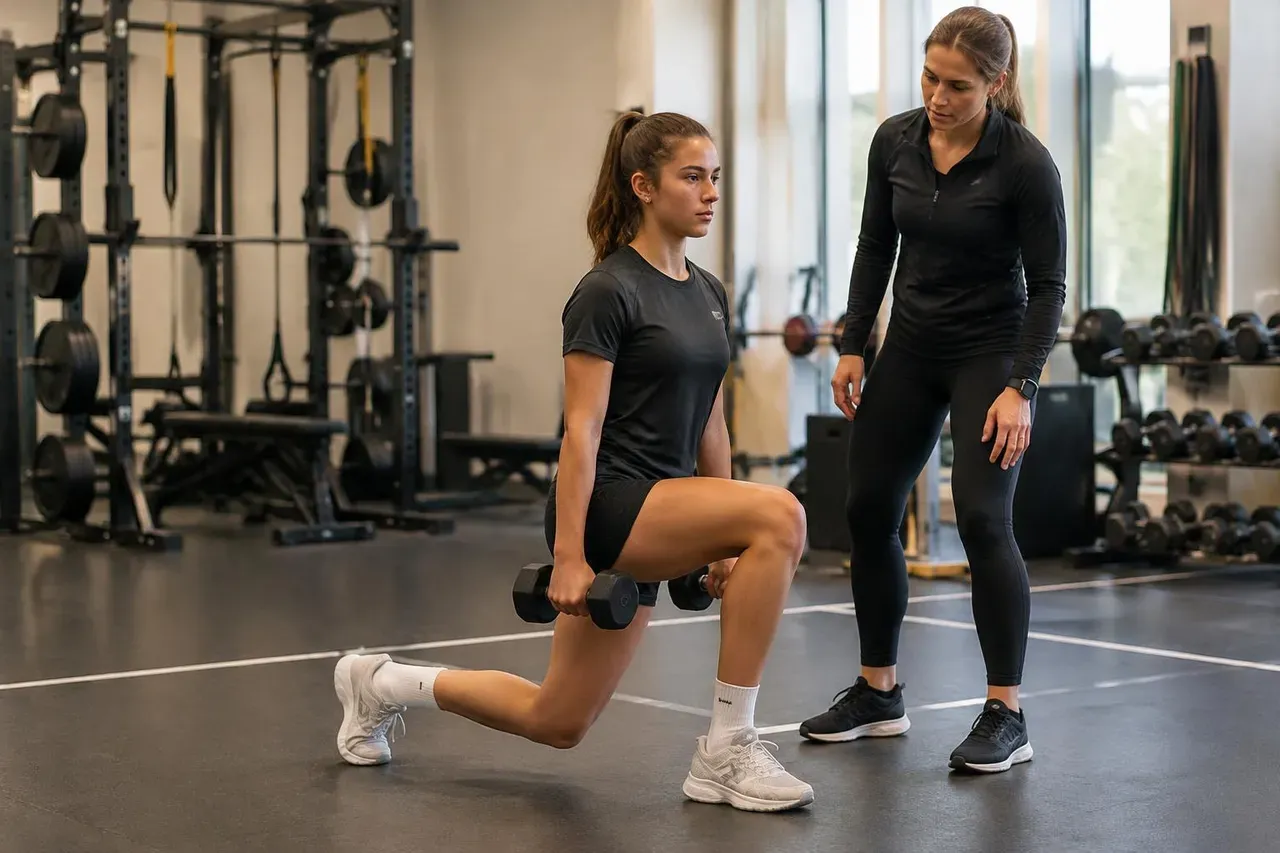
Bad technique = guaranteed injuries. Master light movement before adding weight.
Training Methods
Depending on your level and goals, different methods exist:
Popular Methods
Classic Sets (Beginners)
3-4 sets of 8-12 reps. Perfect for learning movements and building a base.
Maximum Strength (Intermediate)
3-5 sets of 1-5 reps with very heavy loads. Develops pure strength.
Contrast Method (Advanced)
Alternate heavy and explosive exercise (e.g., heavy squat then jump). Develops power.
Cluster Sets (Advanced)
Small pauses during set to maintain quality. Cutting-edge technique for elite athletes.
Mistakes to Absolutely Avoid
🚫 Top 5 Mistakes
- 1.
Going too heavy too fast
Your ego wants to lift heavy, but your body isn't ready. Result: guaranteed injury.
- 2.
Neglecting technique
Bad technique limits your progress and increases injury risk.
- 3.
Not resting enough
You get strong during rest, not during training!
- 4.
Copying someone else's program
What works for your friend won't necessarily work for you. Individualization!
- 5.
Ignoring nutrition
You can't build a house without bricks. Your muscles need protein!
Strength and Sports: Why It Matters for You
Whatever your sport, strength is a fundamental quality:
⚽ Ball Sports
Hit harder, jump higher, be more powerful in duels
🏃 Endurance Sports
Movement economy, injury prevention, final sprint
🥋 Combat Sports
Striking power, impact resistance, explosiveness
🎾 Racket Sports
Striking speed, direction changes, muscle endurance
Nutrition for Strength: The Basics
You can't develop strength without giving your body the fuel it needs:
- 🥩
Protein (1.6-2.2g per kg body weight)
Bricks to build and repair your muscles. Meat, fish, eggs, legumes.
- 🍚
Carbohydrates (Fuel)
Energy to lift heavy. Rice, pasta, whole bread, fruits.
- 🥑
Fats (Hormones)
Essential for growth hormone production. Avocados, nuts, olive oil.
- 💧
Hydration
Even 2% dehydration reduces your strength by 10%! Drink lots of water.
🎯 Develop Your Strength With Experts
At Off-Field, we understand that getting strong is much more than lifting weights. It's a science combining neural training, hypertrophy, technique, nutrition, and recovery.
Our physical preparation programs are designed to:
- ✓ Assess your current level (max strength test, VBT)
- ✓ Identify your weaknesses (neural adaptations or muscle mass)
- ✓ Create a 100% personalized program for your goals
- ✓ Progress safely with perfect technique
- ✓ Integrate strength into your specific sport
Key Takeaways
- ✓Strength is primarily a brain skill (neural adaptations), not just big muscles
- ✓First strength gains (4-8 weeks) come 100% from neural improvement
- ✓There are several types of strength (maximum, explosive, endurance, reactive) depending on your needs
- ✓Perfect technique must always take priority over load. Ego = injury
- ✓Recovery and nutrition are as important as training itself
- ✓Your program must be individualized. What works for your friend won't necessarily work for you
Conclusion: Smart Strength
Getting strong isn't just going to the gym and randomly lifting weights. It's understanding how your body and brain work together to produce force.
The strongest athletes aren't necessarily those with the biggest muscles. They're those who learned to intelligently use what they have. Their brain knows how to recruit all muscle fibers at the right time, synchronize muscles perfectly, and release safety brakes when necessary.
Strength is a skill that's learned. And like any skill, it requires practice, patience, and above all... a good coach!
Now that you understand how strength really works, you're ready to train smartly. Remember: slowly but surely, technique before ego, and brain before muscles!