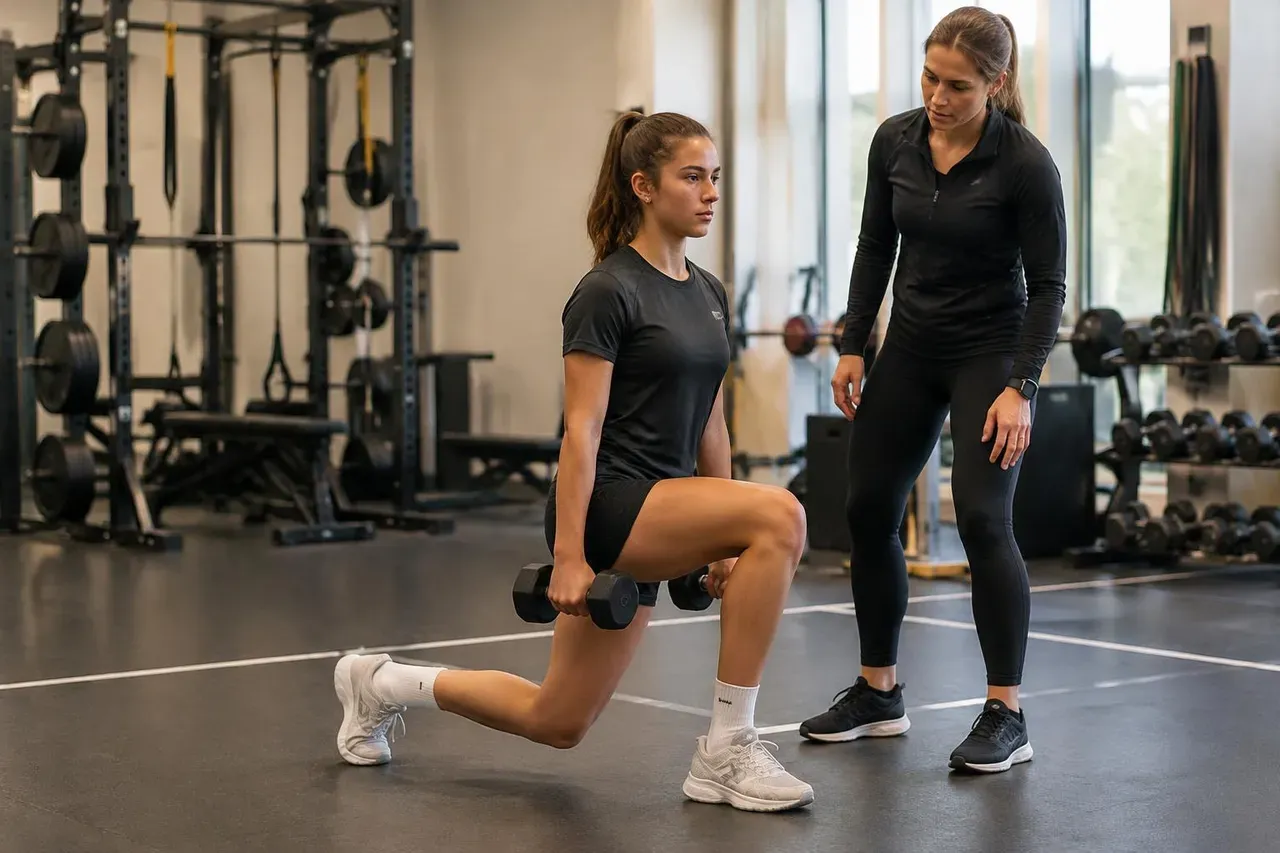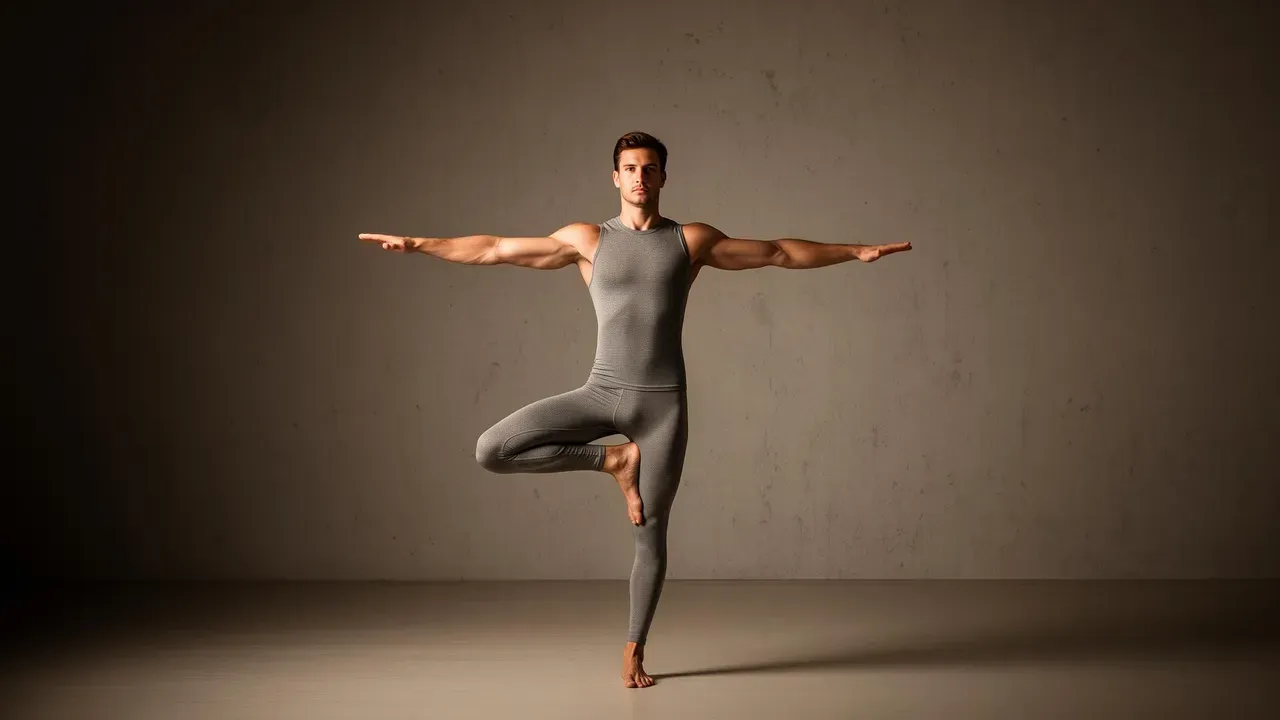
Ever slipped on ice, sprinted for a bus, or tried to put on trousers standing on one leg? Each time, your body played an invisible balance game — and usually won. The match is between two players: your center of mass and your center of pressure. Understanding how they interact changes how we move, recover from injury, and prevent falls.
The problem in 30 seconds
Standing upright is not trivial. The human body is a narrow tower (your feet) carrying a high, mobile mass (torso and head). The slightest push should tip us over — yet we hold. Why? Because the brain and muscles make dozens of micro-corrections per second to keep one specific point — the center of mass — above the area covered by the feet — the base of support.
The tightrope walker analogy
Picture a tightrope walker. Her body represents the center of mass: a theoretical point summarising where her total weight averages out — about two finger-widths below your navel when standing. The tips of her balancing pole, swinging constantly, represent the center of pressure: the exact spot under your feet where weight presses hardest at a given moment. The CoM moves slowly; the CoP moves fast, correcting tiny imbalances continuously.
Margin of stability: your balance "savings account"
Biomechanists use the margin of stability: the distance between your center of mass (corrected by its velocity) and the edge of your base of support. Think of it as a bank balance. Positive = you absorb a shoulder bump, a missed step, a wet floor. Negative = you either step quickly to create a new base, or you fall.
Why we fall — and why sometimes we don't
Three ingredients usually combine: a perturbation (slip, push, sharp turn), a slow detection (vision, inner ear or foot sensors lagging), and a weak response (muscles too slow to produce force). What saves us is power — force produced very quickly. Not raw strength to lift heavy. The ability to send a foot to the right place in a fraction of a second.
What it means for you
Balance is a trainable skill. A few minutes a day — standing on one leg while brushing teeth, heel-to-toe walking, eyes-closed static balance — produce measurable gains. After a sprain or surgery, dedicated balance retraining (proprioception) is essential to avoid recurrence. And for athletes, the goal is not stability but controlled instability: managing chosen imbalances better than your opponent.
🎯 Measure your balance objectively
Our 2-hour Full Test assesses margin of stability, left/right asymmetries and reactive capacity using force plates — the same technology found in elite biomechanics labs.
Book the Full TestKey takeaways
- ✅ Your center of mass sits about two finger-widths below the navel.
- ✅ Your center of pressure, under your feet, moves constantly to track it.
- ✅ Stay upright = keep CoM above the feet. Otherwise you step or fall.
- ✅ Avoiding a fall depends on three things: detect fast, decide fast, move fast.
- ✅ Balance is a skill — trainable at any age, lost quickly without practice.
- ✅ After a joint injury, balance retraining is critical to prevent recurrence.