
Stretching is probably the most debated topic in physical preparation. "Should I stretch before or after?" "Do static stretches reduce performance?" "Can stretching prevent injuries?" Here are the science-based answers, without dogma or shortcuts.
🏋️ Want a personalized stretching program?
Our coaches integrate mobility into every training program.
Discover physical preparationThe 4 Types of Stretching Explained
Passive Static
Position held 20-60 sec without muscle contraction. Example: touching your toes and holding.
Active Static
Position held by agonist muscle contraction. Example: raising a straight leg and holding it without assistance.
Dynamic
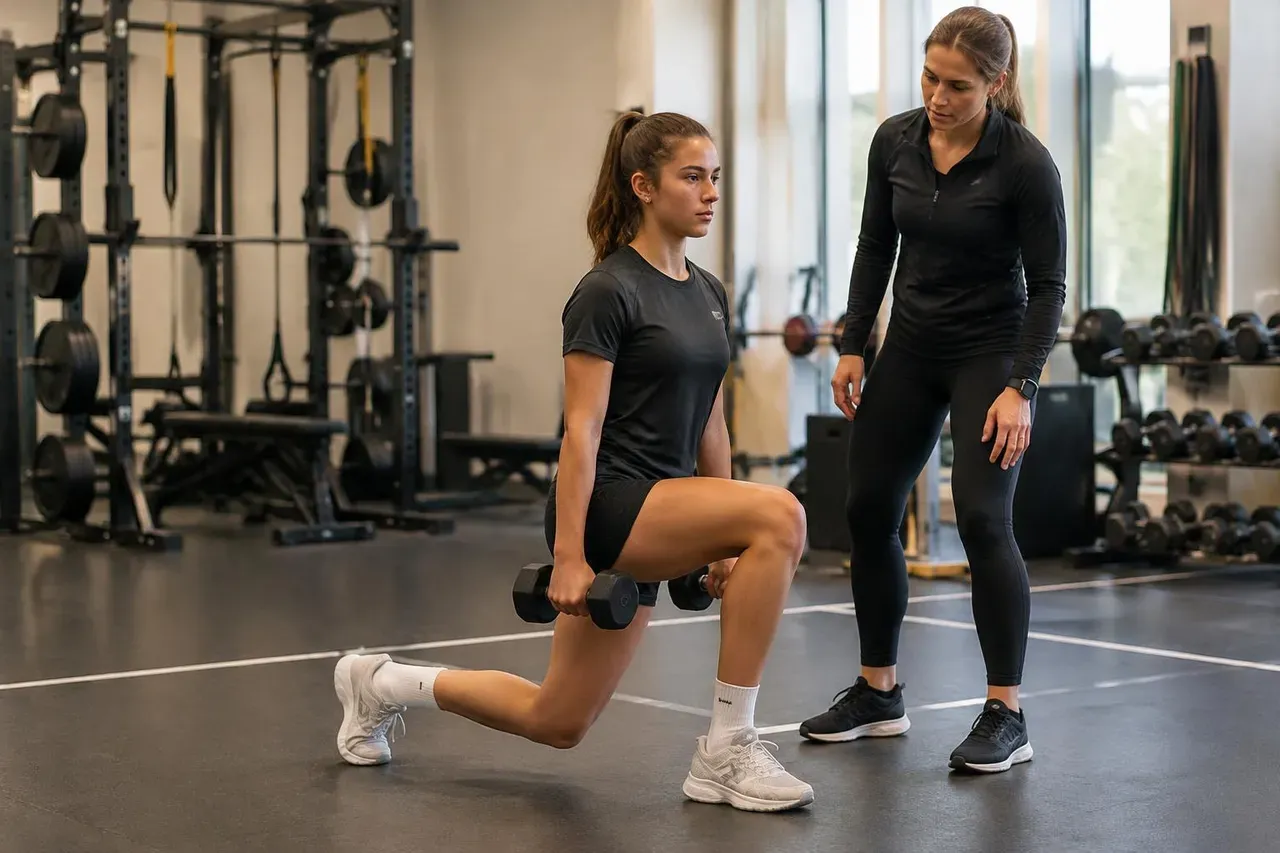
Controlled movements through range of motion. Example: leg swings, walking lunges.
PNF (Proprioceptive Neuromuscular Facilitation)
Alternating contraction-relaxation to gain range. The most effective method for long-term flexibility.
Stretching Before Exercise: What Science Says
❌ Static stretching before exercise: avoid
Scientific literature is clear: prolonged static stretching (>60 seconds) before exercise reduces performance by 2-5% in strength and power (Behm & Chaouachi, 2011).
✅ Dynamic warm-up: the gold standard
Dynamic warm-up combines body temperature elevation, neuromuscular activation, and range of motion work — everything the body needs to perform.
Stretching After Exercise: Useful or Useless?
Myth #1: "Stretching reduces DOMS"
False. Systematic reviews (Herbert et al., 2011) show that post-exercise stretching does not significantly reduce DOMS (delayed onset muscle soreness).
When is post-exercise stretching actually useful?
- Range of motion gains — Post-training is optimal timing (warm muscles)
- Flexibility-dependent sports — Gymnastics, dance, martial arts
- Correcting imbalances — Chronically shortened muscles (hip flexors, pectorals)
- Cool-down — Positive psychological and parasympathetic effect
Stretching and Injury Prevention
Stretching alone does not prevent injuries (Lauersen et al., 2014). However, a comprehensive program integrating eccentric strengthening + mobility + proprioception reduces injury risk by 50% on average.
Frequently Asked Questions
Does stretching cause strength loss?
Prolonged static stretching (>60 sec) before exercise temporarily reduces strength by 2-5%. This effect disappears after 10-15 minutes of activity.
How long should you hold a static stretch?
For flexibility gains: 30-60 seconds per position, 2-4 repetitions, 3-5 times per week. For a simple cool-down: 15-20 seconds is sufficient.
Does yoga replace stretching?
Yoga combines stretching, isometric strengthening, and breathing work. It's excellent for global mobility but doesn't replace a sport-specific dynamic warm-up.
Should you stretch every day?
If the goal is flexibility gains, yes — frequency matters more than duration. For general well-being, 3-4 times per week is sufficient.
Does foam rolling replace stretching?
No, but it complements it. Foam rolling reduces muscle tension and improves stretch tolerance. Use it before stretching for better results.
📍 Personalized Mobility Program in Gland
Our coaches assess your mobility and create a tailored program integrated into your training.
Discover our programs