As we enter 2026, the very definition of health and human performance is undergoing a radical transformation in the Lake Geneva region. We are entering the era of active longevity, a holistic and technological approach where athletic performance, biometric data precision and biohacking interventions converge for a single goal: maximizing healthy life expectancy (healthspan).
🎯 Want to measure your biological age?
Our force plate testing battery evaluates your power, asymmetries and RSI for a 100% personalized program.
Discover the Complete Test1. Biological Foundations of Longevity
From "Sickspan" to "Healthspan"
The major challenge of modern medicine and physical preparation is no longer simply to avoid premature death, but to delay functional decline. Although overall life expectancy has increased significantly, this extension is too often accompanied by an increase in "sickspan" — the period of life spent in a state of chronic illness or dependence.
The theory of morbidity compression, postulated by James Fries, suggests that it is possible to push back the onset of chronic diseases much closer to natural death. Ideally, an optimized human life should resemble a rectangular curve: high functionality maintained until a very advanced age, followed by a rapid and short decline.
❌ Classic Aging
Progressive decline over 20-30 years with chronic diseases, dependence and loss of autonomy.
✅ Active Longevity
High functionality maintained until 85-95 years, then rapid and short decline.
2. The "Hallmarks of Aging": Molecular Targets of Training
Physical exercise does more than burn calories; it sends cascades of signals that interact directly with cellular aging processes.
🧬 Genomic Instability and DNA Protection
A meta-analysis revealed that out of 387 unique genes whose expression is modified by exercise, a majority showed significant decrease in DNA methylation after exercise in older people. Exercise "cleans" the epigenetic marks that accumulate with age.
🔬 Telomere Attrition
Telomeres are DNA sequences at chromosome ends that shorten with each cell division. There is a fascinating correlation between physical performance and telomere length.
♻️ Loss of Proteostasis and Autophagy
High-intensity exercise is one of the most powerful activators of autophagy — the recycling of cellular waste. By creating temporary metabolic stress, exercise forces the cell to "clean house."
3. Sarcopenia and Dynapenia: The Silent Enemies of Autonomy
Sarcopenia (age-related muscle mass loss) and dynapenia (loss of muscle strength and power) are the direct precursors of frailty, falls and loss of autonomy.
📉 Key Decline Statistics
- • Muscle mass decreases by approximately 3 to 8% per decade after age 30
- • This rate accelerates significantly after age 60
- • Muscle power loss declines even faster than strength or mass
⚡ Crucial Data
In a cohort of nearly 4,000 individuals, those in the upper quartile of muscle power had a spectacularly lower all-cause mortality risk (Hazard Ratio of 5.88 for the weakest men vs the strongest in power).
4. Force Plates: The "Gold Standard" of Evaluation
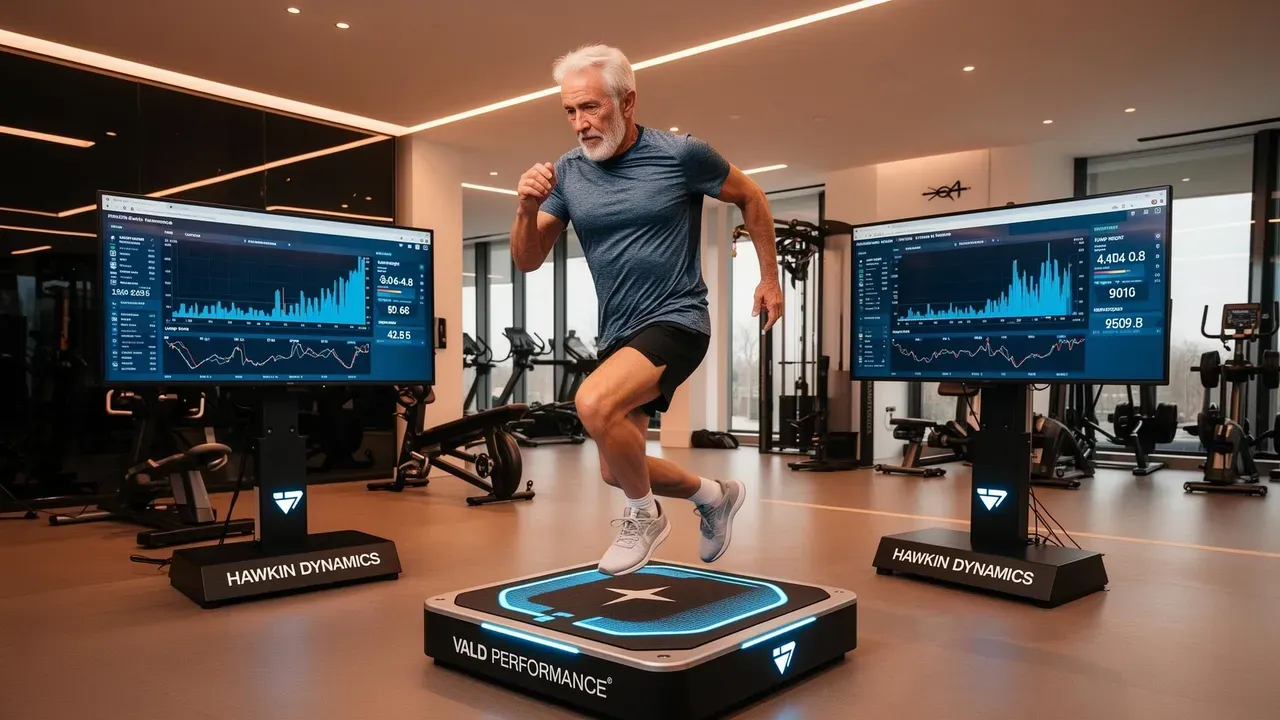
Force plates (VALD Performance, Hawkin Dynamics, Kistler) are the heart of diagnosis at Off-Field. They measure Ground Reaction Force (GRF) at a frequency of 1000 Hz.
CMJ as a Biological Age Biomarker
The Countermovement Jump (CMJ) is the most universally used test. Jump height is a direct indicator of lower limb power, but the analysis goes much further.
💡 Clinical Relevance
For a 50-year-old client, improving their CMJ by 5 cm is not just about sports performance; it's literally reversing their neuromuscular biological clock by several years.
🎯 Measure Your Biological Age
Our force plate evaluation detects your asymmetries, measures your RSI and establishes your complete neuromuscular profile.
Book a Complete Test5. The TeamBuildr Digital Ecosystem
Raw data collection is useless without centralization and intelligent analysis. Using TeamBuildr allows aggregating test results directly into the client's longitudinal profile.
6. Adherence and sustainable progression
The central principle is not to promise instant transformation, but to build a system clear enough to repeat. Motivation fluctuates; structure makes it possible to continue when energy drops.
7. Biohacking and Recovery on La Côte
Active longevity is not built solely through effort. It is forged equally during recovery phases, where cellular adaptations occur.
❄️ Whole Body Cryotherapy
Exposure to extreme temperatures (-110°C to -140°C) for 2-3 minutes causes a controlled thermal shock.
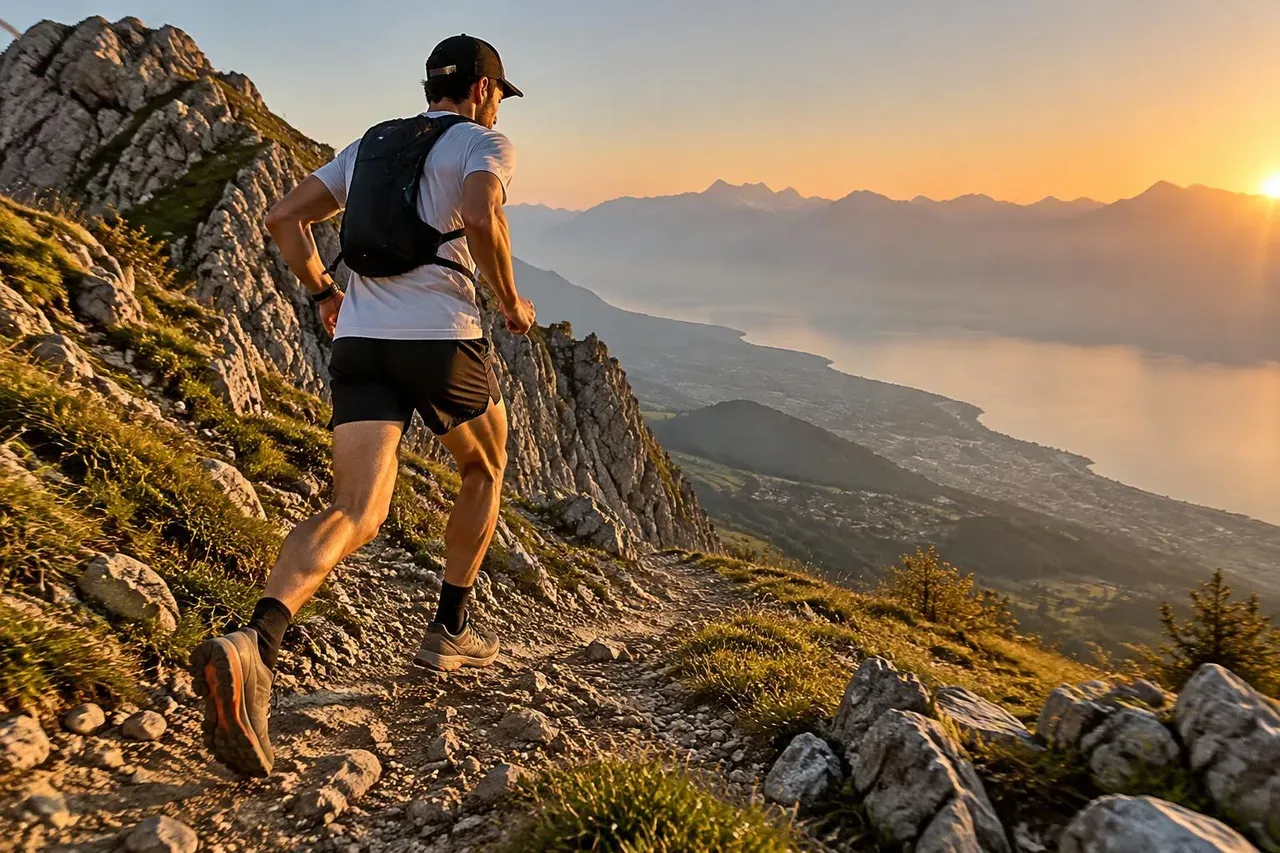
🥾 Rucking on the Toblerones Trail
Rucking (walking with a weighted backpack) is the quintessential "Zone 2" exercise. The Toblerones Trail, from Prangins to Bassins via Gland, offers ideal terrain.
8. Your 2026 Action Plan
📏
1. MEASURE
Use force plates to establish your real biological profile. Accept the truth of the numbers.
⚡
2. OPTIMIZE
Engage in a personalized protocol, dynamically adjusted by data.
🔄
3. RECOVER
Integrate biohacking and leverage the exceptional natural playground of the region.
"Longevity cannot be bought in pills; it is rented, and the rent is paid every day through intelligent effort and targeted recovery."
🚀 Ready to Start Your Transformation?
Discover our personalized offers for active longevity: force plate testing, data-driven coaching and tailored support.
9. Appendix: Understanding Key Metrics
⚡ RSI (Reactive Strength Index)
Definition: RSI = Jump Height (m) / Contact Time (s)
Meaning: Ultimate measure of explosiveness and stretch-shortening cycle efficiency of your tendons.
A drop in RSI is often the first sign of nervous system fatigue or aging "stiffness."
↔️ Eccentric Force Asymmetry
Alert threshold: >10-15% difference between legs
Poor symmetry means you systematically overload one joint with every step, leading to premature cartilage wear.
📈 RFD (Rate of Force Development)
Definition: Speed at which you can produce force
RFD declines much faster than maximum strength with age. It's the most critical quality for preventing falls.
Frequently Asked Questions
What is active longevity and how does it differ from traditional fitness?
Active longevity is a holistic approach that aims to maximize healthy life expectancy (healthspan), not just lifespan. It uses precise biometric data and technologies like force plates to personalize training and prevent age-related functional decline.
At what age should one start focusing on active longevity?
Ideally from age 30, as muscle mass begins to decline by 3-8% per decade at that age. The earlier you build a "power reserve," the longer you'll maintain optimal functionality. However, it's never too late to start.
What is RSI and why is it important?
RSI (Reactive Strength Index) measures explosiveness by dividing jump height by ground contact time. A high RSI indicates healthy and elastic tendons. It's an early indicator of nervous fatigue and a marker of fluid, pain-free mobility.
What's the difference between sarcopenia and dynapenia?
Sarcopenia is age-related muscle mass loss, while dynapenia is the loss of muscle strength and especially power. Dynapenia declines faster and is a better predictor of mortality and fall risk than muscle mass alone.
How do you maintain results over time?
We combine objective testing, measurable goals, individualized progression and regular adjustments to turn progress into a durable routine.
📚 Scientific Sources
This article is based on research published in peer-reviewed scientific journals, including:
- • NIH - Lifespan versus health span debate (PMC12068195)
- • Oxford Academic - Compression of Morbidity (PMC11978790)
- • PMC - Aging Hallmarks: Benefits of Physical Exercise (PMC5980968)
- • ResearchGate - Muscle Power vs Strength as Mortality Predictor
- • VALD Performance - Force Plates 101
- • Frontiers in Aging - Dynapenia in older adults (fragi.2024.1504789)