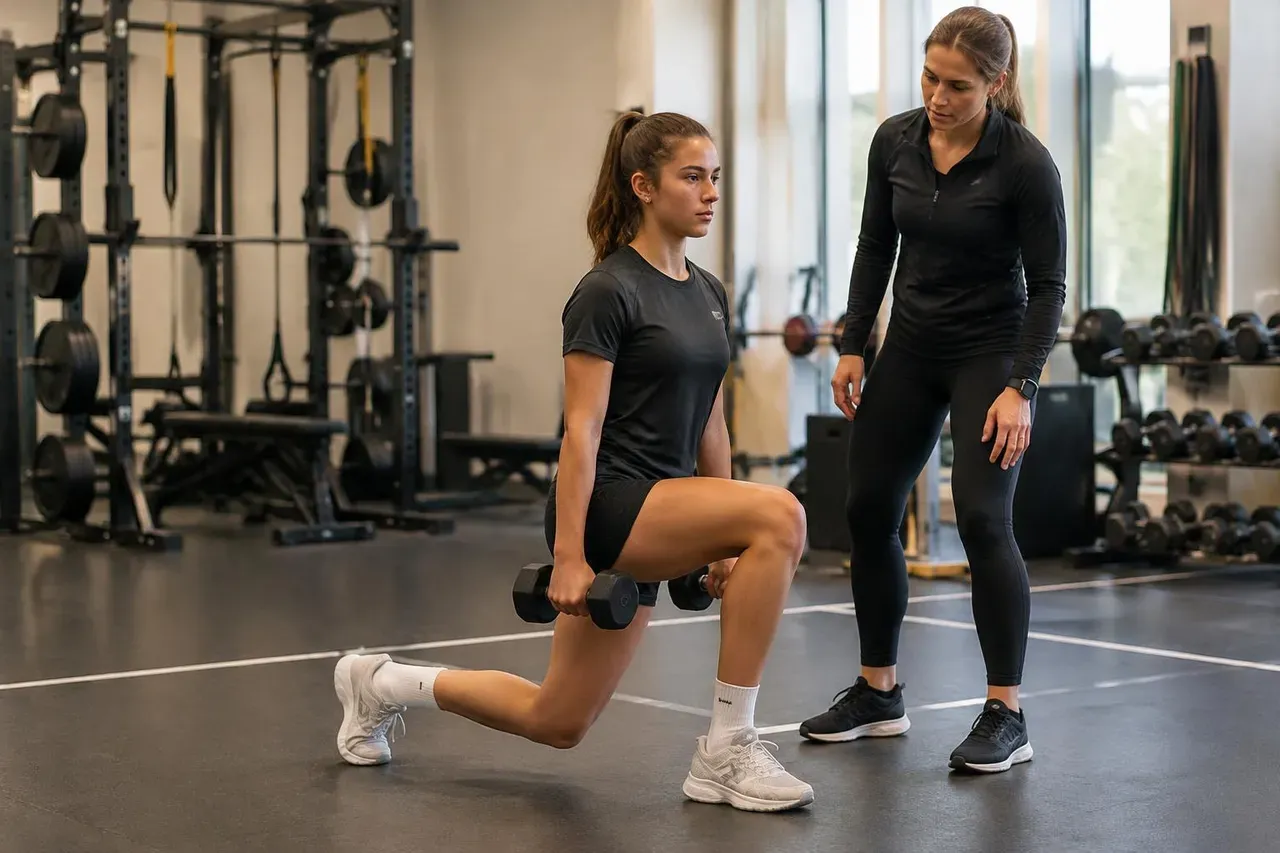
Want to dominate on the ice? Modern hockey is unforgiving: you need to be fast, powerful, and explosive. Discover how scientific testing reveals your hidden strengths and helps you explode your potential!
Hockey: A Sport of Pure Explosiveness
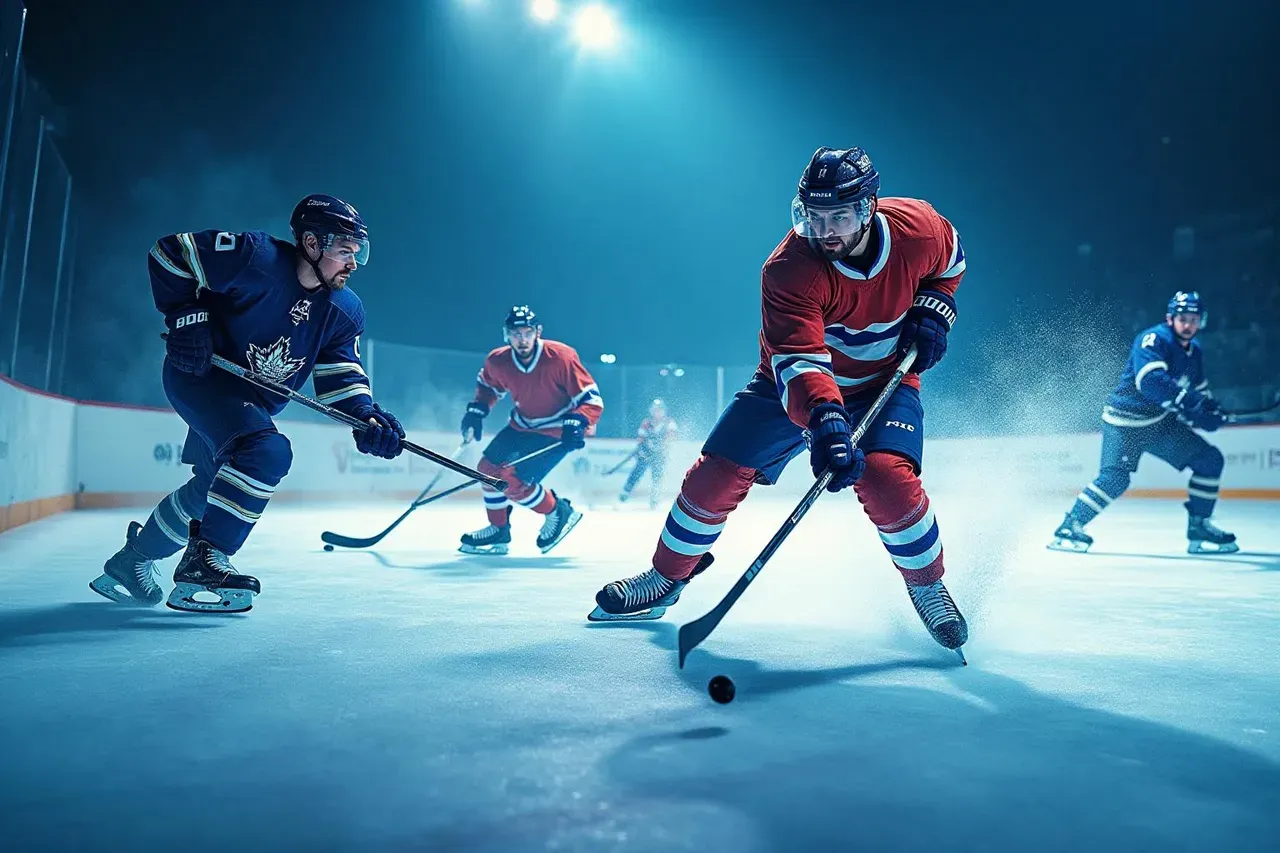
Ice hockey is like racing car sprints, but on skates! A shift (time on ice) lasts only 30 to 60 seconds, but during that time, you give EVERYTHING. Sprint, brutal stop, change of direction, physical contact... Then you recover 2-3 minutes on the bench and start again. And that for 60 minutes of game!
"Hockey is a sport of repeated maximal efforts. Each shift is an explosion of energy!"
This unique structure makes hockey super demanding physically. You must have:
The 5 Essential Physical Qualities In Hockey
1. Explosive Speed
Ability to accelerate like a rocket over 10-20 meters to beat your opponent.
2. Leg Power
Explosive strength to propel your body with each stride and resist contacts.
3. Multidirectional Agility
Change direction instantly without losing speed or balance.
4. Recovery Capacity
Your aerobic system allows you to recover quickly between shifts to stay performant throughout the game.
5. General Muscular Strength
Protection against injuries and ability to win physical duels.
The Big Mystery: Off-Ice Vs On-Ice
Here's THE question every hockey player asks: "If I get stronger in the gym, will I really skate faster?"
The good news? YES! Science has proven there's a direct link between what you do off-ice and your on-ice performance. But be careful, it's not magic...
🔬 What Science Says
Recent studies show that players who can:
- • Squat heavier = Skate faster over 15-30 meters
- • Jump higher = Have better acceleration on ice
- • Sprint faster on land = Have better sprint times on ice
Why? Because the muscles that make you jump and sprint (hips, thighs, calves) are the SAME ones that propel you on ice!
That's why off-ice tests are so important: they allow you to measure these fundamental qualities without needing to rent a rink every time!
Tests That Reveal Your Potential
Now, let's talk concrete. What tests should a hockey player do to assess their physical condition?
1. Explosive Power Tests
🦘 Vertical Jump
What it measures: The explosive power of your legs (ability to produce a lot of force very quickly).
Why it's important: A higher jump = more explosive legs = faster acceleration on ice. Simple!
📊 Good score: > 50 cm for men, > 40 cm for women
↔️ Broad Jump
What it measures: The ability to project your body forward with force.
Why it's important: It's very close to the skating movement! The farther you jump, the more horizontal propulsion you can create on ice.
📊 Good score: > 2.40 m for men, > 2.00 m for women
2. Maximal Strength Tests
🏋️ Squat (Front Squat or Back Squat)
What it measures: The maximal strength of your legs and hips.
Why it's important: Strong legs = solid base to produce power. The stronger you are, the more explosive you can be!
📊 Elite goal: Squat 1.5x your bodyweight (for an 80 kg player = 120 kg)
🦵 Leg Press
What it measures: General leg strength in a safer movement than the squat.
Why it's important: Allows you to assess your strength even if you're not yet comfortable with the free squat.
3. Speed And Agility Tests
⚡ 10-40 Meter Sprint
What it measures: Your acceleration capacity (0-10m) and maximum speed (10-40m).
Why it's important: Direct correlation with on-ice sprint. If you're fast on land, you'll be fast on ice (with skating technique).
📊 Good score 10m: < 1.70 seconds | 40m: < 5.20 seconds
🔄 Agility Test (Pro Agility / 5-10-5)
What it measures: Ability to change direction quickly (like back-and-forth on ice).
How it works: Sprint 5 meters right, touch ground, sprint 10 meters left, touch ground, sprint 5 meters to center.
📊 Good score: < 4.50 seconds
4. Aerobic Capacity Tests
🏃 Yo-Yo Intermittent Test (Level 2)
What it measures: Your ability to repeat intense efforts with short recoveries (exactly like hockey shifts!).
How it works: 20-meter shuttle runs with 5-second breaks, speed increasing progressively until you can't keep up.
📊 Elite hockey level: > 18-20 (speed level reached)
Technology At The Service Of Performance
Modern hockey uses cutting-edge technology to measure performance even more precisely:
📱 GPS / Accelerometers
Small sensors worn on the upper body that measure:
- • Distance covered
- • Number of accelerations/decelerations
- • Intensity of physical contacts
- • Total training load
⚙️ VBT (Velocity-Based Training)
Sensors that measure bar speed in strength training:
- • Optimizes training load
- • Detects fatigue in real-time
- • Maximizes power development
🧪 Lactate Tests
Blood samples after exercise to measure:
- • Anaerobic capacity (energy without oxygen)
- • Metabolic fatigue level
- • Adaptation to intense training
🏒 On-Ice Systems
Technology directly on the rink:
- • Photoelectric cells to time sprints
- • High-speed cameras to analyze technique
- • Force sensors in skates (research)
How To Use Test Results?
Tests are great, but only if you know what to do with the results! Here's how to use them:
🎯 The 4 Steps After Testing
Identify Your Weaknesses
Low vertical jump? Work on power. Slow sprint? Focus on strength and acceleration.
Create A Targeted Program
Your training should be designed specifically to improve your weaknesses while maintaining your strengths.
Train With Intention
Each session has a precise goal based on your test results. No random training!
Re-Test To Measure Progress
Redo the same tests every 2-3 months to see your improvements concretely and adjust your program.
Concrete Example: Test-Based Program
Imagine your tests reveal that:
- ✅ Maximal strength: Excellent (squat 1.6x bodyweight)
- ⚠️ Vertical jump: Average (45 cm)
- ❌ 10m sprint: Weak (1.85 seconds)
- ✅ Yo-Yo test: Good (level 19)
Conclusion: You're strong but not explosive enough! Your problem isn't raw strength, but your ability to use that strength QUICKLY.
💪 Recommended Program (8 Weeks)
Monday - Explosive Power
- • Loaded jumps with light weight (3x5 reps)
- • Sled sprints light (6x10m)
- • Explosive squats at 60% 1RM (4x3 reps, max speed)
Wednesday - Strength-Speed
- • Jump lunges (3x8 per leg)
- • Explosive deadlift (4x5 at 70% 1RM)
- • 0-20m accelerations (8x with full recovery)
Friday - Ballistic Power
- • Box jumps (5x5)
- • Medicine ball throws (3x8)
- • Sprint starts (multiple starting positions, 10x10m)
🎯 Goal: Improve vertical jump by 5-8 cm and reduce 10m sprint time under 1.75 seconds in 8 weeks!
Mistakes To Avoid
⚠️ DON'T Make These Mistakes
❌ Mistake 1: Testing Without Standardized Protocol
If you change how you do the test each time, you can't compare results. Be rigorous and consistent!
❌ Mistake 2: Testing Too Much
Testing every week is counterproductive. Once every 8-12 weeks is enough to see real progress.
❌ Mistake 3: Ignoring Recovery Before Tests
Arriving fatigued to tests completely skews results. Take 48h rest before a testing session.
❌ Mistake 4: Comparing Yourself To Others
Your only competitor is YOU from the last test. Compare yourself to your own previous results, not others'.
❌ Mistake 5: Off-Ice Tests Only
Off-ice tests are excellent, but don't forget to test on-ice too to evaluate the REAL performance transfer!
The Future Of Hockey Testing
Sports science is constantly evolving. Here's what's coming soon in the hockey world:
🤖 Artificial Intelligence
Automatic analysis of your skating technique by cameras + AI to instantly identify technical flaws.
🧬 Genetic Testing
Identify your genetic predispositions to personalize your training even more (fast vs slow fibers, etc.).
⌚ Advanced Wearables
Sensors in clothing that measure muscle fatigue, hydration, and stress in real-time.
🧠 Cognitive Tests
Measure decision speed and ability to read the game under fatigue (hockey is mental too!).
Conclusion: Testing, Your Competitive Advantage
Modern hockey is a science. Players who succeed no longer train randomly: they measure, analyze, and optimize every aspect of their physical condition.
🎯 Tests never lie. They show you exactly where you are and where you need to go.
Whether you're a young player dreaming of playing elite or an experienced athlete wanting to reach the next level, performance testing is your GPS to success.
Don't let chance decide your progression anymore. Measure, train smart, and progress!
🚀 Ready To Explode Your Potential?
At Off-Field, we use all these scientific tests to create 100% personalized physical preparation programs for hockey players. Our Complete Testing analyzes over 15 performance parameters to precisely identify your strengths and weaknesses.
Article based on an exploratory review of scientific literature (2010-2025) in ice hockey physical preparation. Main sources: studies on off-ice/on-ice performance correlation, load monitoring technologies, and development of hockey-specific physical qualities.