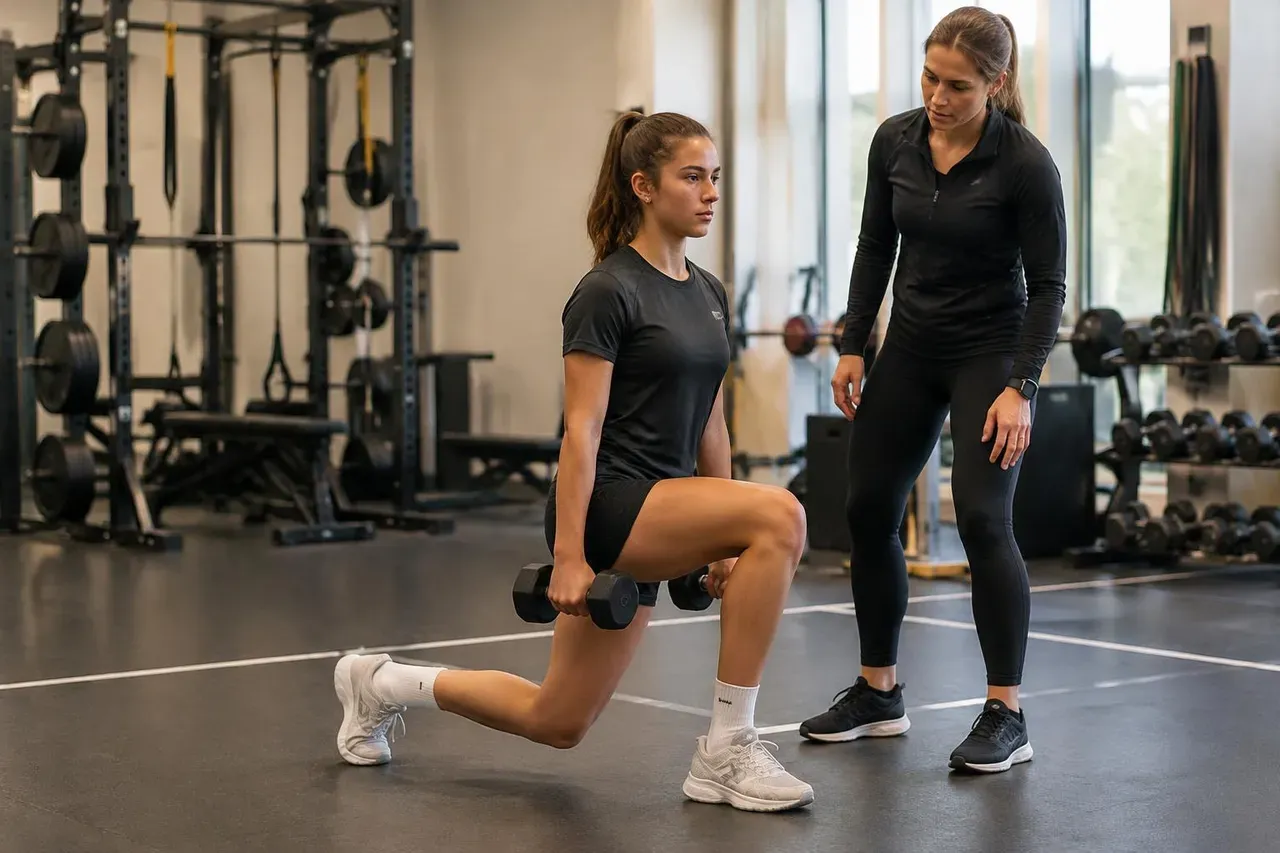
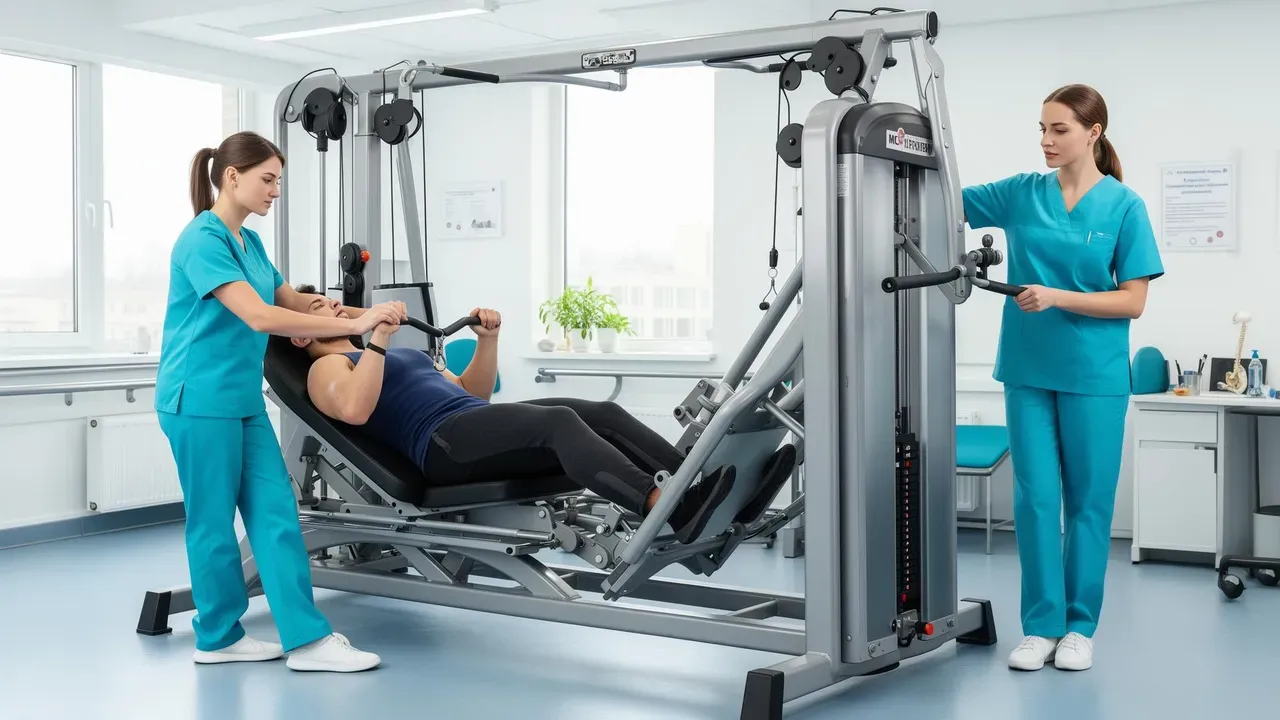
Muscle hypertrophy – the increase in muscle fiber size – is no longer reserved for gyms. In rehabilitation, it represents a major therapeutic goal to restore function, prevent recurrence and improve patients' quality of life. This guide explores the mechanisms, protocols and clinical applications of hypertrophy in rehabilitation.
🎯 Need personalized support?
Our specialized physiotherapists guide you through your rehabilitation with adapted hypertrophy protocols.
FAST BOOKING PHYSIOIntroduction: why hypertrophy in rehabilitation?
Muscle atrophy (loss of muscle mass) is a frequent and rapid consequence of immobilization, surgery or illness. Studies show that a loss of 0.5 to 2% of muscle mass per day can occur during prolonged bed rest. This muscle wasting leads to decreased strength, impaired joint function and increased risk of relapse.
The goal of hypertrophy in rehabilitation is not to "bulk up muscles" but to restore functional muscle mass necessary for daily life, sport or prevention of new injuries. It's an evidence-based approach integrated into modern physiotherapy protocols.
0.5-2%
Mass loss per day of bed rest
4-6 wks
First visible hypertrophy gains
40%+
Strength deficit post-ACL at 6 months
Physiological mechanisms of hypertrophy
Muscle hypertrophy results from the muscle's adaptation to repeated mechanical stress. Three main mechanisms are involved:
🔬 The 3 stimuli of hypertrophy
- 1. Mechanical tension – Stress applied to muscle fibers activates mechanoreceptors and triggers anabolic signaling cascades (mTOR, IGF-1). The higher and more prolonged the tension, the greater the hypertrophic stimulus.
- 2. Metabolic stress – Accumulation of metabolites (lactate, H+ ions, inorganic phosphate) during prolonged effort creates an environment favorable to muscle growth via hormone release and satellite cell activation.
- 3. Muscle damage – Micro-lesions induced by eccentric exercise stimulate repair and synthesis of new contractile proteins. Caution: excessive damage can be counterproductive in rehabilitation.
In rehabilitation, the challenge is to optimize these three stimuli while respecting tissue constraints (healing, pain, joint limitations). This is where specific protocols and techniques like Blood Flow Restriction (BFR) come in.
Minimal effective load: the paradigm has changed
For a long time, it was believed that a high load (≥65% of 1RM) was necessary to induce hypertrophy. Recent research has shown that light loads (20-40% of 1RM) can produce similar gains provided training is taken to muscle failure.
📊 Load protocol comparison
| Load | Repetitions | Hypertrophy | Rehab application |
|---|---|---|---|
| 80-85% 1RM | 6-8 reps | +++ | Late phase |
| 65-75% 1RM | 8-12 reps | +++ | Intermediate phase |
| 40-65% 1RM | 12-20 reps | ++ | Early phase |
| 20-40% 1RM + BFR | 15-30 reps | +++ | Early post-op |
This discovery is revolutionary for rehabilitation: it's possible to stimulate hypertrophy without overloading fragile structures (ligament graft, consolidating bone, inflammatory joint).
Blood Flow Restriction (BFR): the rehabilitation revolution
Blood Flow Restriction (BFR) or blood flow restriction training involves applying a specialized tourniquet around the proximal limb during exercise. This technique allows significant hypertrophy gains with very light loads (20-30% of 1RM).
🩺 How does BFR work?
The tourniquet maintains incoming arterial blood while limiting venous return. This creates an environment of local hypoxia and metabolic accumulation that:
- • Activates type II muscle fibers (normally recruited at high load)
- • Increases growth hormone and IGF-1 release
- • Stimulates satellite cell activation
- • Causes metabolic stress without excessive mechanical damage
✅ BFR indications in rehabilitation
- • Early post-operative (ACL, prostheses, fractures)
- • Severe post-immobilization atrophy
- • Pain limiting load
- • Fragile populations (seniors, cardiac patients)
- • Tendinopathies (minimal load on tendon)
Studies show that low-load BFR produces hypertrophy gains comparable to traditional high-load training (Lixandrão et al., 2018), with considerably reduced joint and tendon stress.
Rehabilitation protocols by phase
📅 Phase 1: Immediate post-operative (0-4 weeks)
- Goal: Limit atrophy, maintain neuromuscular activation
- Load: 20-30% 1RM with BFR or isometrics
- Volume: 3-4 sets of 15-30 reps, 30s rest
- Frequency: 2-3x per week
📅 Phase 2: Intermediate rehabilitation (4-12 weeks)
- Goal: Initiate hypertrophy, restore baseline strength
- Load: 40-65% 1RM, progressive
- Volume: 3-4 sets of 10-15 reps
- Frequency: 2-3x per week
📅 Phase 3: Advanced strengthening (12+ weeks)
- Goal: Maximize hypertrophy, restore symmetry
- Load: 70-85% 1RM
- Volume: 4-5 sets of 6-12 reps
- Frequency: 3x per week
🏋️ Want to maximize your gains?
Our team of physical trainers designs personalized hypertrophy programs adapted to your level and goals.
Discover physical preparationOptimal training volume
Volume (total number of sets per muscle group per week) is the most predictive factor for hypertrophy. Meta-analyses recommend:
📈 Volume recommendations
- • Minimum effective: 10 sets/muscle group/week
- • Optimal: 15-20 sets/muscle group/week
- • Maximum tolerable: 20-25 sets (beyond, risk of overtraining)
In rehabilitation, we often start with 6-10 sets/week and progress gradually based on tolerance.
Nutrition and hypertrophy in rehabilitation
Training alone is not enough. Muscle protein synthesis requires adequate protein and energy intake:
🥗 Nutritional recommendations
- • Protein: 1.6 to 2.2 g/kg body weight/day
- • Distribution: 20-40 g protein per meal, 4-5 times/day
- • Timing: 20-40 g within 2h post-training
- • Leucine: 2-3 g per serving to maximize synthesis
- • Energy: Avoid severe caloric deficit
A post-operative rehabilitation patient has protein needs increased by 50-100% compared to normal due to surgical stress and the tissue reconstruction phase.
Specific populations
👴 Seniors and sarcopenia
Sarcopenia (age-related muscle mass loss) affects 10-16% of those over 60. Resistance training is the first-line treatment. Particularities:
- • Anabolic resistance (lower response to same protein dose)
- • Increased protein requirement: 1.2-1.6 g/kg/day minimum
- • BFR is particularly interesting (less joint stress)
- • Priority on execution quality and safety
🏥 Post-orthopedic surgery
After surgery (ACL, hip/knee prosthesis, fracture), atrophy is rapid and profound. Recommended protocol:
- • BFR as soon as possible (often D7-14 post-op)
- • Neuromuscular electrical stimulation (NMES) as complement
- • Gradual progression toward traditional loading
- • Goal: restore ≥90% symmetry before return to sport
🎾 Athletes and return to competition
For athletes, rehabilitation hypertrophy must aim at restoring symmetry and sport-specific power:
- • Regular testing (force plate, isokinetic)
- • Objective return criteria (LSI ≥90%, normalized RSI)
- • Progressive integration of sport-specific movements
- • Prevention of compensations and residual asymmetries
Common mistakes to avoid
❌ Frequent pitfalls
- • Insufficient volume: <10 sets/week is often not enough
- • Too slow progression: Underestimating patient's adaptation capacity
- • Neglecting intensity: Staying in comfort zone, avoiding effort
- • Ignoring nutrition: Training without adequate protein intake
- • Uncorrected asymmetry: Returning to sport without restored symmetry
- • Early abandonment: Stopping before gains consolidation
How to measure hypertrophy?
Objective monitoring is essential to adjust the program. Several methods are available:
📏 Measurement methods
- Circumference measurement: Measuring thigh/arm circumference at standardized landmarks. Simple, reproducible, but sensitive to edema and adipose tissue.
- Muscle ultrasound: Measures muscle thickness and pennation angle. Precise, non-invasive, reproducible.
- MRI: Gold standard for muscle cross-sectional area. Expensive, reserved for research or complex cases.
- DEXA: Overall body composition (lean mass). Useful for long-term monitoring.
📊 Assess your progress
Our test battery allows objective measurement of strength, power and asymmetries to guide your rehabilitation.
Discover TestingFrequently asked questions
How long to see first hypertrophy results?
First strength gains appear in 2-3 weeks (neural adaptations). Measurable hypertrophy begins around 4-6 weeks and becomes visible around 8-12 weeks with regular training.
Is BFR safe after surgery?
Yes, when performed by a trained professional and with surgeon approval. Studies show an excellent safety profile, including in post-operative patients. Contraindications include: active thrombosis, clotting disorders, local infection.
Can you do hypertrophy training with pain?
Light pain (≤3/10) during exercise is generally acceptable. BFR and light loads often allow working below the pain threshold while stimulating hypertrophy. Consult your physiotherapist to adapt the protocol.
What is the ideal training frequency?
For hypertrophy, 2-3 sessions per muscle group per week seem optimal. This allows frequent stimulation while leaving 48-72h recovery between sessions targeting the same group.
Are hypertrophy gains permanent?
Gains are maintained as long as training continues (even at reduced frequency). After stopping, atrophy occurs progressively. However, "muscle memory" (myonuclei) facilitates regaining gains when training resumes.
Conclusion
Muscle hypertrophy is a powerful therapeutic tool in rehabilitation. Thanks to scientific advances (BFR, effective light loads, optimized protocols), it's now possible to stimulate muscle growth even in early recovery phases, in fragile patients or with significant mechanical constraints.
The key to success lies in program individualization, respecting progression and integrating adapted nutrition. Don't hesitate to consult our physiotherapists and physical trainers for personalized support.
📚 Sources
- • Schoenfeld BJ et al. (2017). Strength and Hypertrophy Adaptations Between Low- vs. High-Load Resistance Training. J Strength Cond Res.
- • Lixandrão ME et al. (2018). Magnitude of Muscle Strength and Mass Adaptations Between High-Load Resistance Training Versus Low-Load Resistance Training Associated with Blood-Flow Restriction. Sports Med.
- • Morton RW et al. (2018). A systematic review, meta-analysis and meta-regression of the effect of protein supplementation on resistance training-induced gains in muscle mass and strength. Br J Sports Med.
- • Kramer IF et al. (2017). Both basal and post-prandial muscle protein synthesis rates are not different between healthy older and younger individuals. J Cachexia Sarcopenia Muscle.
- • Hughes L et al. (2019). Blood flow restriction training in clinical musculoskeletal rehabilitation: a systematic review and meta-analysis. Br J Sports Med.