Want to become an elite athlete? Forget shortcuts! The world's best champions follow a very specific path. Discover LTAD (Long-Term Athlete Development): the scientific recipe to transform a playing child into a world champion!
What Is LTAD?
Imagine you want to build a skyscraper. You can't start with the roof, right? You must first dig the foundations, then build the first floor, then the second... It's the same for becoming an athlete!
LTAD (Long-Term Athlete Development) is a 7-stage plan that guides a child from their first sporting steps to the top of competition. It's not a magic invention: it's the result of decades of scientific research on how humans learn sports.
"A champion is not born, they are built. And each step of the journey counts as much as the destination."
The 7 Stages Of The Journey To Excellence
Here is the path that future champions follow. Each stage is important and must be fully experienced before moving on to the next.
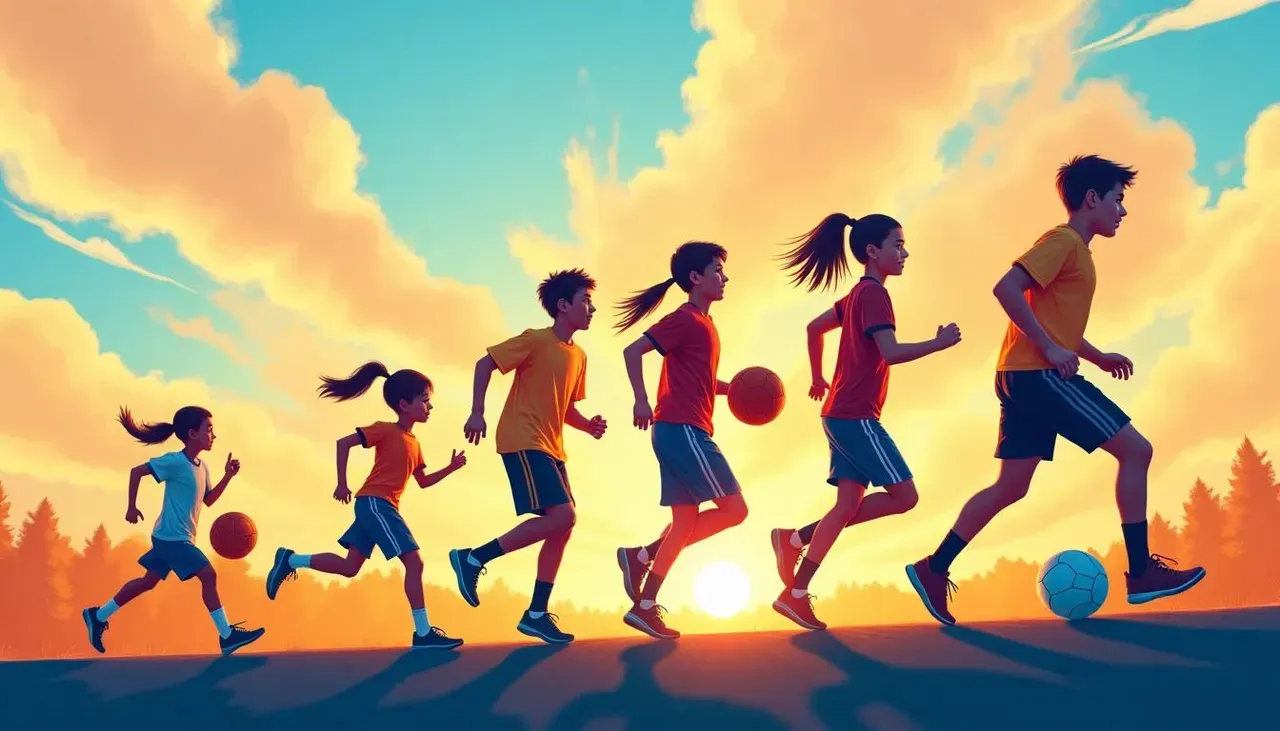
🚀 The Champion's Journey In 7 Stages
1. Active Start (0-6 years)
The child discovers movement through play. Running, jumping, throwing... Everything goes! The goal: love to move.
2. FUNdamentals (6-9 years)
Learning the "ABCs" of movement: Agility, Balance, Coordination. Many different sports, lots of FUN!
3. Learn To Train (9-12 years)
Training starts to become structured. Basic techniques are taught. This is the golden age for learning sports movements!
4. Train To Train (12-16 years)
Building the physical "engine": strength, endurance, speed. The body grows fast, we need to take advantage!
5. Train To Compete (16-18 years)
Learning to perform under pressure. Strategy, mental game, recovery... Competition becomes serious.
6. Train To Win (18+ years)
Sport becomes a profession. Every detail is optimized for victory. This is the world elite!
7. Active For Life
After high-level career (or if you don't go pro), staying active for health and pleasure. Sport is for life!
Physical Literacy: Your Sports Vocabulary
You know the alphabet? Thanks to it, you can read any book. In sports, it's the same! There's an "alphabet of movement" called physical literacy.
📖 What Is Physical Literacy?
It's the combination of three things:
- • Motivation: The desire to move and play sports
- • Confidence: Believing in your ability to do the movements
- • Competence: Actually knowing how to do the movements correctly
A child with good physical literacy can learn ANY sport more easily!
That's why it's super important to do many different sports when young. Each sport teaches you different "letters." The more letters you know, the more beautiful texts you can write... or become a super athlete!
The Great Debate: Early Specialization Vs Diversification
Here's the question all parents ask: "Should my child focus on ONE sport very early to become a champion?"
❌ Early Specialization (Bad Idea)
What it is: Doing ONE sport intensively before age 12.
The risks:
- • Overuse injuries (the body always does the same movements)
- • Sports burnout (the child gets fed up and quits everything)
- • Incomplete physical development
- • Less creativity and adaptability
✅ Sports Diversification (Good Idea)
What it is: Practicing MULTIPLE sports until age 12-15, then gradually specializing.
The benefits:
- • Complete and harmonious physical development
- • More creativity and adaptability
- • Fewer injuries
- • More fun = more long-term motivation
- • Better performance in adulthood!
"Studies show that most Olympic athletes played several sports during childhood before specializing in adolescence."
"Windows Of Opportunity": Myth Or Reality?
You may have heard that there are "windows" where the body learns certain qualities more easily. For example: "You must develop speed between 7 and 9 years old, otherwise it's too late!"
🔬 What Modern Science Says
Recent research (2010-2025) shows that these "rigid windows" probably don't exist as we thought!
- ✅ True: Some qualities are easier to develop at certain ages
- ❌ False: Windows don't "close" definitively
- ✅ True: You can improve at ANY age with the right training
- ❌ False: Missing a "window" doesn't doom the athlete
Conclusion: It's better to see these periods as "opportunities" rather than "obligations." No panic if your child didn't do coordination training at 8!
Biological Age Vs Chronological Age
Two 12-year-old children can have VERY different bodies. One might look like a 10-year-old, the other like a 15-year-old teenager! That's the difference between calendar age (chronological) and body age (biological).
⏰ Chronological Age
The age on your ID card
- • Used for sports categories
- • Simple to measure
- • Doesn't always reflect actual development
🧬 Biological Age
The age of your physical development
- • Measured by Peak Height Velocity (PHV)
- • More accurate for adapting training
- • Varies greatly between individuals
Why is this important? Because a smart coach must adapt their program to the athlete's BIOLOGICAL age, not just their chronological age. An "early maturer" and a "late maturer" of the same age don't have the same needs!
Peak Height Velocity (PHV)
PHV is the time when you grow the fastest. In girls, it's usually around 12 years old. In boys, around 14 years old. But it can vary by 2-3 years depending on individuals!
📏 Why PHV Is Super Important
Before PHV
Ideal time to develop coordination, agility, and techniques. The body is very "malleable" and learns movements quickly.
During PHV
Watch out for injuries! Bones grow faster than muscles. It's also the time to develop aerobic capacity and speed.
After PHV
The body can handle more load. It's the ideal time to develop strength and power. Hormones help build muscle!
Deliberate Play Vs Deliberate Practice
Two ways to train, two different goals. The best athletes had BOTH in their journey!
🎯 Deliberate Play
Self-organized activity, motivated by fun
- ✓ Children create their own rules
- ✓ No adult directing
- ✓ The goal is to have fun
- ✓ Develops creativity
💡 Example: Improvised soccer game between friends in the yard
📋 Deliberate Practice
Structured activity, focused on improvement
- ✓ Directed by a coach
- ✓ Targeted repetitive exercises
- ✓ The goal is to progress
- ✓ Immediate feedback
💡 Example: Technical training session with coach
The key: More deliberate play when young (to develop love of sport and creativity), then gradually more deliberate practice as you grow (to perfect techniques).
The 10 Keys Of LTAD
The LTAD model is based on 10 essential factors for optimal development:
1. 📖 Physical literacy
2. 🎯 Specialization at the right time
3. 🧒 Developmental age
4. 📅 Adapted periodization
5. 🏋️ Progressive physical development
6. 🧠 Mental and emotional development
7. 📈 Age-appropriate competition
8. ⚠️ Injury prevention
9. 🔄 Integrated system (parents, coaches, federations)
10. 🔬 Continuous science-based improvement
How To Apply LTAD In Real Life?
Here are practical tips for each age group:
👶 6-9 years: FUNdamentals
- • Try at least 3-4 different sports per year
- • 80% of training = play and fun
- • Develop running, jumping, throwing, catching, balance
- • Zero result or competition pressure
🧒 9-12 years: Learn To Train
- • Start learning basic techniques
- • Still practice 2-3 different sports
- • Gradually introduce the notion of training
- • Competition remains formative, not the main goal
👦 12-16 years: Train To Train
- • Progressive specialization (1-2 main sports)
- • Develop physical qualities (strength, endurance, speed)
- • Introduce basic weight training (after PHV)
- • More regular and structured competition
🧑 16+ years: Train To Compete
- • Complete specialization in chosen sport
- • Intensive and personalized training
- • Mental and strategic development
- • Competition becomes the main goal
Common Mistakes To Avoid
🚫 The 5 Mistakes That Ruin Development
1. Specializing too early: Doing one sport before age 12 increases risk of injuries and burnout.
2. Too much competition, not enough training: Ideal ratio = 70% training, 30% competition in youth.
3. Ignoring biological age: Treating a late maturer like an early maturer can be catastrophic.
4. Copying adult workouts: Children are not mini-adults! Their needs are different.
5. Forgetting fun: A child who no longer enjoys their sport will eventually quit, regardless of talent.
The Role Of Parents And Coaches
Athlete development is a team effort. Here's what everyone can do:
👨👩👧 Parents' Role
- ✓ Encourage without putting pressure
- ✓ Favor sports diversity
- ✓ Make sure the child is having fun
- ✓ Avoid comparison with others
- ✓ Respect the pace of development
- ✓ Be a role model for physical activity
🏋️ Coaches' Role
- ✓ Adapt training to each child
- ✓ Prioritize development over results
- ✓ Assess biological age, not just chronological
- ✓ Create a positive and fun environment
- ✓ Teach proper techniques from the start
- ✓ Communicate with parents
At Off-Field: Custom Support
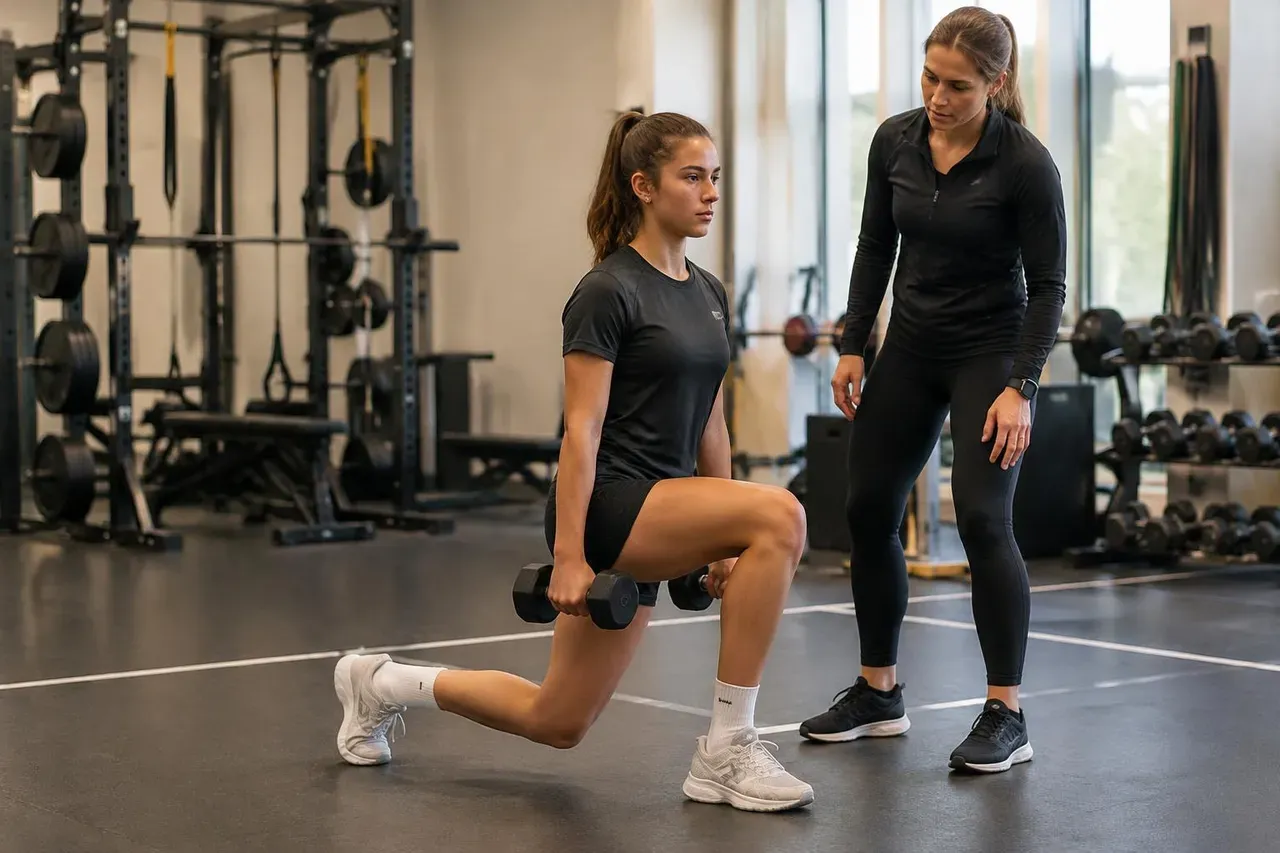
Want to apply these scientific principles to your development or your children's? At Off-Field, our physical trainers use the latest LTAD knowledge to create programs adapted to each age and development level.
🎯 What We Offer
- • Development stage assessment: Tests to identify your biological age and specific needs
- • Personalized program: Training adapted to your LTAD stage
- • Progress tracking: Regular tests to measure your progress
- • Injury prevention: Specific program for high-risk periods (growth)
🚀 Build Your Inner Champion!
Whether you're a developing young athlete or a parent who wants the best for their child, our experts can guide you on the path to excellence.
Conclusion: Patience Is Key
Becoming a great athlete is like growing a tree. You can't pull on it to make it grow faster! You need to feed it, water it, protect it... and give it time to grow.
LTAD reminds us that the journey is as important as the destination. Every step counts. Every sports experience builds tomorrow's champion. No shortcuts, no rushing: just progressive, intelligent development adapted to each individual.
"The secret of champions? They took the time to build their foundations well. The rest is a matter of work and passion."
So, ready to start your journey to excellence? 🚀