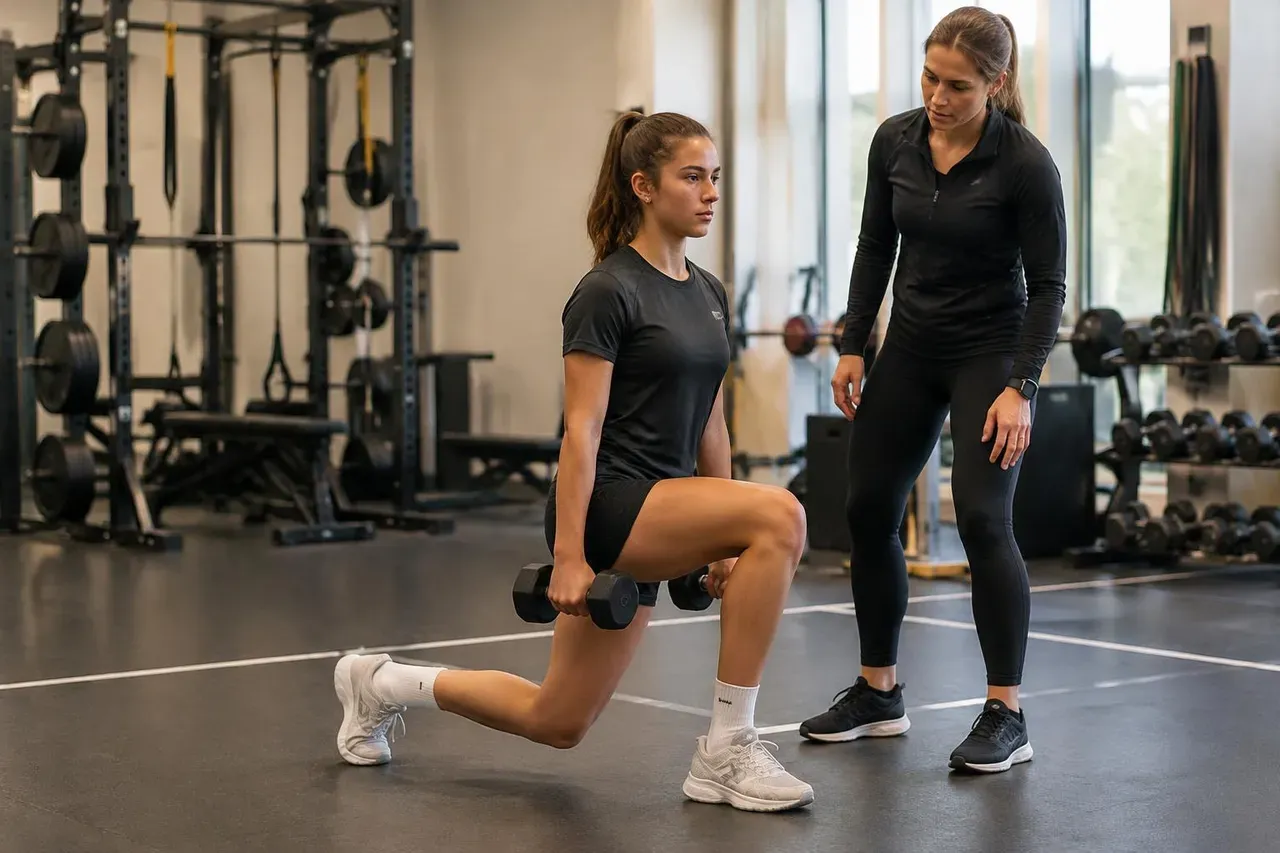

The development of muscular strength is a fundamental pillar of physical preparation in athletes. To optimize performance and reduce injury risk, it's crucial to understand the different types of strength and apply the most effective training methods, as identified by science and practice.
The Different Types of Strength
Muscular strength is not expressed in a single way: there are several complementary categories of strength, each with its definition and importance in sport.
🏋️ Maximal Isometric Strength
Ability to produce maximum tension without movement (static contraction). It's a reference for evaluating the pure strength of a muscle, often used in follow-up tests.
Strength gains from isometric training are specific to the training angle: progress manifests mainly around the trained angle.
💪 Maximal Dynamic Strength
Ability to deploy the highest force with movement, typically measured by a 1RM on a basic exercise. Studies show that to increase maximal strength, loads ≥80% 1RM must be used.
Schoenfeld et al. demonstrated that only heavy load training provides optimal maximal strength gains.
⚡ Explosive Strength (Force-Velocity)
Ability to generate high force in a very short time. This is the quality underlying power and athlete acceleration. Measured via rate of force development (RFD) or tests like vertical jump.
High explosive strength is a performance indicator and a protective factor against muscle injuries.
🔄 Reactive Strength
A particular form of explosive strength corresponding to the ability to use the stretch-shortening cycle of muscle and tendon. It manifests during very brief plyometric movements.
Regular plyometric training improves reactive strength by optimizing musculotendinous elasticity and myotatic reflex.
🔋 Strength Endurance
Ability to resist fatigue during prolonged or repetitive strength exercises. It depends on the ability to continuously mobilize a large number of motor units.
Particularly important in muscular endurance sports: rowing, combat sports, climbing, etc.
Method 1: Undulating vs Linear Periodization
Strength training is generally organized in cycles to optimize gains while avoiding plateaus.
📊 Linear Periodization
Training is divided into successive blocks: hypertrophy → maximal strength → power/speed.
- • 4 weeks at 8-12 repetitions
- • 4 weeks at 4-6 repetitions
- • 4 weeks at 1-3 explosive repetitions
🔀 Undulating Periodization
Training variables vary from session to session throughout the week.
- • Monday: strength (5×5 heavy)
- • Wednesday: power (5×3 light explosive)
- • Friday: hypertrophy (4×10 moderate)
"A meta-analysis (17 studies, 510 participants) concluded that there is no difference in effectiveness between linear vs undulating periodization for increasing strength. Both methods produce similar progress."
Method 2: Velocity-Based Training (VBT)
Velocity-Based Training is a modern method of intensity self-regulation that uses execution speed as a criterion for load dosage.
📈 VBT Advantages
1. Individualization and Self-regulation
VBT accounts for daily performance fluctuations that can reach ±20-30% on 1RM (fatigue, stress, sleep).
2. Optimal Fatigue Management
By setting a velocity loss threshold (e.g., stop when velocity drops 20%), fatigue is precisely controlled.
3. Performance and Motivation
Immediate velocity feedback motivates athletes to put maximum intention into each repetition.
🔬 What Research Says
A 2022 meta-analysis (~7-8 weeks VBT intervention in trained athletes) shows:
- • Lower limb maximal strength: +0.76 SMD
- • Strength endurance: +1.19 SMD
- • Vertical jump performance: +0.53 SMD
- • 5-30m sprint: time improvement (-0.40 SMD)
Method 3: Cluster Set Training
Clusters are a method of structuring sets aimed at inserting short intra-set pauses to maintain high-quality execution.
⏱️ Cluster Set Structure
Rather than performing 8 consecutive reps, you do sub-blocks of 2-3 reps, interspersed with 10-30 seconds of rest.
Example: 85% 1RM → 2 reps + 15s pause + 2 reps + 15s pause + 2 reps = 6 total reps
✅ Power Maintenance
By fragmenting the set, you get a higher average velocity per rep than with the same number of consecutive reps.
✅ Movement Quality
Ideal for training neuromuscular power by working at high intensity without sacrificing quality.
Method 4: Rest-Pause / Myo-Reps
Rest-pause involves performing a first set close to failure, then following with short pauses (10-20 seconds) followed by mini-sets until accumulating a target number of repetitions.
🔄 Myo-Reps Protocol
Step 1: Activation set of 10-15 reps close to failure
Step 2: 10-20 second pause
Step 3: 3-5 mini-sets of 3-5 reps with 10-20s pause between each
Result: 20-30 effective reps in ~2-3 minutes instead of 10+ minutes with classic sets.
🔬 Scientific Results
- • Hypertrophy: equivalent to classic training in less time
- • Maximal strength: gains comparable to traditional methods
- • Strength endurance: superior improvement (+20-30%)
Method 5: Eccentric Overload
The eccentric phase is the lowering phase of the load, where the muscle lengthens under tension. Muscles can tolerate ~20-50% more load eccentrically than concentrically.
"Chronic eccentric contractions promote greater increases in strength, muscle mass, and neural adaptations than concentric contractions." — Meta-analysis Roig et al. (2009)
⬇️ Eccentric Protocol Examples
Slow Tempo (5-8s)
Very controlled descent with moderate loads to strengthen tendons and prevent injuries.
Eccentric Overload (110-120% 1RM)
Using weight releasers or assisted ascent for supra-maximal loads.
Nordic Curl
Eccentric protocol for hamstrings, very effective in injury prevention.
Method 6: Contrast Loading (PAP)
Contrast methods cleverly combine heavy and light efforts to take advantage of post-activation potentiation (PAP).
🎯 Contrast Principle
A maximal strength exercise intensely activates the nervous system, so that in the following minutes, the muscle can temporarily produce more power on a light explosive effort.
Example: 3RM Squat → 2-3min rest → Explosive vertical jump (height increased by 2-5%)
🏆 French Contrast (Gilles Cometti)
Sequence of 4 consecutive exercises:
- 1. Heavy movement (e.g., squat)
- 2. Light plyometric (e.g., jump)
- 3. Medium movement with explosive load
- 4. Light loaded plyometric (e.g., jump with weighted belt)
How to Combine These Methods?
An 8-12 week cycle could include an undulating periodization base, integrate VBT to adjust loads, use clusters on key exercises, employ myo-reps on assistance exercises, and place some contrast sessions in the final phase.
📅 Sample 12-Week Programming
Weeks 1-4: Accumulation
Moderate volume and intensity, preparatory work for muscles and tendons. Slow eccentric tempos.
Weeks 5-8: Intensification
Heavy loads, VBT, cluster sets. Focus on maximal strength in all 3 contraction types.
Weeks 9-12: Explosion
Load contrasts, high-velocity work, conversion to usable power.
Conclusion
The best strength development methods are those that judiciously combine planning adapted to the athlete's level, well-dosed progressive overload, and research-proven intensification techniques.
🎯 Key Points to Remember
- • Maximal strength develops with heavy loads (≥80% 1RM)
- • Stimulus variation is essential to continue progressing
- • You can gain strength without going to total failure
- • The key is accumulating high-quality explosive repetitions
- • Developing strength only matters if you can translate it into useful power
Optimize Your Strength Development
Our physical preparation coaches use these scientific methods to create personalized programs adapted to your sport and objectives.