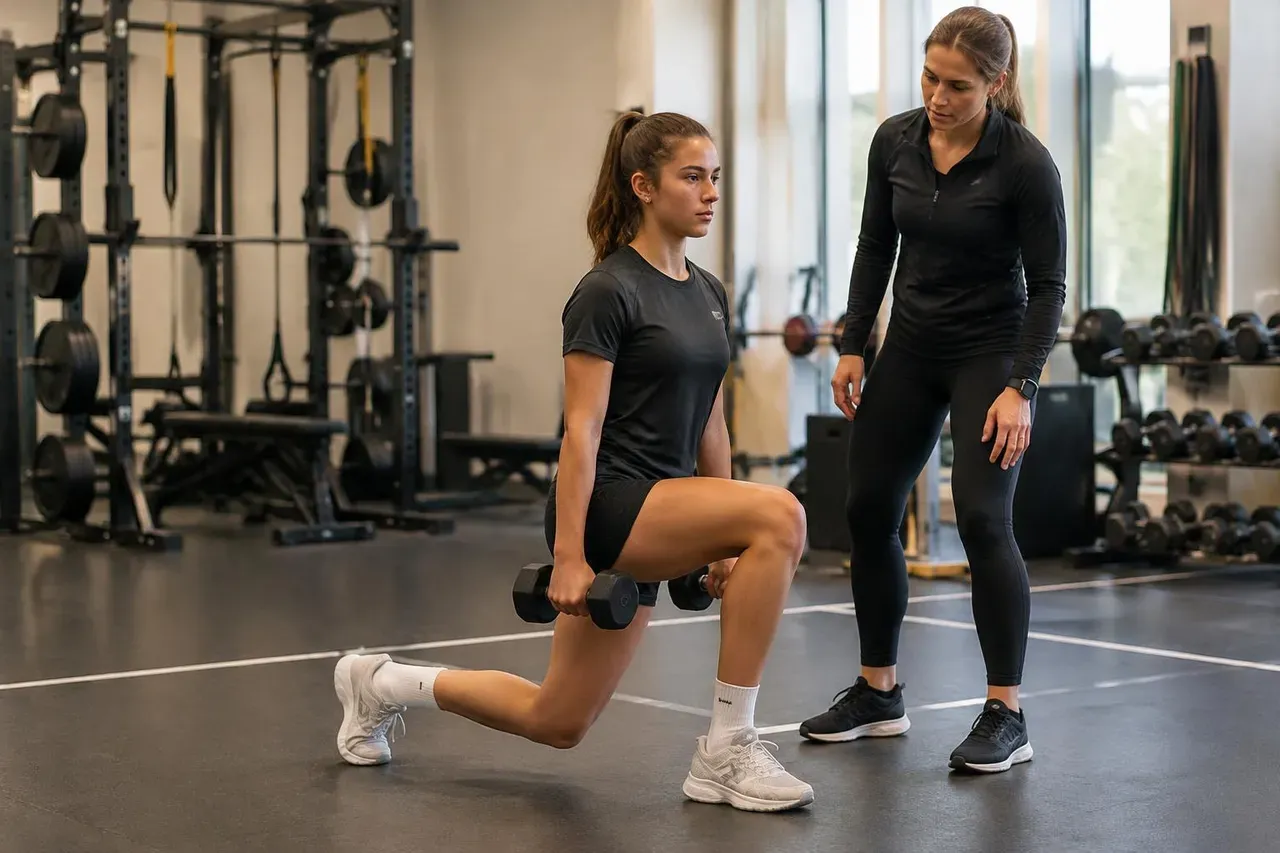
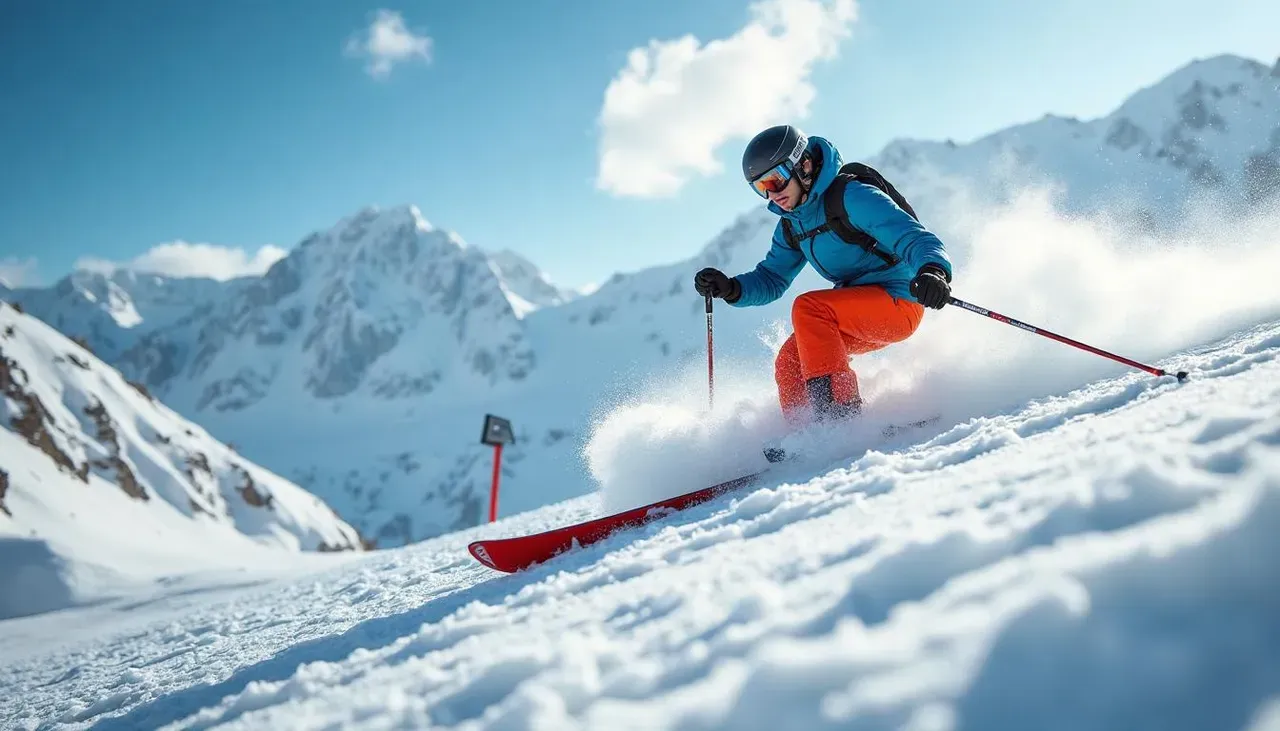
Winter is approaching and you're already dreaming of the slopes at La Dôle or Les Diablerets? Wait! Every year, over 34,000 workers in Switzerland get injured during winter sports. The number one culprit: the anterior cruciate ligament (ACL). Good news: you can drastically reduce this risk with just 3 weeks of smart preparation.
The "Weekend Warrior" Syndrome
You work all week in an office in Gland or Nyon. The weekend arrives, and boom! You rush to the slopes with Olympic champion enthusiasm. Problem: your legs aren't ready for the violent forces of skiing.
⚠️ Chilling Statistics
- • 34,000 winter sports injuries per year in Switzerland (SUVA)
- • +122,000 including neighboring France (cross-border workers)
- • Significant increase in serious accidents among 40-64 year olds
- • Peak accidents around 2-3 PM (fatigue + degraded snow)
Descending an icy red slope generates torsional forces on your knee that walking along the lake NEVER simulates. Your body must be specifically prepared for these constraints.
How Do Skiing Injuries Happen?
Understanding injury mechanisms helps prevent them. Here are the 3 most dangerous scenarios:
👻 The "Phantom Foot"
The most insidious mechanism, responsible for most ACL tears:
- Backward imbalance: You end up "sitting back", hips below knees
- Weight transfer: All weight goes to the downhill ski
- Edge catch: The back of the ski catches on hard snow
- Forced rotation: The ski forces the tibia into violent internal rotation
- Rupture: The ACL gives way under tension
💡 Solution: Maintain tongue pressure (tibia pressed forward against the boot)
🎿 Anterior Drawer (Back Landing)
Common during poorly controlled jump landings:
When you land "on your heels", the ski tail hits the ground first. The lever arm propels your tibia forward while your femur stays behind. This shearing can rupture the ACL BEFORE the bindings release.
💪 Explosive Quad Contraction
Paradoxically, your quadriceps can become your ACL's enemy:
When you violently contract your thighs to recover (knee slightly bent), the patellar tendon pulls the tibia forward, adding tension to the already stressed ACL. That's why the Hamstring/Quad ratio is VITAL.
"Strong hamstrings act as an 'active ACL' by counterbalancing quadriceps traction."
Can You Really Prepare In 3 Weeks?
Science recommends 8-12 weeks for deep structural adaptations. But if you only have 3 weeks, you can STILL significantly reduce risks by targeting the right mechanisms.
🧠 The 3 Fast-Adapting Levers
1. Neural Adaptation (Neural Drive)
Teaching the brain to recruit more motor units. This is the "awakening" of dormant potential - visible within the first 2 weeks.
2. Muscle-Tendon Stiffness
Plyometric training rapidly increases the muscle's ability to store and release energy, improving joint protection.
3. Deep Stabilizer Activation
Postural muscles (glutes, core) respond quickly to proprioception, improving trunk stability - the foundation of leg independence.
The 3-Week Protocol
Here's the week-by-week plan, designed to be done with minimal equipment:
| Phase | Duration | Objective | Method |
|---|---|---|---|
| Week 1 | Days 1-7 | Activation & Technique | Isometrics, Slow tempo, Postural correction |
| Week 2 | Days 8-14 | Eccentric Overload | Controlled plyometrics, Nordic Curls |
| Week 3 | Days 15-21 | Tapering & Speed | Reactivity, Proprioception, Recovery |
Week 1: Foundations & Alignment
Theme: "Relearning to move". The goal is to correct dynamic valgus (knee caving in) and wake up the glutes.
🏋️ Session A: Unilateral Strength (Monday & Thursday)
1. Warm-up (10 min)
Brisk walking + Clamshells (2x15) + Ankle mobility against wall
2. Bulgarian Split Squat
Rear foot on a bench. Lower in 3 sec, rise in 1 sec. Knee aligned with 2nd toe.
3 sets × 8-10 reps per leg
3. Wall Sit
Back to wall, knees at 90°. Alternate lifting heels to simulate edge work.
3 sets × 45-60 sec
4. Single Leg Glute Bridge
Posterior chain strengthening, fighting quad dominance.
3 sets × 12 reps per leg
🧘 Session B: Stability & Proprioception (Tuesday & Friday)
1. Dynamic "Clock" Plank
In plank position, touch "12 o'clock", "3 o'clock", "9 o'clock" without moving hips.
3 sets × 45 sec
2. Perturbed Single Leg Balance
Standing on one leg, knee bent, eyes closed. On cushion if too easy.
3 × 1 min per leg
Week 2: Intensification & Eccentric Strength
Theme: "Preparing the brakes". This is the most critical week. Expect soreness!
⚡ Session C: Eccentric Strength (Monday & Thursday)
1. Nordic Hamstring Curl ⭐
The "Gold Standard" exercise for ACL prevention! Kneeling, ankles locked, slowly fall forward. Use hands to push back up.
3 sets × 4-6 reps (no more!)
2. Jump Squats
Power + eccentric absorption work. FOCUS on controlled, silent landing.
3 sets × 8 reps
3. Cossack Squats
Very wide feet, lower on one leg, other extended. Three-dimensional work.
3 sets × 8 reps per side
🔥 Session D: Lactic Circuit (Tuesday or Wednesday)
Objective: Simulate the burn of continuous descents. Circuit 3-4 rounds, 2 min rest between rounds.
1. Dynamic Step-Ups (30 sec per leg)
2. Push-ups (15 reps) - Strengthens for falls
3. Skater Jumps (45 sec) - Mimic lateral skating
4. Isometric Tuck Position (45 sec)
Week 3: Tapering & Sharpening
Theme: "Freshness and Reactivity". Reduce volume by 40% but maintain intensity.
🎯 Session E: Power & Agility (Monday & Wednesday)
1. Single Leg Hops (Cross Pattern)
Draw a cross on the ground. Hop to all 4 quadrants on one foot. Speed and precision.
3 sets × 15 sec per foot
2. Strength Maintenance (Reduced Volume)
Goblet Squat: 2×8 fast reps | Side Plank: 2×30 sec per side
3. Active Mobility
Hip opening (Pigeon pose) + Thoracic extension
🛋️ Weekend before departure: Complete rest or very light activity (swimming, yoga). Maximum hydration.
Nutrition: Strengthen Your Ligaments From Within
Training is only the stimulus. Adaptation happens during recovery.
🥩 Protein
1.6-2.0g per kg bodyweight to repair muscle damage from eccentric sessions.
🦴 Collagen + Vit C
15g collagen with vitamin C, 30-60 min before training, can DOUBLE collagen synthesis in ligaments!
💧 Hydration
2-3L water daily from week 3. Well-hydrated intervertebral discs absorb shocks better.
On The Slopes: Golden Rules
You survived the 3 weeks. Don't ruin it now!
🎿 Prepared Skier Checklist
Equipment: The Last Line Of Defense
Even the world's strongest skier can tear a ligament if their equipment fails.
🔧 Points To Check
Binding Settings (DIN)
If you've lost weight or ski less aggressively than before, your DIN value is probably too high. In a slow fall, bindings won't release and your knee absorbs everything.
Properly Fitted Boots
A boot that's too loose = delay between tibia movement and ski reaction. This proprioceptive "lag" can be fatal during an edge mistake.
Protection
Snowboarders: wrist guards are MANDATORY. For everyone: helmets reduce head trauma by 35%.
"Preparing a body for the violent demands of skiing in 3 weeks is a challenge. But by targeting neuromuscular activation and eccentric strengthening rather than mass gain, this protocol maximizes your chances of making it through the season unscathed."
🎯 Want A Personalized Program?
This general protocol is an excellent starting point. But every body is different! Our physical preparation coaches can create a custom program adapted to your level, history, and season goals.
Discover Physical PreparationAssess Your Current Level
Want to know where you really stand? Our testing sessions evaluate your strength, power, balance, and proprioception with cutting-edge technology.
📊 Take Stock Of Your Abilities
Identify your asymmetries (left/right differences), your hamstring/quad ratio, and receive a personalized corrective program to ski safely.
Book A Testing SessionThe key message: Skiing is a beautiful but demanding sport. Three weeks of smart preparation can make the difference between a memorable season and a hospital season. Your knee will thank you!