
Want to run faster and longer on the trails? The secret isn't to run even more! Discover how smart strength training can transform you into a machine that devours kilometers and elevation changes.
Trail: Much More Than Road Running
Trail running is NOT road running practiced in nature. It's a completely different sport! You climb mountains, fly down slopes, jump over roots... Your body faces forces that a road runner never experiences.
"In trail, it's not the aerobic engine you need to improve first. It's the chassis and transmission!"
Imagine your car: even with a great engine, if the suspension is poor and the wheels spin, you're going nowhere. In trail, it's the same! Your VO2max (your engine) is important, but what really makes the difference is your "chassis" (muscles, tendons) and your "transmission" (neuromuscular coordination).
Running Economy: Your Secret Weapon
Running economy is like your car's fuel efficiency. The better your economy, the less energy you use at the same speed!
🚗 Running Economy In One Picture
Imagine two runners side by side at 12 km/h:
- • Runner A: Heart rate 160 bpm, breathing hard, sweating a lot
- • Runner B: Heart rate 140 bpm, breathing easily, looking relaxed
Runner B has better running economy. They can maintain this pace MUCH longer!
The good news? Studies show that strength training improves running economy by 2 to 8%. That might not seem huge, but on a 100km ultra, it's the difference between finishing fresh or crawling to the finish!
The Secret: Your Tendons Are Springs
Here's a concept that will change your view of running: your tendons work like springs! With each step, they store energy when your foot hits the ground, then release it to propel you forward.
🔋 How Does The "Spring" Work?
Impact phase
Your foot hits the ground. Your Achilles tendon and calf muscles stretch and absorb energy, like a spring being compressed.
Energy storage
For a split second, all this energy is "stored" in the tendon, ready to be released.
Free propulsion
The tendon releases like a spring and propels you forward. This energy is FREE: your muscles didn't have to produce it!
A stiffer tendon (not "tight" but "efficient") stores and returns energy faster. Result: shorter ground contact time, less work for muscles, better running economy!
How to make tendons more efficient? With HEAVY resistance training! Studies are clear: only training with loads above 70% of maximum strength significantly increases tendon stiffness.
RFD: Producing Force FAST
RFD (Rate of Force Development) is your ability to produce force QUICKLY. And in running, it's crucial!
⏱️ Why Speed Matters
Your foot stays on the ground less than 250 milliseconds (a quarter of a second). In this ultra-short time, you DON'T have time to develop maximum force!
What matters isn't how much you can lift maximum, but how much force you can produce in 250 ms. That's RFD!
Plyometric training (jumps, bounds) and explosive training improves your RFD through neurological adaptations: your brain learns to recruit more muscle fibers faster.
Heavy Weights Vs Plyometrics: Which To Choose?
Both! But for different reasons. Here's what science says:
| Training type | Best for | Mechanism |
|---|---|---|
| Heavy loads (80%+ 1RM) | High speeds (over 12 km/h) Athletes with high VO2max | Tendon stiffness Maximum strength |
| Plyometrics (jumps, bounds) | Moderate speeds (under 12 km/h) Trail and ultra | RFD (quick production) Stretch-shortening cycle |
| Combined | All profiles Complete program | All benefits! |
For trail runners: Since your average race pace is often around 10-12 km/h, plyometrics is particularly effective. But combine it with heavy work for tendon adaptations!
Downhill: Your Achilles Heel?
In trail, downhill is often where it hurts. Literally! And there's a scientific reason for that.
⚠️ Why Downhill Destroys Legs
Eccentric contractions: Downhill, your muscles (especially quadriceps) work while lengthening to brake your body. This is called eccentric work.
Muscle damage: These contractions cause micro-tears in muscle fibers. That's why you have MONSTER soreness after a big descent!
Specific fatigue: A study showed that after a 65km mountain ultra, athletes' running economy was degraded during downhill testing but NOT on flat or uphill. Downhill causes unique fatigue!
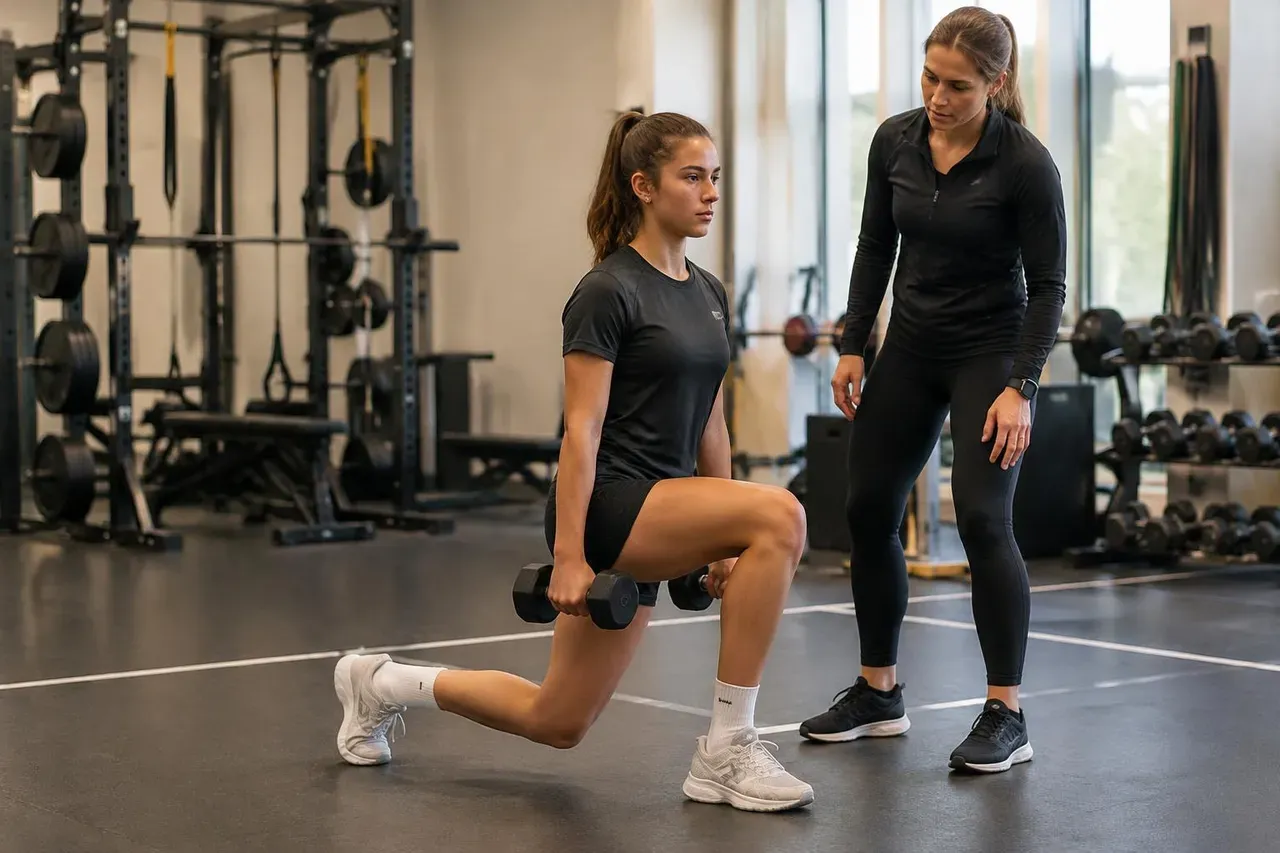
The solution? Specifically train eccentric strength! Exercises like Bulgarian split squats with slow descent, Nordic hamstrings, or depth jumps prepare your muscles to better handle descents.
"Durability": Staying Strong When Tired
Here's the most exciting concept from recent research: durability. It's not your running economy when fresh, but your ability to MAINTAIN it when exhausted!
🔋 Durability: The Ultra Weapon
Imagine two runners at km 5 of an ultra: they have the same running economy. But at km 80:
- • Runner A: Economy degraded by 15%. Struggling, stride is chaotic.
- • Runner B: Economy only lost 5%. Still running cleanly.
Runner B has better "durability." Strength training makes this difference!
Fatigue degrades musculo-tendinous stiffness: your "springs" become less efficient. Strength training helps maintain this stiffness longer. This is perhaps THE most important benefit for ultra-trail runners!
Core And Hips: The Stable Base
Your trunk and hips are the platform from which your legs generate force. If this platform is unstable, you lose energy with every step!
🎯 Key Muscles
- • Gluteus medius: Stabilizes pelvis with each step
- • Gluteus maximus: Uphill propulsion
- • Transverse: Core stability
- • Obliques: Rotation and anti-rotation
⚠️ Signs Of Weakness
- • Hip "drop" on non-support side
- • Knee collapsing inward
- • Excessive trunk rotation
- • Knee or IT band pain
A gluteus medius strengthening program can even eliminate pain in runners suffering from IT band syndrome!
Myths To Forget
❌ "Strength training will make me gain weight"
FALSE! Studies show that in concurrent training (endurance + strength), you don't gain mass. Endurance "blocks" hypertrophy. You gain strength without the kilos!
❌ "Strength training will make me less flexible"
FALSE! Strength training with full range of motion actually improves flexibility. And the tendon "stiffness" we're looking for has nothing to do with joint flexibility.
❌ "Strength training prevents injuries"
NUANCED! It's what we all think, but scientific evidence is... weak. Strength training is excellent for REHABILITATING an injury, but its PREVENTIVE effect in a healthy runner isn't proven.
Sample Program For Trail Runners
💪 Sample Week
Session A - Heavy Strength (45 min)
- • Squats: 4x4-6 @ 80-85% 1RM
- • Bulgarian split squats: 3x6 each leg
- • Hip thrusts: 3x8
- • Loaded calf raises: 3x10
Session B - Plyometrics (30 min)
- • Depth jumps: 3x5
- • Box jumps: 3x6
- • Alternating bounds: 3x8 each leg
- • Banded skipping: 3x20m
Core & Hips (after each session)
- • Side plank: 2x30s each side
- • Clamshells: 2x15 each side
- • Bird-dogs: 2x10 each side
Optimal timing: Same day as an easy run, or with 24h recovery before a quality session (intervals, tempo).
At Off-Field: Test And Progress
Want to know where you really stand? Our test battery analyzes your strength, power, RFD, and musculo-tendinous stiffness. You leave with a personalized program based on YOUR weaknesses!
🎯 What We Measure For Trail Runners
- • Isometric strength: Your maximum strength in key positions
- • Eccentric strength: Your braking ability (crucial for descents)
- • RFD: Your speed of force production
- • Asymmetries: Left/right imbalances that increase injury risk
- • Power: The force × speed combination
🏔️ Become A Stronger, More Durable Trail Runner!
Whether you're preparing for your first trail or aiming for UTMB, an adapted strength program can transform your performance. Come discover your strengths and weaknesses!
Conclusion: Run Less, Run Better
The key message from 15 years of scientific research is clear: to run better in trail, it's not enough to run more. Proper strength training improves your running economy, fatigue resistance, and ability to handle descents.
2 sessions of 30-45 minutes per week can improve your running economy by 2 to 8%. On an ultra, that's HUGE. And no, you won't gain 10 kilos of muscle!
"Strength training doesn't replace running. It transforms HOW you run. More efficient, longer, with less damage."
Ready to transform your trail running? The trail awaits! 🏔️