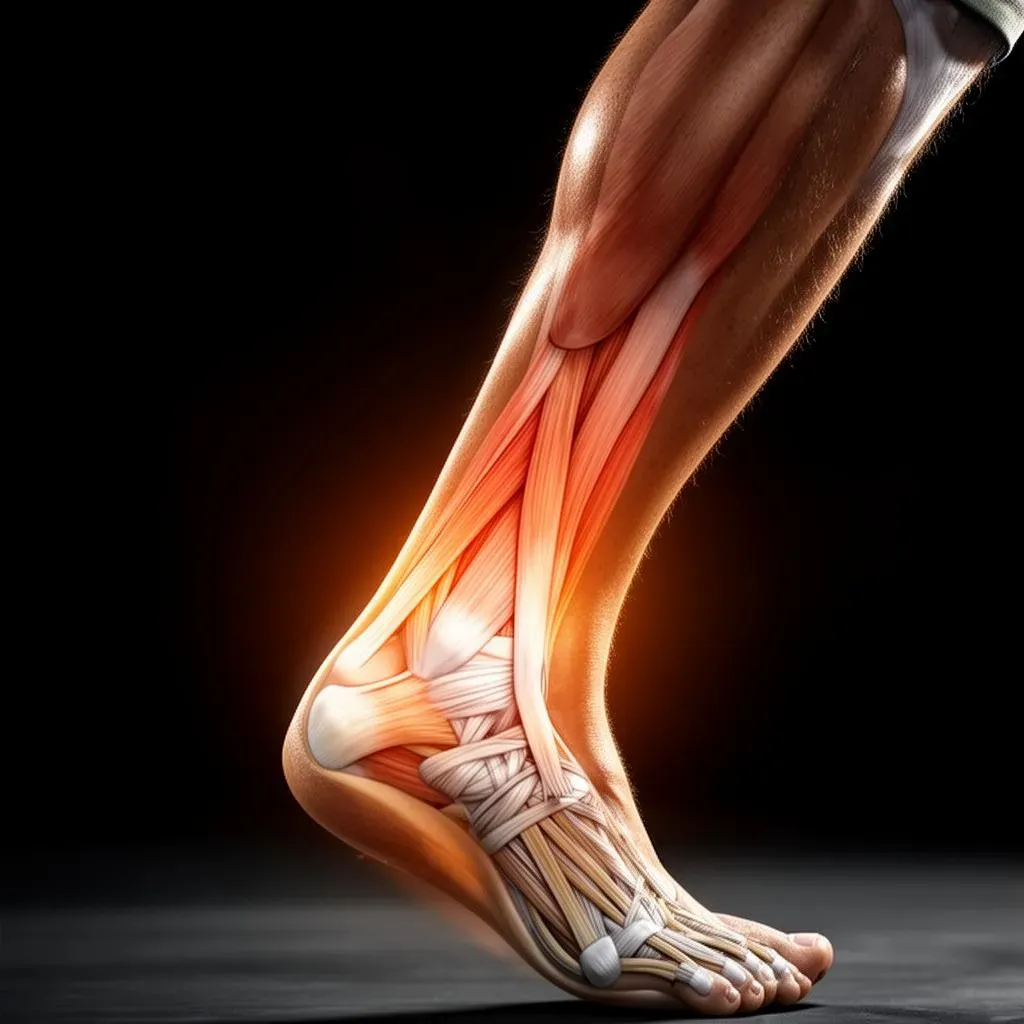
Tendons are connective tissues essential for transmitting muscular force and storing elastic energy. In explosive actions like sprinting and jumping, they behave like springs: stretching under load then releasing stored energy. Tendon stiffness – their resistance to deformation – directly determines performance and injury risk.
🎯 Want to measure your tendon stiffness and explosiveness?
Our ForceDecks force plates measure RSI, contact time, and asymmetry – direct indicators of tendon quality.
Discover TestingStructural and Mechanical Tendon Adaptations Under Load
Unlike muscle, tendons adapt slowly but surely to mechanical loading. When regularly subjected to high loads, tenocytes remodel the collagen matrix: we observe increased stiffness, and sometimes slight tendon hypertrophy. Scientific consensus confirms this positive adaptation to resistance training.
+39%
Achilles tendon stiffness after 12 weeks of heavy strengthening
r = 0.82
Correlation between max strength and tendon stiffness
48-72h
Peak collagen synthesis after intense exercise
Load intensity plays a determining role. Arampatzis et al. (2007) showed that only sprinters had significantly higher tendon stiffness, while endurance runners had tendons comparable to sedentary individuals. Intense and explosive mechanical loads are needed to fully stimulate tendon adaptation.
Tendon Stiffness and Sprint Performance
Elite sprinters exhibit high stiffness qualities throughout the lower limb, contributing to ground contact times of 80–100 ms. During sprinting, the Achilles tendon supports very high tensions and acts as a spring that stores energy at impact and releases it during propulsion.
⚡ Why does stiffness help sprinting?
- • Rapid force transmission: less elastic slack = faster energy transition
- • Less sinking: the athlete doesn't collapse at each step and rebounds immediately
- • Optimal muscle work: muscle works near its optimal length, quasi-isometrically
- • Better running economy: even in endurance, a stiffer Achilles = less energy expenditure
Tendon Stiffness and Jump Performance
Bojsen-Møller et al. (2005) demonstrated a positive correlation between tendon stiffness and jump height: subjects with stiffer tendons achieved better jumps and rate of force development (RFD). A stiff tendon allows the muscle to transmit force more instantly to the ground.
🔑 Key point: stiffness + coordination = performance
Kubo et al. (2007) perfectly illustrate this: the leg trained with plyometrics didn't increase tendon stiffness but improved jumps, while heavy strength training stiffened the tendon but only improved the squat jump. "Heavy loading builds the spring, plyometrics teach you to use it."
Method 1: Heavy Strength Training
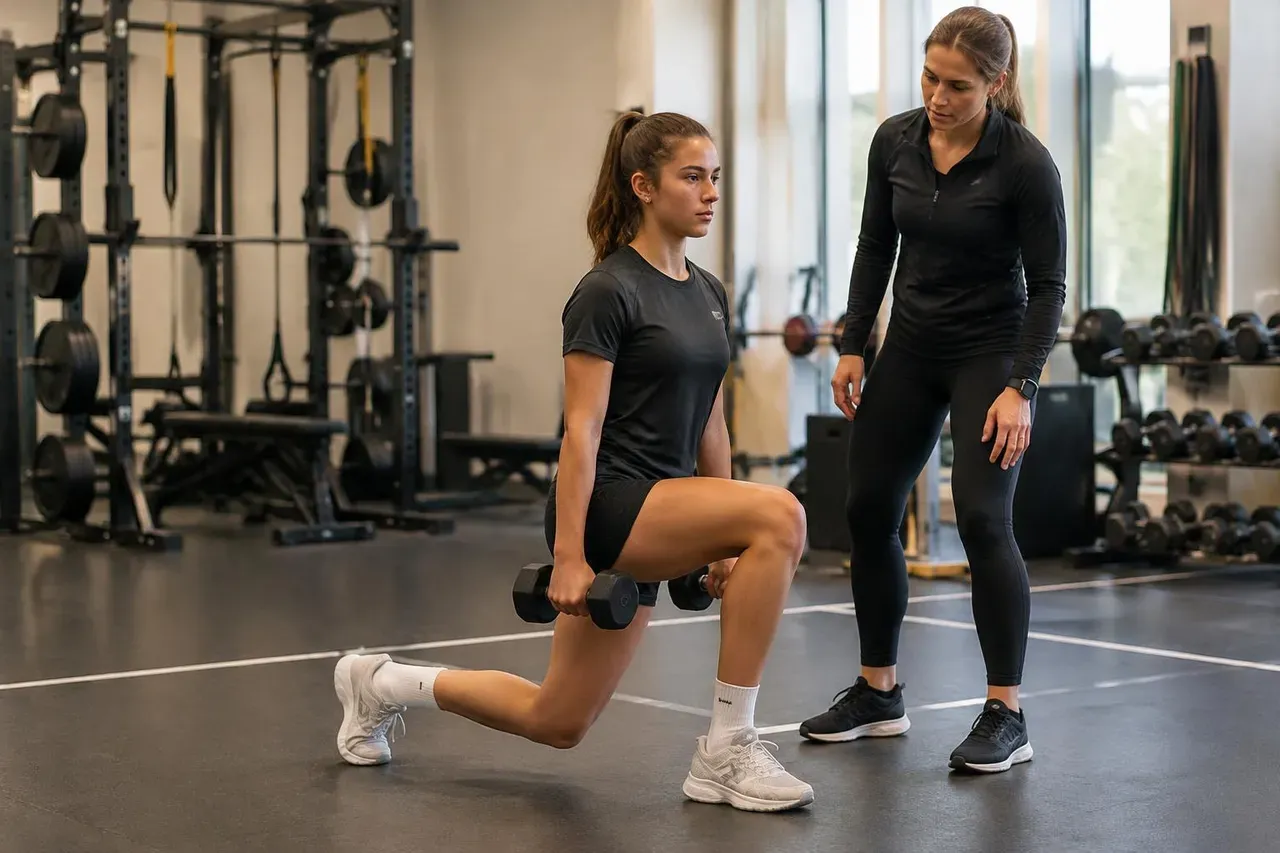
Training with heavy loads (70–90% 1RM+), executed slowly, imposes high strain on tendons over long contraction durations. This strongly stimulates collagen remodeling and increases stiffness. Heavy Slow Resistance (HSR) protocols show remarkable results.
📋 Heavy Strength Protocol
- • Compound exercises: squat, leg press, deadlift, lunges
- • Specific: heavy calf raises (standing and seated), 3–4 × 6–8 reps
- • Slow tempo: 3s up, 3s down (3-0-3-0)
- • Frequency: 2–3 sessions/week, minimum 48h recovery
- • Progression: gradual load increase over 8–12 weeks
Method 2: Plyometric Training
Plyometrics subject the tendon to high loading rates. Its direct effect on structural stiffness is debated – but its impact on dynamic joint stiffness and neuromuscular coordination is well documented. The key is progressive overload: from simple jumps to drop jumps, bilateral to unilateral.
✅ Proven Effects
- • Improved dynamic joint stiffness
- • Better neuromuscular control
- • Improved RSI (shorter contacts)
- • Better elastic energy utilization
📊 Recommended Dosage
- • Beginner: 50–60 contacts/week
- • Intermediate: 100–120 contacts/week
- • 100–150 significant contacts per session
- • Increase ≤ 10-20% per week
Method 3: PIMA vs HIMA Isometrics
Alex Natera popularized two types of isometrics with distinct effects: PIMA (Pushing Isometric Muscle Action) and HIMA (Holding Isometric Muscle Action).
PIMA – Pushing Isometric
Push against an immovable object (overcoming isometric)
- • Self-limiting: very low injury risk
- • Maximum neuromuscular recruitment
- • Develops max strength and RFD
- • Low local fatigue
- • Protocol: 5 × 3-5s at 100%, 2 min rest
HIMA – Holding Isometric
Resist an external load (yielding isometric)
- • More demanding: superior coordination required
- • Braking force and strength endurance
- • Engages eccentric pathways
- • Higher metabolic fatigue
- • Protocol: 3-4 × 30s at 60-80% 1RM
🏋️ Ready to optimize your tendons?
Our physical preparation programs integrate heavy strength, plyometrics, and isometrics to develop powerful and resilient tendons.
Discover Physical PreparationNutrition and Tendon Recovery
Dr. Keith Baar showed that supplementing with 15g gelatin/collagen + 50mg vitamin C, taken 30–60 minutes before training, can double pro-collagen I production. This translates to potentially stronger tendons and better recovery.
Sample Weekly Plan
Monitoring and Tendinopathy Prevention
📊 Tendon Pain Monitoring Scale
🟢 0-2/10
Green zone: continue progressing
🟡 3-4/10
Yellow zone: reduce plyometric load
🔴 5+/10
Red zone: rest + therapeutic isometrics
Frequently Asked Questions
How long does it take to increase tendon stiffness?
Tendon adaptations require sustained programs over 8 to 16 weeks. Collagen synthesis is a slow process (peak at 24-72h post-exercise). Be patient: stiffness gains happen over months, not days.
Plyometrics or heavy strength: which to choose?
Both are complementary. Heavy strength "builds the spring" (increases structural stiffness), plyometrics "teaches you to use it" (improves neuromuscular coordination). The best programs combine both approaches.
Are PIMA/HIMA isometrics effective for tendons?
Yes, remarkably. Burgess et al. measured +62% stiffness after 6 weeks of explosive isometrics. PIMAs develop max strength with low fatigue, HIMAs strengthen eccentric tolerance. They're also useful for tendinopathy prevention.
Does collagen supplementation really help tendons?
Yes. Keith Baar's protocol (15g collagen + vitamin C, 30-60 min before exercise) doubled pro-collagen I synthesis. It's a useful complement but not a substitute for mechanical training.
Is stretching harmful for tendon stiffness?
Short-term, prolonged static stretching transiently decreases stiffness, which is undesirable before explosive efforts. Use dynamic warm-up instead. Static stretching remains useful for recovery or targeting overly stiff areas.
📚 Scientific Sources
This article is based on the work of: Arampatzis et al. (2007), Bojsen-Møller et al. (2005), Kubo et al. (2002, 2007), Jacobs et al. (2025), Burgess et al. (2007), Fouré et al. (2009, 2010), Keith Baar et al. (collagen supplementation), Alex Natera (PIMA/HIMA isometrics).