Modern sport is undergoing an unprecedented mutation, characterized by a radical intensification of the physiological and biomechanical demands placed on athletes. What was considered, just twenty years ago, as an optional complement to technical practice — physical preparation — has now become the non-negotiable cornerstone of performance, career durability and long-term health.
🎯 Want to optimize your sports performance?
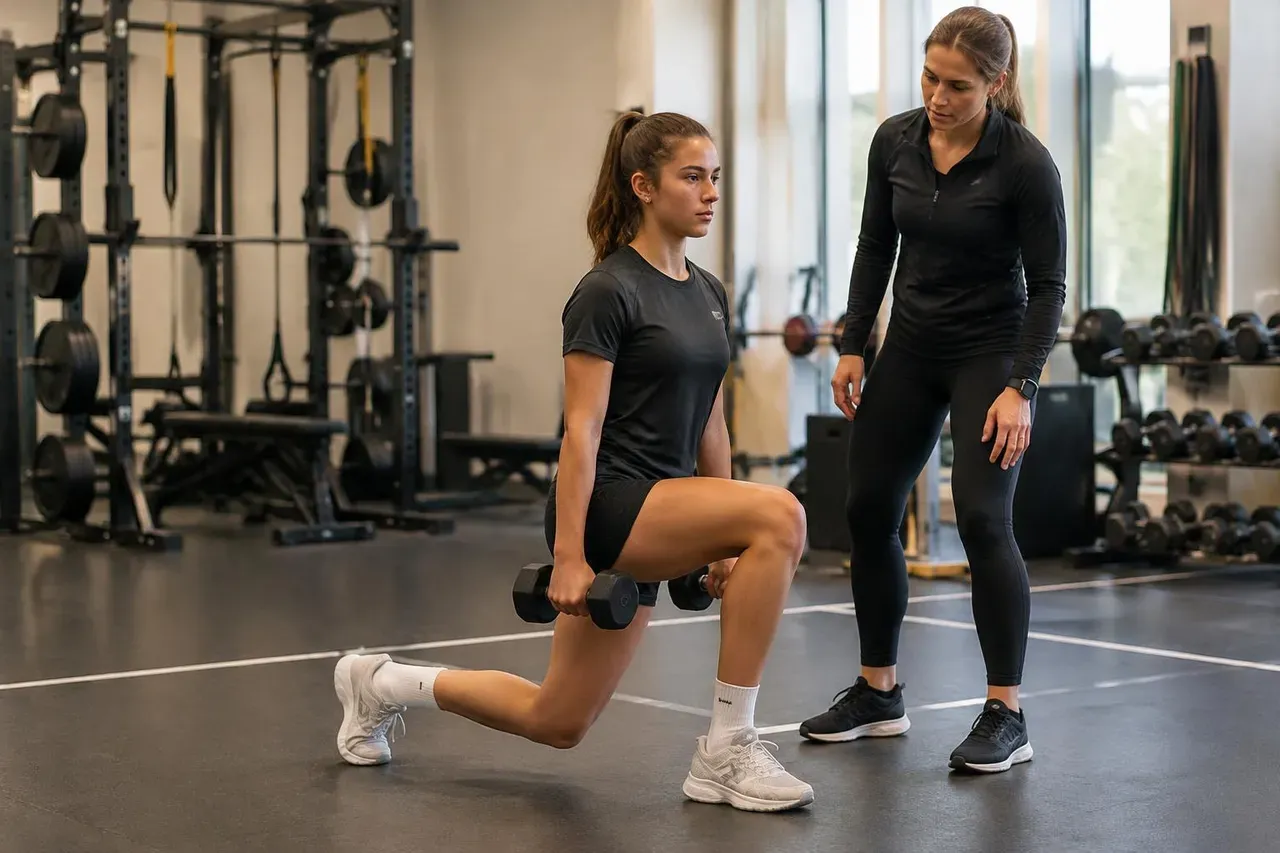
Our team of physical preparation coaches supports you with personalized programs based on your performance tests.
Discover Physical PreparationThe evolution of sports demands
Analysis of longitudinal data over the past two decades reveals an accelerated "natural selection" driven by game demands. In the English Premier League, for example, high-intensity distances have increased by over 30% between 2006 and 2013, while the number of explosive actions jumped by 50%.
In professional rugby, collision intensity and game phase density have transformed player morphology, requiring levels of strength and power that would have been inconceivable in the amateur era. The number of rucks and mauls per match has doubled or even tripled compared to the first World Cups.
📊 The inflation of physical demands
- • Football: +30% high-intensity distance, +50% explosive actions
- • Rugby: Number of collisions × 2-3 compared to amateur era
- • Tennis: Serve speed and rally power constantly increasing
- • All sports: Reduced recovery time, game densification
This game densification means active recovery periods are shorter, and required power peaks are higher. The athlete who neglects physical preparation doesn't just stagnate; they put themselves at risk.
Neuromuscular adaptations
Physical preparation acts as a powerful signal sent to the body to reconfigure itself. Contrary to a simplistic view that would reduce weight training to "building muscle", adaptations are first and foremost neurological, followed by deep structural changes.
Neural adaptation: the central command
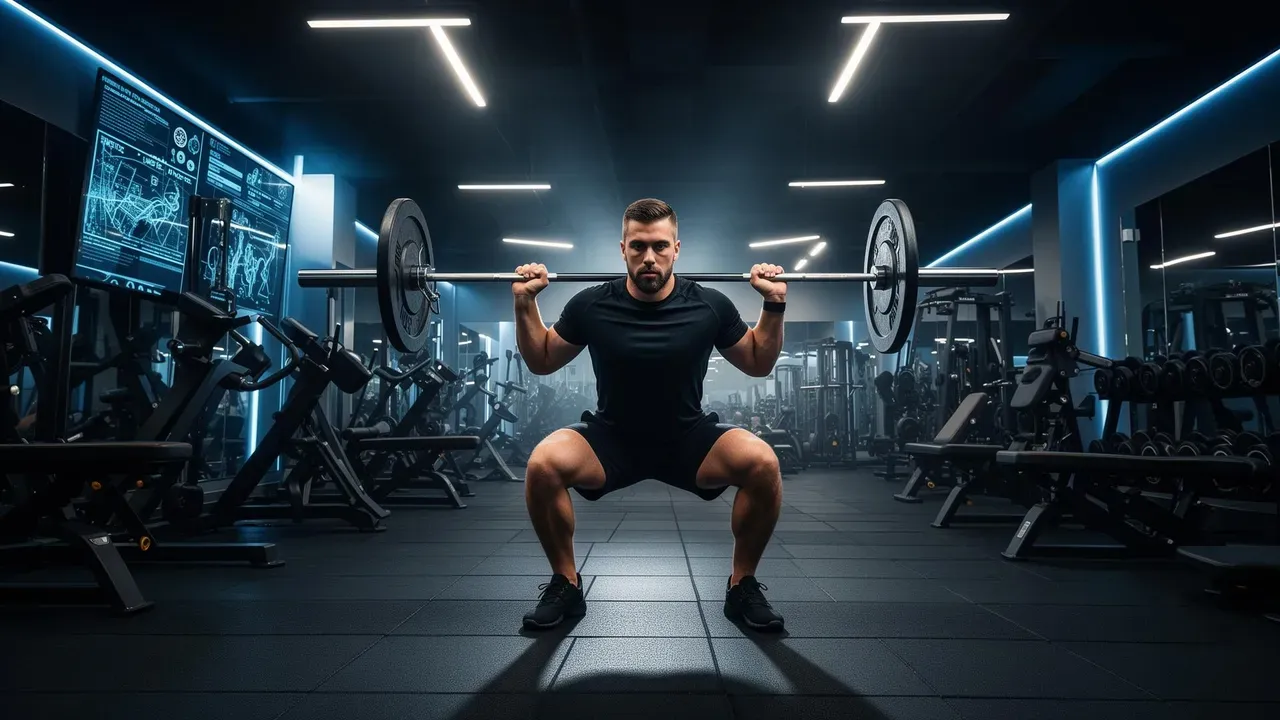
Initial strength gains in a beginner athlete or during a new training cycle are mostly attributable to neural factors. Strength training, particularly with heavy loads (>80-85% of 1RM), forces the nervous system to recruit high-threshold motor units (type II fast fibers).
🧠 Recruitment and frequency
Training increases the rate coding of motor neurons. Studies using electromyography (EMG) show a significant increase in signal amplitude in trained athletes.
⚡ Synchronization and doublets
Explosive athletes display "doublets" – two action potentials sent with a very short interval at contraction onset, enabling near-instantaneous force development (Rate of Force Development).
Muscle architecture: beyond aesthetics
Myofibrillar hypertrophy (increase in contractile proteins) increases force generation capacity per unit area, thus improving relative strength (force relative to body weight), which is the true indicator of athletic performance.
Eccentric and speed training promotes muscle fascicle lengthening. Longer fascicles allow higher contraction velocity and reduce injury risk during stretching.
| Parameter | Heavy Load (>80% 1RM) | Light Load (30-50% 1RM) |
|---|---|---|
| Maximum Strength Gain | Very High | Low to Moderate |
| Neural Adaptation | Strong increase | Low |
| Hypertrophy | High (if sufficient volume) | High (if taken to failure) |
| Neural Cost | Decreases for submaximal load | Remains high |
🎯 Ready to develop your power?
Our testing battery assesses your neuromuscular qualities and guides your physical preparation.
Book a Complete TestPassive tissue adaptation: tendons, ligaments, bones
One of the most powerful arguments for physical preparation is its effect on the body's "passive" structures. In many sports, the limiting factor is not the muscle, but the tendon or bone.
Tendon stiffness: a mechanical advantage
Tendons are not inert cables; they are living and dynamic tissues that respond to mechanical loads through a process called mechanotransduction. Resistance training, especially with heavy loads and isometric or eccentric contractions, stimulates tendon fibroblasts to synthesize type I collagen.
In biomechanics, "stiffness" is a positive quality for a tendon. A stiff tendon acts like a powerful spring: it can store and return elastic energy with great efficiency. Studies show that training increases Achilles and patellar tendon stiffness, improving running economy and jump height.
⏰ The adaptation time lag
Muscles adapt relatively quickly (a few weeks). Tendons and ligaments, being less vascularized, have much slower metabolism. It often takes more than 12 weeks to see significant structural changes in the tendon.
This lag creates a "vulnerability window" where the muscle has become too strong for the tendon. Regular and continuous physical preparation is the only way to synchronize these adaptations.
Bone architecture and Wolff's Law
Wolff's Law states that bone remodels in response to the mechanical stresses it experiences. Athletes practicing resistance or impact sports (gymnastics, weightlifting, rugby) have bone mineral densities significantly higher than average.
Conversely, cyclists or swimmers, despite excellent cardiovascular capacity, may present osteopenia (bone weakness) at the spine and hips. Integration of weight training (squats, deadlifts) and plyometrics is imperative for these populations.
Injury prevention: the vaccine strategy
If performance wins medals, availability wins championships. Physical preparation is now recognized as the most effective prophylactic intervention, far surpassing stretching or protective equipment.
📊 Scientifically proven effectiveness
A foundational meta-analysis published in the British Journal of Sports Medicine compared various prevention strategies. The results are unequivocal:
- • -66% sports injury risk with strength training
- • -50% overuse injuries
- • 0% protective effect from stretching alone
| Program | Target | Risk Reduction |
|---|---|---|
| Systematic training | Global sports injuries | ~66% |
| Nordic Hamstring Exercise | Hamstrings | ~51% |
| FIFA 11+ | Lower limbs | 30-50% |
| ACL Prevention | Anterior cruciate ligament (women) | >50% |
| Copenhagen Adduction | Adductors (groin) | Strong reduction |
Focus: the Nordic Hamstring Exercise
Hamstring tears are the most common injury in high-intensity running sports. The Nordic Hamstring Exercise has been identified as a specific "vaccine". By exposing the muscle to supramaximal eccentric loads, an architectural adaptation is forced: the addition of sarcomeres in series.
This means the muscle becomes physically longer and can operate at greater stretch lengths without rupture. Teams that integrate this single exercise see their injury rates drop by half.
ACL protection
ACL rupture is a career catastrophe for an athlete, with rehabilitation times of 9 to 12 months. Female athletes are particularly vulnerable (3 to 8 times higher risk).
🎯 Prevention programs target:
- 1. Quadriceps Dominance: Hamstring strengthening counterbalances tibial anterior pull.
- 2. Dynamic Valgus: Glute strengthening maintains hip-knee-ankle alignment.
- 3. Core Control: A weak core causes parasitic movements increasing knee loads.
Young athlete development
One of the most persistent misconceptions is that weight training is dangerous for children. Science says exactly the opposite. Not only is it safe, but it's beneficial.
Official positions from the ACSM, NSCA and IOC confirm that resistance training, when supervised, does not harm growth plates. On the contrary, mechanical stimulation is necessary to maximize bone density at a critical age.
📈 The LTAD Model (Long-Term Athlete Development)
- "FUNdamentals" stage: Development of physical literacy (running, jumping, throwing).
- "Learn to Train" stage: Introduction of weight training movement technique without heavy loads. This is the golden age for developing coordination.
- "Train to Train" stage: At peak height velocity (PHV), emphasis is on aerobic capacity and strength to consolidate the changing body.
Physical preparation as a selection factor
Longitudinal tracking studies show that physical qualities (30m speed, vertical jump, agility) are powerful discriminators for professional selection.
NBA
Drafted players outperform non-drafted on vertical jump and sprint tests
Football
Youth who join academies have superior power and endurance levels
The psychobiological advantage
The impact of physical preparation goes beyond muscle to reach the athlete's brain and psyche. It's a mental construction tool.
Neurobiology of resilience
Intense physical exercise induces neurobiological adaptations that protect against stress and depression. Increased BDNF (Brain-Derived Neurotrophic Factor) levels promote neuroplasticity and neuron health.
Regular exposure to controlled training stress "desensitizes" the HPA axis (Hypothalamus-Pituitary-Adrenal), allowing the athlete to better manage acute competition stress. They learn physiologically to stay calm under pressure.
💪
Confidence
Feeling physically strong = greater self-efficacy
🧠
Mental Toughness
Overcoming difficult sessions creates a resilience reservoir
⚡
Hormonal Profile
Optimization of Testosterone/Cortisol ratio
Longevity and post-career health
Physical preparation is the athlete's fountain of youth. It allows pushing back the inevitable physiological decline and extending the lucrative career.
The "Super-Agers": case studies
- LeBron James invests massively (estimated $1.5M per year) in his body. Beyond genetics, it's the rigorous application of recovery and strengthening that allows him to absorb impacts after 20 seasons.
- Cristiano Ronaldo maintains a biological age lower than his real age through iron discipline mixing explosive weight training, endurance and recovery.
- Tom Brady popularized the concept of "pliability" which is nothing more than an advanced form of tissue quality maintenance and mobility.
Long-term health
Contrary to the idea that elite sport "wears out" the body, data show that elite athletes live longer than the general population (reduced mortality rate for cardiovascular diseases and cancers).
However, the risk lies in abrupt cessation. Osteosarcopenia (muscle and bone loss) threatens the former athlete who becomes sedentary. Physical preparation instills lifestyle habits ("Active for Life") that protect the former athlete.
Conclusion: the 5 fundamental pillars
At the end of this analysis, physical preparation appears no longer as a "bonus" for the athlete, but as the indispensable foundation of any serious sporting endeavor.
- 1. The Performance Pillar: It unlocks neural and muscular potential, allowing more force expression, faster and longer.
- 2. The Protection Pillar: It constitutes the only proven "vaccine" against injuries, strengthening tendons, ligaments and bones.
- 3. The Evolution Pillar: It's the necessary adaptive response to professional sports intensification.
- 4. The Economic and Career Pillar: It maximizes "availability", key factor of market value and longevity.
- 5. The Psychological Pillar: It forges a resilient brain in a robust body.
In 21st century sport, the saying has changed: you no longer play to get fit; you must be fit to have the right to play.
🎯 Ready to optimize your preparation?
Start with a complete test to identify your strengths and areas for improvement, then join a personalized physical preparation program.