
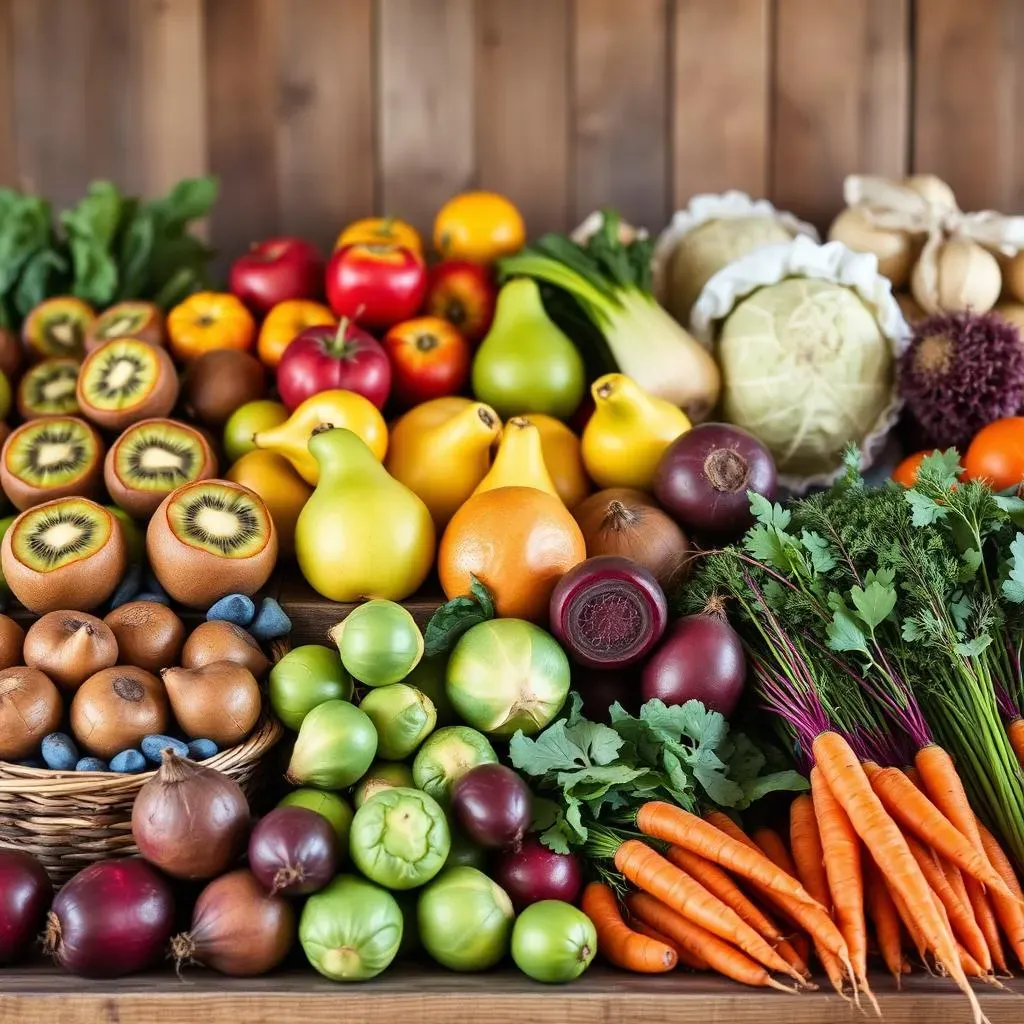
Eating seasonally is more than a trend. It's a simple and coherent approach to optimize your health, taste, and ecological impact. Here's everything you need to know about seasonal fruits and vegetables in Canton Vaud, with practical tips for consuming them at every meal.
🥗 Want to optimize your nutrition?
Our Personal Training approach includes personalized nutritional guidance to maximize your results.
Discover Personal TrainingWhy Eat Seasonal (and Local) in Vaud
Eating seasonal fruits and vegetables is primarily about common sense:
🍎 Better Taste
Harvested at peak ripeness, shorter transport, less storage = optimal flavors.
💰 More Practical
In season, it's abundant, cheaper, and easy to cook.
🌈 Healthier
Varying colors throughout the year increases nutritional diversity.
In Switzerland, the season varies slightly depending on the year and region. Part of winter produce is freshly harvested or stored (apples, root vegetables, etc.). Checking the origin always remains useful.
The Simple Health Rule: 5 Portions Per Day
Swiss nutritional recommendations (OSAV) and the WHO are clear:
📊 The Winning Equation
- 5portions per day = 3 portions of vegetables + 2 portions of fruit
- 120gper portion ≈ a handful (about 600g total/day)
- 400gminimum according to WHO to reduce the risk of non-communicable diseases
Important Clarification: Not "Unlimited"
The message "fruits and vegetables without moderation" is too vague. Here's the nuance:
| Type | Recommended Quantity |
|---|---|
| Non-starchy vegetables (salads, cabbages, leeks, etc.) | Very generously |
| Fruits | 2 portions/day as base (more possible depending on energy expenditure) |
Health Benefits (Scientifically Proven)
What we can properly state, with solid scientific sources:
📈 Demonstrated Impact
- • Higher fruit and vegetable consumption is associated with a reduced risk of cardiovascular disease and overall mortality
- • Benefits are observed up to high intakes (up to ~800g/day in some meta-analyses)
- • WHO links at least 400g/day to a reduced risk of non-communicable diseases
Why It Works (Mechanically)
🌾
Fiber
Satiety, digestion, gut microbiome
⚡
Potassium
Blood pressure balance
🛡️
Antioxidants
Immunity, cellular repair
🎯 Want to structure your nutrition?
Our Personal Training program includes a complete nutrition guide and weekly personalized follow-up.
Discover our packagesSpecial Vaud: Local Kiwi Really Exists
Canton Vaud (Aubonne region) is an interesting special case: approximately 80% of Swiss kiwis are produced there. This is the kind of fruit that makes local anchoring credible and proves you can eat locally even in winter.
🥝 Why Vaud Kiwi Is Interesting
- • Harvested in autumn, available all winter
- • Excellent source of vitamin C (more than orange!)
- • Local production = freshness and traceability
- • Perfect for breakfast or as a snack
What to Eat, Concretely? (By Season)
❄️ Winter (December – February): The Real Season in Vaud
Contrary to popular belief, winter is not a "dead season". There's more diversity than you think, between fresh harvest and smart storage.
🍎 Winter Fruits
- • Vaud kiwi (Aubonne)
- • Apples, pears (Swiss storage)
- • Walnuts, chestnuts (depending on period)
🥬 Winter Vegetables (the stars)
- • Leek – perfect base for soups and stir-fries
- • Cabbages – kale, Brussels, curly, white/red
- • Endive
- • Root vegetables – carrot, beet, parsnip, celeriac
- • Jerusalem artichoke
- • Lamb's lettuce – great winter salad
🌱 Spring (March – May): Return of Green
Asparagus, spinach, radishes, salads, rhubarb, first strawberries (depending on weather/year).
☀️ Summer (June – August): Abundance
Fruits: strawberries, raspberries, currants, cherries, apricots...
Vegetables: tomatoes, zucchini, cucumbers, peppers, beans...
🍂 Autumn (September – November): Harvests and Transition
Fruits: grapes, apples, pears, quinces, walnuts, arrival of kiwis.
Vegetables: squashes, cabbages, root vegetables, leeks.
How to Eat Them at Every Meal (Without Overcomplicating)
Goal: at least 1 portion at each main meal, and 1-2 portions elsewhere.
🌅 Breakfast
- • 1 fruit (apple, pear, kiwi)
- • or cottage cheese + kiwi + walnuts
🍽️ Lunch
Simple rule:
½ plate vegetables (raw and/or cooked) + protein + starch if needed
🍎 Snack
- • 1 fruit
- • or carrot sticks + hummus
🌙 Dinner
- • Soup / stir-fry / roast: leek + root vegetables + cabbage
- • Salad (lamb's lettuce / endive)
Best Easy Choices (Especially in Winter)
Consume very generously – these vegetables are particularly "cost-effective" nutritionally:
⭐ Top 4 Vaud Winter Picks
- Cabbages (kale, Brussels, cauliflower, etc.)
Easy to cook/roast, excellent nutritional density - Leeks
Perfect base for soups, stir-fries, gratins - Lamb's lettuce
Local salad available year-round - Root vegetables (carrot, beet, parsnip, celeriac)
Excellent roasted with spices + drizzle of oil
Sources and References
- • Swiss recommendations (OSAV/BLV): 5 portions/day, 120g/portion, varied seasons and colors
- • "5 a day" campaign (SSN, OSAV mandate)
- • Fruits Vaud Genève calendar – local anchoring and Aubonne kiwi
- • Swissmilk calendar – Swiss winter fruits and vegetables
- • WHO – 400g/day minimum, practical advice
- • BMJ / Int. J. Epidemiology meta-analyses – dose-response relationships
🎯 Want to structure your nutrition with personalized support?
Our team supports you with a nutrition plan adapted to your goals and weekly follow-up.
Discover Personal Training