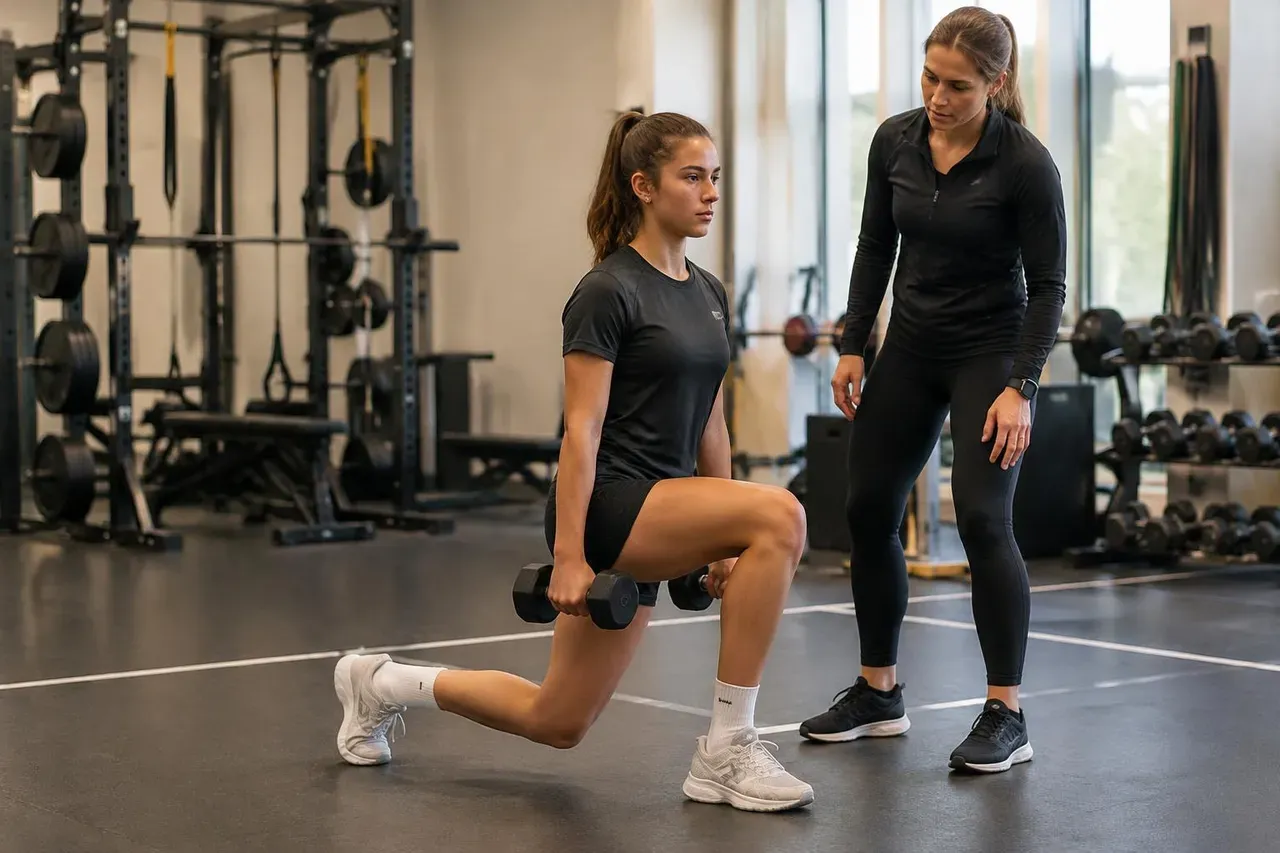
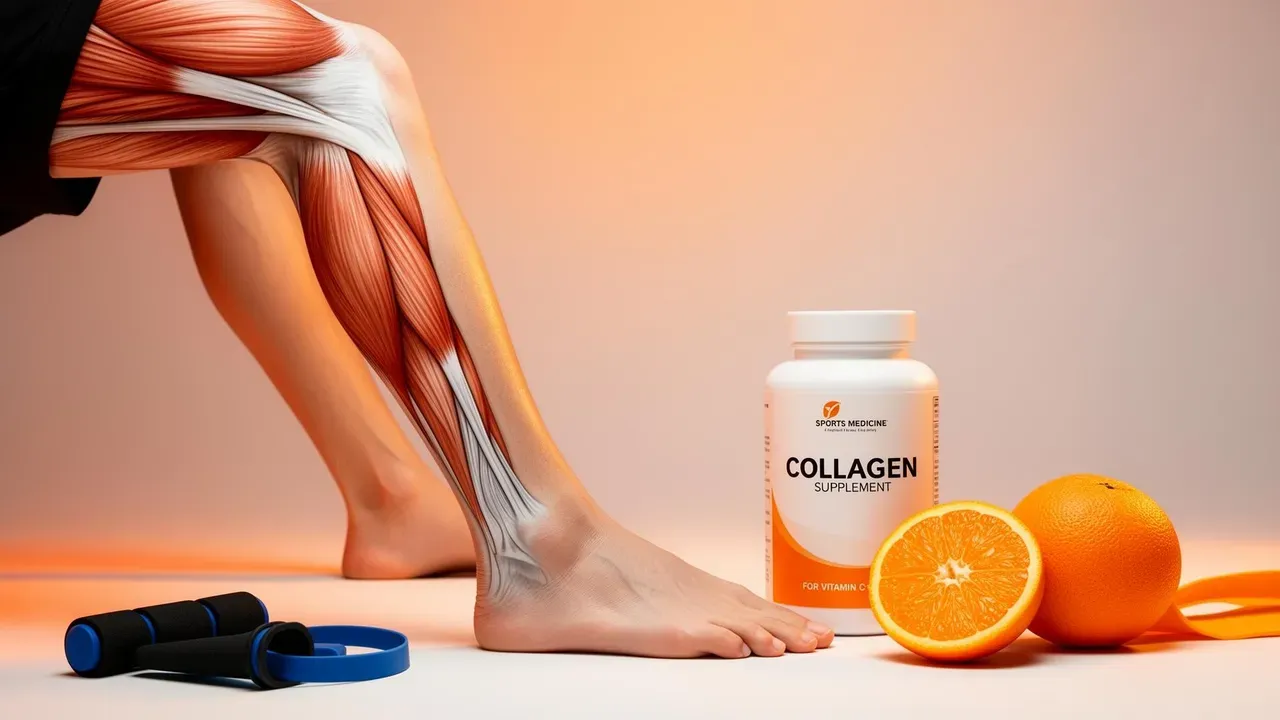
More than 70% of sports medicine consultations concern connective tissue pathologies: tendons, ligaments, cartilage. The tendon, a slow-metabolism and hypovascularized structure, represents the "weak link" in the kinetic chain. Unlike muscle that adapts in a few weeks, tendons require months to modify their properties. This guide explores how to optimize nutrition to strengthen your tendons.
🎯 Suffering from tendon pain?
Our physiotherapy team can assess your needs and guide you toward recovery.
Consult physiotherapyWhy is the tendon the weak link?
The tendon is composed of tenocytes (specialized fibroblasts) immersed in a dense extracellular matrix. Type I collagen constitutes 60 to 85% of the dry weight of the tendon, organized hierarchically: tropocollagen molecule → microfibril → fibril → fascicle → tendon.
While muscle can hypertrophy and strengthen rapidly under training and standard protein intake (whey, casein), the tendon requires months or even years to significantly modify its material properties. This temporal mismatch in tissue adaptation is often the origin of overuse tendinopathies.
⚠️ The muscle-tendon mismatch
Muscle adapts in 3-6 weeks, tendon in 3-6 months. This difference creates a structural imbalance: your muscle becomes stronger, but your tendon doesn't keep up. That's often where injuries occur.
The unique biochemical signature of collagen
The fundamental distinction between muscle and tendon tissue lies in their amino acid composition. Muscle contractile proteins (actin, myosin) are rich in essential amino acids, particularly leucine (BCAAs). In contrast, collagen has an atypical profile:
33%
Glycine
Essential at the center of the triple helix
22%
Proline + Hydroxyproline
Structure stability
60-85%
Type I Collagen
Tendon dry weight
This composition explains why traditional protein sources for muscle building (like whey) are suboptimal for specifically supporting collagen synthesis. The tendon has "conditionally essential" nutritional needs for its repair.
Whey vs Collagen: the protein duel
Whey protein is characterized by rapid digestion and high essential amino acid content, particularly leucine. However, several studies show its limitations for tendon tissue:
📊 Study results
- • Babraj study: Essential amino acid ingestion (whey-type) does not increase collagen synthesis rate in the patellar tendon
- • Oikawa study: Whey stimulates muscle protein synthesis but has no superior effect to placebo on collagen synthesis markers
- • Explanation: The relative lack of glycine and proline in whey is the limiting factor
In contrast, hydrolyzed collagen (collagen peptides) and gelatin share the same amino acid profile as the tissue they aim to repair. Hydrolyzed collagen ingestion leads to a significant elevation in plasma concentrations of glycine, proline and hydroxyproline.
The critical role of Vitamin C
Collagen synthesis depends on a crucial biochemical step: the hydroxylation of proline and lysine residues. This reaction is catalyzed by enzymes (prolyl-4-hydroxylase and lysyl-hydroxylase) that require an obligatory cofactor: Vitamin C.
⚠️ Without Vitamin C = No functional collagen
Without Vitamin C, hydroxylation fails, the collagen triple helix is unstable at body temperature and is degraded. This is the molecular mechanism of scurvy, but also of micro-tendon fragility in sub-deficient athletes.
The Keith Baar protocol: optimal timing
Research from Keith Baar's laboratory at UC Davis has defined the current reference protocol, based on two fundamental principles:
🕐 The bioavailability window
- • Plasma peak: After gelatin or hydrolyzed collagen ingestion, amino acids peak between 30 and 60 minutes
- • Strategic timing: Consume the supplement 45 to 60 minutes BEFORE tendon loading
- • Result: 15g gelatin + Vitamin C 1h before 6 min of jump rope = doubled collagen synthesis vs placebo
⏱️ Cellular refractoriness
Tenocytes become "refractory" to mechanical stimuli after about 10 minutes of continuous activity. Molecular signaling shuts down even if exercise continues.
Practical implication: Short, repeated sessions (10 min morning and evening) are more effective than a single long session, with 6-8h recovery between sessions.
Clinical evidence: pain reduction
Several randomized studies have validated the effectiveness of collagen supplementation for tendinopathies:
📈 Clinical studies
- Praet et al. (2019): Runners with chronic Achilles tendinopathy. 2.5g specific collagen peptides + calf strengthening → significantly faster improvement in VISA-A score (pain and function) + reduced intratendinous vascularization (sign of structural healing).
- Clark / McAlindon: University athletes with joint pain. 10g hydrolyzed collagen/day for 24 weeks → significant pain reduction vs placebo.
- Jerger et al. (2022/2023): 5g collagen peptides for 14 weeks of training → significant increase in patellar tendon cross-sectional area (tendon hypertrophy).
🎯 Optimize your tendon performance
Our team can help you integrate these strategies into your personalized physical preparation.
Discover physical preparationEssential cofactors
🍊 Vitamin C (50-200mg)
Limiting cofactor for hydroxylation. Studies systematically use 48 to 225mg with gelatin. Without Vitamin C, protein supplementation effectiveness is theoretically zero for collagen.
🔶 Copper
Lysyl oxidase (LOX), the enzyme responsible for covalent cross-links that give the tendon its rupture resistance, is copper-dependent. Genetic analysis has proven a causal link between copper levels and Achilles tendon pathology risk.
🐟 Omega-3 (EPA/DHA)
Don't directly stimulate collagen synthesis, but modulate inflammation and promote resolvins. In animals, exercise + Omega-3 improves collagen fiber organization and accelerates healing after tendon rupture.
🟡 Curcumin
Beyond anti-inflammation, recent studies suggest curcumin may stimulate cell differentiation and tenogenesis (tendon tissue formation).
Specific populations
👩 Female athletes
Women have increased risk of ligament (ACL) and tendon injuries, influenced by hormonal fluctuations. Estrogens can decrease tendon stiffness and attenuate collagen synthesis after exercise.
Importance: A study on elite female soccer players shows that collagen supplementation is effective in countering this relative deficit and increasing tendon stiffness. It's a major preventive strategy for this population.
🌱 Vegetarian/vegan athletes
This population is at risk of glycine and proline deficiency, as these amino acids are less abundant in plants. There is no collagen in the plant kingdom.
Strategy: Use of biosynthetic (fermented) collagen or a mixture of free amino acids (Glycine + Proline + Lysine) + Vitamin C. The future lies in recombinant human collagen produced by biotechnology.
Safety and precautions
⚠️ Points of vigilance
- • Kidney stones: Hydroxyproline is metabolized to oxalate. For a healthy, well-hydrated athlete, the risk with 15g is low. Increased caution if history of lithiasis.
- • Heavy metals: Collagen supplements derive from animal by-products that can accumulate contaminants. Choose certified products (Informed Sport, NSF Certified for Sport).
- • Quality: Prefer pharmaceutical-grade hydrolyzed collagen sources for optimal bioavailability.
Recommended practical protocol
| Parameter | Recommendation | Justification |
|---|---|---|
| Substance | Hydrolyzed collagen or Gelatin | AA profile identical to tendon, bioactive peptides |
| Dosage | 15-25g | Validated dose to double collagen synthesis |
| Cofactor | Vitamin C (50-200mg) | Essential for prolyl-4-hydroxylase enzyme |
| Timing | 45-60 min BEFORE training | Blood peak coincidence with mechanical "pump" effect |
| Frequency | Daily (training days) | Maintain constant anabolic signal |
| Exercise type | Plyometrics, sprint, heavy resistance | Mechanical loading needed to use nutrients |
🔄 Rehabilitation protocol (active injury)
This protocol aims to maximize healing by circumventing cellular refractoriness:
- • Morning T-60 min: 15g collagen + Vitamin C (nutritional pre-load)
- • Morning T-0: Short rehab session (10-15 min)
- • Noon/Afternoon: Rest (min. 6h to restore tenocyte sensitivity)
- • Evening T-60 min: 15g collagen + Vitamin C (optional)
- • Evening T-0: Short rehab session (10-15 min) → double daily stimulation
Conclusion
The era when the tendon was considered an inert structure is over. The integration of proteins rich in glycine and proline (collagen/gelatin), imperatively coupled with Vitamin C, and temporally synchronized with appropriate mechanical loading, constitutes today the most powerful non-invasive intervention to:
1
Prevent injuries
By strengthening the extracellular matrix
2
Accelerate healing
In case of tendinopathy
3
Optimize performance
Tendon stiffness and force transfer
For the highly active athlete, whose tendons are subjected to extreme loading cycles, this "ECM-centric" (extracellular matrix-centered) nutritional strategy should be considered as fundamental as carbohydrate consumption for energy or whey for muscle. It's a long-term biological investment for sports career sustainability.
🏋️ Ready to optimize your tendons?
Our physical preparation and physiotherapy experts can support you in integrating these nutritional and training strategies.