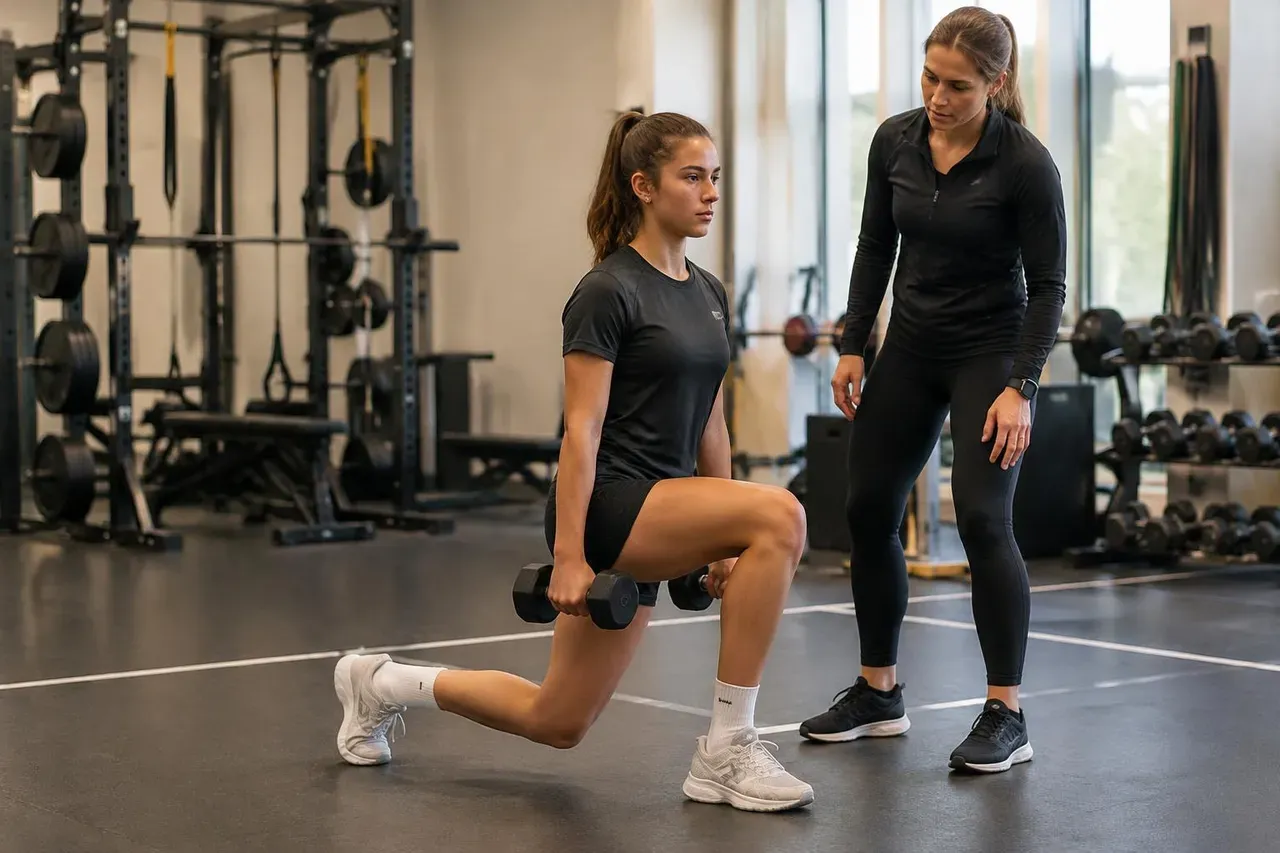
When we talk about female health in sport, the conversation still very often stops at the menstrual cycle. Should training follow cycle phases? Does performance change? Fair questions — but they are only a small part of the topic.
What the 2026 review shows
A 2026 systematic review in Sports Medicine mapped the screening tools used to assess female athlete health. It gathers 360 studies, 134,506 participants and 273 different tools.
The message is clear: female athlete health is multidimensional, but the way we monitor it stays fragmented. The most studied domains are mental health, disordered eating and body image. Several specifically female dimensions remain far less explored: menstrual health, pelvic floor, pregnancy and postpartum, breast health, menopause.
💡 The key idea
Talking only about the menstrual cycle gives a far too narrow view of female athlete health.
The cycle is information, not the whole story
An irregular cycle, amenorrhoea, significant pain or an unusual change are all meaningful information. But the cycle should not become a single dashboard that automatically decides how an athlete must train.
Two women at the same point of their cycle can feel completely different. The same athlete can have a symptom-free cycle and then a very different month. Monitoring must start from the person and her actual symptoms — see our detailed article on the menstrual cycle and performance.
Energy availability is a major topic
An athlete can train a lot while not eating enough energy to cover both training demands and normal bodily function.
This issue — low energy availability, or REDs — can have wide consequences: bone health, reproductive function, recovery, training adaptation, immunity, psychological wellbeing. And it is not limited to endurance athletes or very lean bodies.
🔑 The coach's role
Not to make a nutritional or medical diagnosis, but to spot signals that deserve a conversation and, if needed, a referral to the right professional.
🎯 Get an objective baseline
The Full Test (2 h, in Gland) assesses strength, power, asymmetries and load tolerance — a starting point for a broader conversation about recovery, nutrition and symptoms.
Book my Full TestMental health is part of performance
The review shows mental health is the most represented domain among screening tools. That matters. Stress, anxiety, weight pressure, body image, relationship with food, mental load and sporting demands all shape how an athlete experiences her training.
A programme that is perfect on paper loses much of its value if it ignores the person's real situation. A coach is not a psychologist, but must build an environment where an athlete can say she isn't doing well without feeling she is a burden.
The pelvic floor is still under-discussed
Urinary leakage during jumping, running or heavy lifting, a feeling of heaviness, pain: these symptoms also occur in young, athletic women. They should not be treated as "normal because you do sport".
The problem is that an athlete may never mention it spontaneously — because she thinks it's normal, because she's embarrassed, or because nobody ever asked. This is exactly the domain the review flags as under-represented in current tools.
The answer isn't that every coach becomes a pelvic floor specialist. The answer is a system that asks a few simple questions and refers to the right professional when needed.
Pregnancy, postpartum and menopause: athletes change over a lifetime
Female athlete health doesn't stop at 20 and competition. A woman may keep training through pregnancy, return progressively after childbirth, or aim to stay highly active through perimenopause and menopause.
Each stage raises different questions. Yet the review shows these life stages remain poorly represented in the screening tools used in sport literature. If we want to support women long term, our model has to evolve with them — see also our article on exercise during pregnancy.
The problem with home-made questionnaires
Another important finding: only half of the studies reported using at least one validated tool. That doesn't make every non-validated questionnaire useless. But writing ten questions on a form doesn't automatically make it a reliable screening tool.
- ✅ Know what you're looking for.
- ✅ Know why you're looking for it.
- ✅ Know what you'll do if an answer raises a flag.
Good screening doesn't pile up questions. It quickly identifies what deserves more specific attention.
At Off-Field, the goal isn't to medicalise everything
We're not asking every athlete to complete an endless medical file before training. That's the opposite excess. Our view is a simple, multidisciplinary system:
- • ask the right questions at the right time;
- • give real space to symptoms and lived experience;
- • use validated tools where relevant;
- • know what belongs to the coach;
- • know what belongs to the physiotherapist;
- • know when to involve a doctor, a pelvic floor specialist or a dietitian.
A coach doesn't need to know everything. But the organisation must not miss a problem simply because it doesn't fit the "performance" box.
Listen more, simplify less
Female health in sport has been oversimplified in two opposite ways: ignored for a long time, then reduced to the menstrual cycle. Progress probably means going beyond both.
Yes, the cycle can be relevant. But so are energy availability, mental health, nutrition, pain, pelvic floor, pregnancy, postpartum, menopause and every individual factor that truly affects the ability to train. An athlete is not a menstrual cycle with a training plan around it.
FAQ
Should training follow cycle phases?
The cycle is useful information, not an automatic dashboard. Start from the person's actual symptoms, not a theoretical calendar phase.
What is low energy availability (REDs)?
Not covering both training demands and normal bodily function. It can affect bone, recovery, immunity, mood and reproductive function.
Is leaking urine during sport normal?
No. It's common, but not inevitable: it's a valid reason to see a pelvic floor physiotherapist, and it can be treated.
🎯 Support that looks wider
Objective testing, strength work and physiotherapy in the same place — so nothing gets missed because it doesn't fit the "performance" box.
Book my Full TestSources: 2026 systematic review (Sports Medicine) of female athlete health screening tools (360 studies, 134,506 participants, 273 tools); Mountjoy M. et al., 2023 IOC consensus statement on Relative Energy Deficiency in Sport (REDs), British Journal of Sports Medicine.