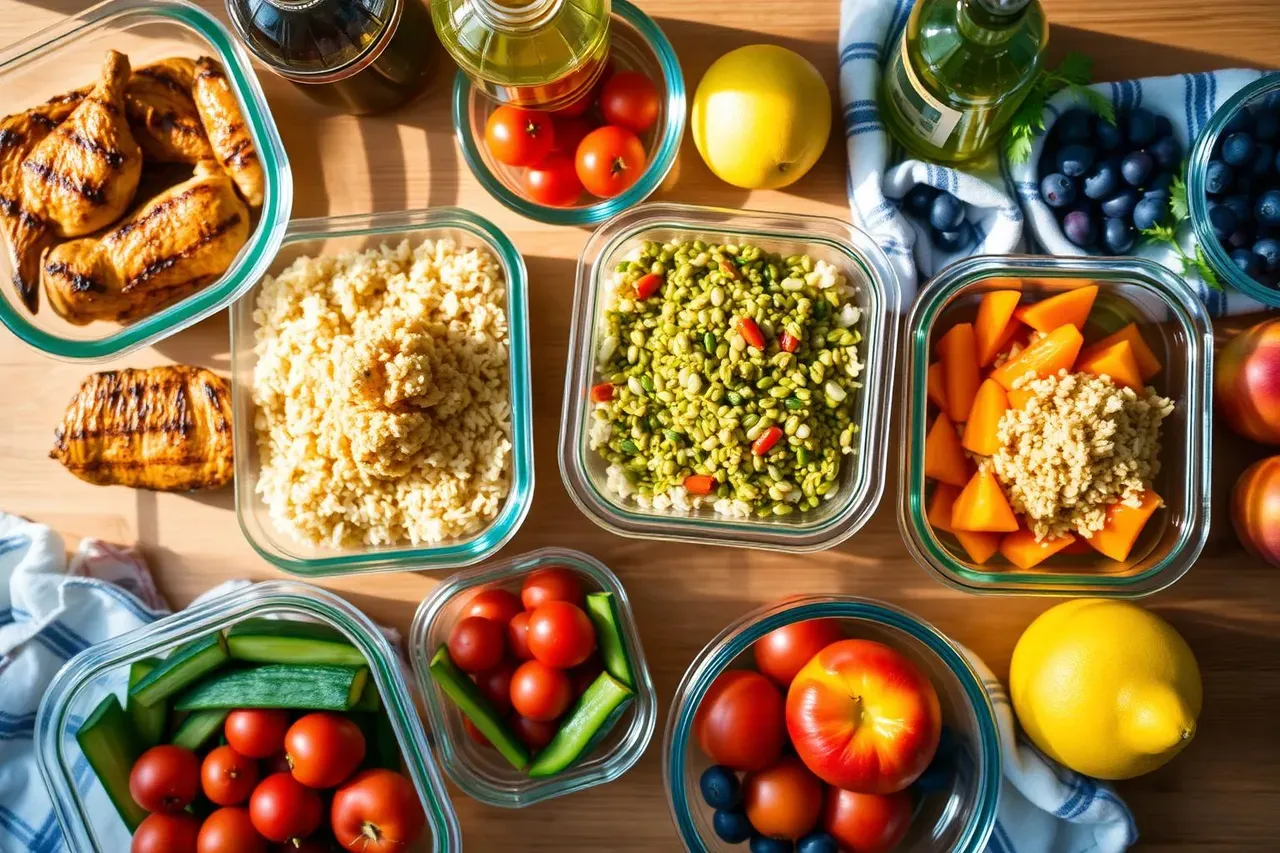
Eating clean in summer without living in the kitchen is possible — as long as you drop the "I cook every night" reflex and switch to the batch cooking + assembly logic. This weekly plan is calibrated for one person, keeps Migros and Coop shelves in mind, prioritises IP-Suisse / Swiss Bio labels, and enforces one strict rule: zero ultra-processed food (NOVA 4). 45 minutes on Sunday, then 15–20 minutes maximum in the evening.
The principle: cook whole, assemble rather than re-cook
The plan runs on one simple routine: 45 minutes of Sunday batch cooking (rice, chicken, lentils, hard-boiled eggs, chopped vegetables), which then lets you assemble full meals in 5 minutes at lunch and cook in 15–20 minutes in the evening. Every meal stays in NOVA 1–3: no ultra-processed food. That classification, developed by Monteiro's team (Public Health Nutrition, 2019), separates genuinely raw or minimally processed foods from reformulated industrial products — and it's the best practical filter to apply in the aisle.
Why the constraint? Because large observational studies (Srour et al., BMJ 2019, NutriNet-Santé cohort of ~105,000 adults) show that a 10% increase in the share of ultra-processed food is associated with a ~12% higher cardiovascular risk, independent of calories, fat or sugar. It isn't just about macros — the food matrix matters too.
Weekly shopping list
Labels to prioritise: IP-Suisse / TerraSuisse (Migros) > Swiss Bourgeon Bio > EU Bio. Always check Swiss origin for meat — a chicken at 6 CHF/kg almost always comes from Brazil (deforestation, massive antibiotics).
| Category | Items | Label / Note |
|---|---|---|
| Animal protein | Fresh chicken breasts & thighs, eggs x12, canned tuna in water x3, sardines x2, plain skyr / quark, cottage cheese | IP-Suisse, free-range, short ingredient lists |
| Legumes | Green lentils 500 g, canned chickpeas x2, kidney beans x1, red lentils 250 g | Swiss or French, quick cook (12–20 min) |
| Grains & starches | Basmati rice 1 kg, rolled oats 500 g, sweet potatoes x4, potatoes x6, whole-wheat pasta 500 g | IP-Suisse for oats and potatoes |
| Seasonal veg (summer) | Zucchini x4, tomatoes x6, cucumbers x2, peppers x3, spinach 300 g, arugula or lamb's lettuce, carrots x6, onions x4 + garlic head | Swiss origin — peak July–August |
| Seasonal fruit | Apricots or peaches x6, blueberries 250 g, cherries or plums, melon x1, bananas x4, lemons x3 | Valais / Switzerland, Max Havelaar for bananas |
| Pantry & oils | Swiss rapeseed oil (daily base), olive oil (cold dressing), mustard, balsamic vinegar, soy sauce, spices (cumin, paprika, curry), tahini | Swiss rapeseed first, short lists |
| Snacks & extras | Walnuts & almonds 200 g, sunflower seeds, block parmesan, feta, sourdough bread from a bakery | Unsalted, unsweetened; no industrial sandwich bread |
What we don't buy (and why)
- ❌ Industrial protein bars — ultra-processed, emulsifiers, sweeteners.
- ❌ Non-Swiss / lowest-price chicken — often Brazilian, poor animal welfare and deforestation footprint.
- ❌ Frozen ready meals — additives, high salt, degraded food matrix.
- ❌ Sodas and "zero" / "light" drinks — sweeteners, microbiome disruption.
- ❌ Nitrite-cured deli meats — classified as probable carcinogens (IARC Group 2A).
- ❌ Industrial sandwich bread and pastries — systematically ultra-processed.
- ❌ Packaged sweetened cereals — even "bio" or "fitness" versions.
Breakfast & snacks
🥣 Daily breakfast
Rolled oats + plain skyr + blueberries or apricot + handful of nuts. 3 minutes, no cooking, NOVA 1.
🍶 Hot alternative
Oat porridge + seasonal fruit + almonds (outside heatwave days).
🥜 Snacks 1 & 2
Nuts + fresh fruit / plain skyr with a bit of honey. Zero prep.
🥕 Sunday snack prep
Homemade hummus (chickpeas + tahini + lemon + garlic blended) + raw carrots. 5 min, keeps 5 days.
Sunday batch cooking (45 minutes)
These 5 bases are enough to assemble 80% of the week's meals without re-cooking anything:
| # | Base | What it gives |
|---|---|---|
| 1 | Rice | 3 cups basmati. Keeps 4 days. Base for 4 lunches + dinners. |
| 2 | Chicken | 4–5 pan-grilled breasts (garlic, paprika, rapeseed oil). Cold = lunch box. Reheated = 5-min dinner. |
| 3 | Lentils | 250 g green lentils (20 min). Base for 2–3 lunch salads. |
| 4 | Chopped vegetables | Zucchini, tomato, cucumber, pepper, carrot. Airtight boxes. Ready for any assembly. |
| 5 | Hard-boiled eggs | 6 eggs. Keep a week. Lunch salads and quick dinners. |
🎯 Adapt portions to your profile
This plan is calibrated for an active adult with average energy needs (~2,200–2,400 kcal). Depending on your build, training volume and goal (fat loss, mass gain, performance), portions need to be adjusted. Our 2-hour Full Test includes a body composition assessment and calorie needs estimate so you leave with a nutrition frame that's genuinely individualised.
Book the Full TestLunches — cold lunch boxes (summer special)
All these meals are eaten cold. Perfect for heatwave days and transport. Assembled in 3–5 minutes if the Sunday batch is done.
Rice – chicken – summer veg bowl
Cold rice, cold grilled chicken, tomato + cucumber + pepper, rapeseed + lemon + mustard dressing.
Lentil – feta – tomato salad
Batch lentils, cherry tomatoes, feta, red onion, arugula, rapeseed + balsamic. Keeps 3 days.
Chickpea – cucumber – lemon salad
Drained chickpeas, cucumber, tomato, parsley or mint, lemon, olive oil. No cooking at all.
Tuna – rice – marinated zucchini bowl
Batch rice, canned tuna, grated zucchini marinated in lemon + herbs, grated carrot, light soy sauce.
Homemade tabbouleh – cold chicken
Whole-wheat semolina or Swiss quinoa, tomato, cucumber, spring onion, parsley, lemon, olive oil. Cold chicken cubes.
Hard-boiled eggs – arugula – walnuts
3 eggs, arugula, tomato, walnuts, sunflower seeds, mustard dressing. The fastest meal.
Kidney beans – raw pepper – chicken
Canned kidney beans, raw pepper, cold cubed chicken, cilantro or parsley, lemon + rapeseed oil.
Dinners — 15 to 20 minutes maximum
Most rely only on batch ingredients (rice, chicken, chopped veg). Actual cooking is 10–15 minutes.
Pan-grilled chicken – sautéed veg – rice
15 min. Chicken breast (garlic, paprika, rapeseed), zucchini + pepper sautéed alongside, batch rice reheated.
Red lentil curry – coconut milk
20 min. Red lentils (12 min), onion + garlic + curry + cumin, coconut milk, spinach. 100% vegetarian.
Vegetable omelette – salad
10 min. 3–4 eggs, zucchini + tomato or spinach, arugula on the side. High protein, zero UPF.
Sweet potato – chicken – homemade hummus
20 min. Microwaved sweet potato (8–10 min), pan-grilled chicken, quick hummus.
Sardines – steamed potatoes – salad
15 min. Microwave steamed potatoes (12 min), sardines or tuna, green salad + mustard. High omega-3.
Whole-wheat pasta – homemade tomato sauce
15 min. Whole-wheat pasta, fresh tomato + garlic + basil sauce, parmesan. Optional soft-boiled egg.
Sautéed veg – scrambled eggs – feta
12 min. Zucchini + pepper + tomato sautéed, scrambled eggs on top, crumbled feta. Ideal in the heat.
Gazpacho – sourdough – cheese
10 min, no cooking. Tomato + cucumber + pepper + garlic + olive oil blended. Double batch = next day's lunch.
Swiss seasonal calendar (yearly guide)
At Migros/Coop: always check the "Suisse" or "Region" label on fresh produce. Plain frozen vegetables (no sauce, no additive) are a valid year-round backup.
| Period | Swiss vegetables & fruits available |
|---|---|
| Jan – Feb | Carrots, beetroot, celeriac, cabbages, leek, parsnip, onion, potatoes, lamb's lettuce, endive, squash, salsify. Fruit: stored apples & pears, Swiss kiwi. |
| Mar – Apr | Spinach, radish, first lettuce, kohlrabi, rhubarb, asparagus (late April), spring onions. Leanest period — lean on conserves and Swiss frozen produce. |
| May – Jun | Asparagus, radish, lettuces, spinach, cauliflower, broccoli, peas, cucumber & zucchini (June), fennel, chard. Fruit: strawberries, rhubarb, first cherries. |
| Jul – Aug | Abundance: tomatoes, zucchini, aubergines, peppers, cucumbers, beans, corn, fennel, broccoli, lettuces, beetroot. Fruit: cherries, Valais apricots, peaches, nectarines, plums, raspberries, blueberries, melon. |
| Sep – Oct | Squashes, cabbages, beetroot, carrots, celery, leek, fennel, spinach, corn, last peppers & tomatoes. Fruit: apples & pears, grapes, quince, plums, walnuts, chestnuts, kiwis. |
| Nov – Dec | Squash, cabbages (Brussels, kale, curly), leek, parsnip, salsify, beetroot, celeriac, carrots, lamb's lettuce, Jerusalem artichoke. Fruit: stored apples & pears, kiwi. |
| Year-round | Carrots, beetroot, onion, potatoes, leek, celery, Swiss mushrooms, lamb's lettuce, hydroponic salads, stored apples. Plain frozen produce as a backup. |
FAQ
How much time does this actually take each week?
45 minutes of Sunday batch cooking, then 5 min at lunch and 15–20 min in the evening. Full week: about 3 hours — less than a meal-delivery subscription, and with zero additives.
Does this plan cover my protein needs if I train?
Yes. Eggs, IP-Suisse chicken, skyr, lentils and chickpeas hit 1.6–2 g/kg — the recommended range for an active adult. Add a portion of skyr as a snack on intense training days.
Why avoid protein bars if they're convenient?
Because they're NOVA 4 (ultra-processed). Observational studies link high ultra-processed intake to higher cardiovascular risk, independent of calories. A handful of almonds + an apricot does the same job.
🎯 Go further: coach your nutrition
This plan is a frame. To tune it to your build, training and goal, our 2-hour Full Test includes a body-composition assessment, a calorie needs estimate and a dedicated nutrition conversation with your strength coaches.
Book the Full TestKey takeaways
- ✅ 45 min Sunday batch cooking = 80% of meals assembled in 5 min.
- ✅ NOVA 1–3 only: cook whole food, skip reformulated industrial products.
- ✅ Swiss origin for meat and seasonal veg — IP-Suisse or Bourgeon Bio first.
- ✅ Summer = mostly cold meals, gazpacho, composed salads — heatwave-friendly.
- ✅ 1.6–2 g protein/kg reached with no powder or bars — eggs, skyr, lentils, chicken.
- ✅ Controlled budget: minimal waste thanks to batch cooking and seasonal produce.
Part of our "Practical nutrition & Swiss seasons" series. See also our guides on summer fruits and vegetables and protein intake for athletes.