In performance, we love to measure. Reaction time, jump height, strength, asymmetry, speed, agility, power, an app score. Then an improvement appears and the conclusion comes fast: "he got better." But better at what, exactly?
The study that shows the problem
A 2026 study on young football goalkeepers illustrates it perfectly. For ten weeks, one group did two weekly virtual reality sessions while a control group continued their usual training.
The VR group improved on several reaction, deflection and visuomotor discrimination tasks performed inside the system. At first glance, excellent.
💡 The essential detail
The tasks used to measure progress were identical or very close to those practised in training. So they got better… at the tasks they had repeated.
The study does not show they saved more shots in matches, made better decisions on the pitch, or became better goalkeepers. That's the whole difference between improving on a test and transferring that improvement to the sport.
The test is not the sport
A test is deliberately a simplification — often that's its strength: standardised environment, identical instructions, few variables, precise equipment. It lets you compare an athlete to himself over time.
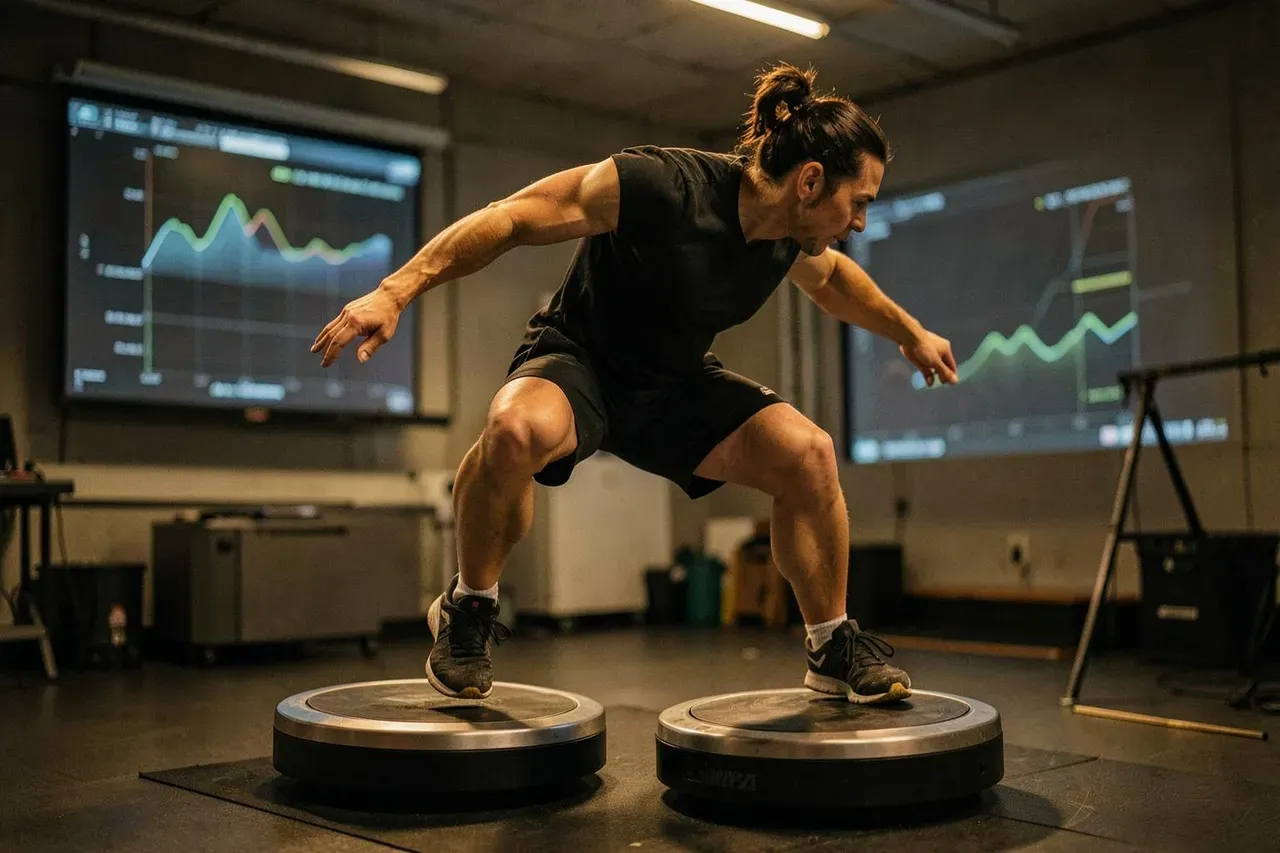
But that simplification has a consequence: a test never fully reproduces the complexity of sport. A vertical jump test informs about force production rate, jump strategy and some neuromuscular characteristics. A better CMJ does not automatically mean more rebounds: timing, reading the game, positioning, the opponent and fatigue all matter too.
A test tells you about one piece of the puzzle. Not the whole puzzle.
The risk of simply learning the test
The more we repeat a task, the better we get at it. That's training. The problem appears when the training task and the assessment task are so close that we can no longer tell whether the athlete developed a general quality or simply learned to play the test better.
Imagine an app asking you to tap lights on a screen as fast as possible. After six weeks, your score rises 20%. That's a real score improvement. It doesn't show you'll make a decision 20% faster against a defender. Different context, different information, different motor response, different pressure. That is the transfer question.
🎯 Data that drives decisions
The Full Test (2 h, in Gland) measures strength, power, strength-endurance and asymmetries — and every measure is tied to a concrete training decision.
Book my Full TestCloser doesn't always mean better
Another common error: assuming a drill or technology is more useful because it looks more like the sport. A VR screen with footballs looks more "specific" than a gym strength exercise. But appearance doesn't guarantee transfer.
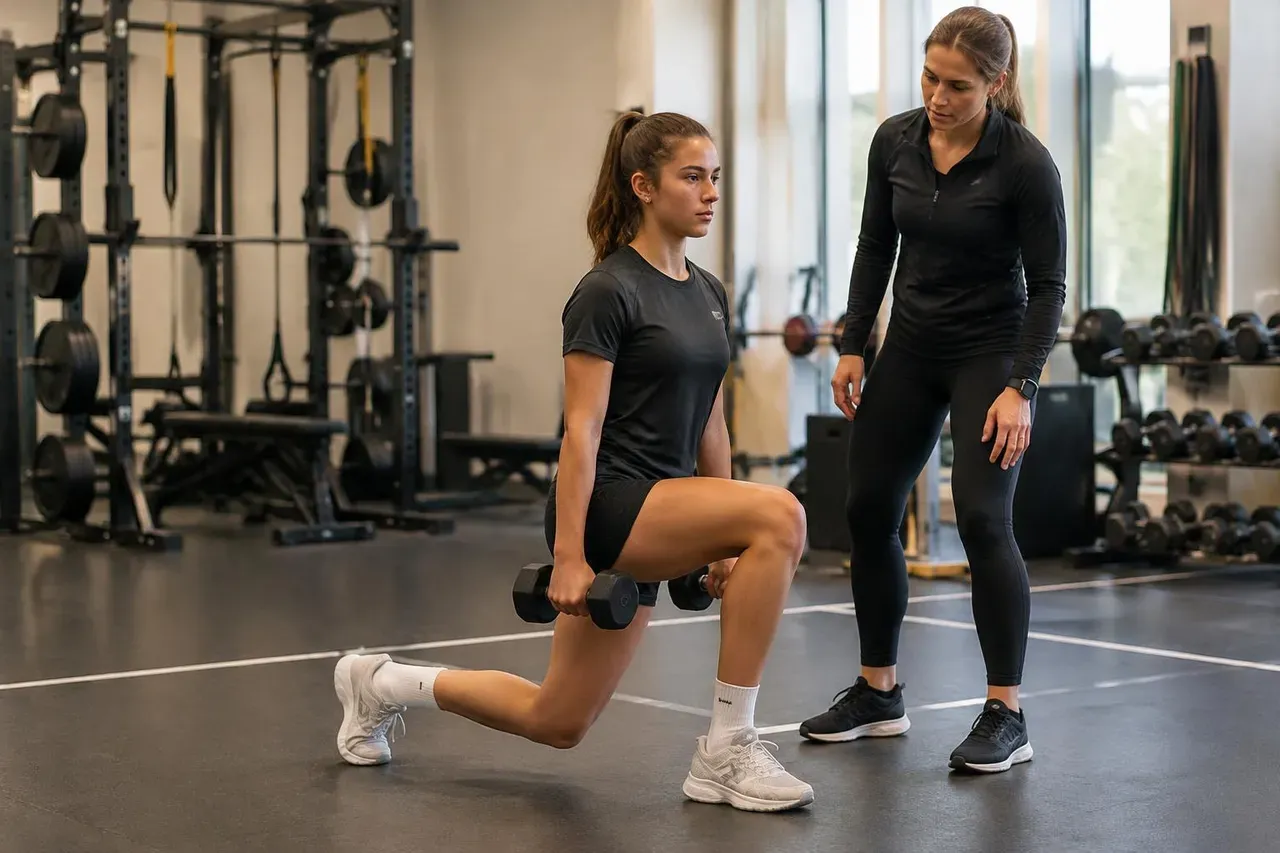
To be worthwhile, an intervention must change something that genuinely matters for performance. Sometimes a sport-like situation is right; sometimes isolating a capacity (strength, speed, power, mechanical tolerance) works better — see our article on why gym training doesn't need to look like your sport.
A good test must change a decision
At Off-Field we use plenty of tests: force plates, dynamometry, jump, strength and power assessments. But measuring for the sake of measuring makes little sense. Before using data, three questions:
1. What does it really measure?
Not what the test name suggests — what the measurement actually captures.
2. Is it reliable?
Does the observed change exceed the normal variability of the measure?
3. What decision does it change?
Without an answer here, the metric is just a nice number in a report.
Reliable is not the same as useful
A test can be extremely reliable and still hold little value for a given decision. A scale measures your weight precisely; that doesn't mean weight alone explains your performance. Conversely, a field observation can be less standardised yet crucial to understanding an athlete.
🔑 You need both
Controlled measurement to objectify qualities, sport observation to understand how those qualities actually show up. Neither fully replaces the other.
How to assess a new technology
Virtual reality, strobe glasses, cognitive platforms, sensors, artificial intelligence, reaction tests, computer vision: new tools appear constantly. Some will become genuinely useful. Four simple questions remove a lot of confusion:
- 1. What quality does the tool claim to improve?
- 2. How is that improvement measured?
- 3. Is the test independent from the training performed?
- 4. Is there a demonstrated improvement in a task that genuinely matters for the sport?
If the athlete only improves on the tool itself, that's interesting — but not yet evidence of transfer. The same caution applies to prediction claims: see our article on predicting injuries with AI.
Tests remain essential
Don't draw the opposite conclusion. A good test helps you:
- ✅ track progress;
- ✅ identify a weak quality;
- ✅ objectify return to sport after injury;
- ✅ adjust programming;
- ✅ compare a person to their own usual values;
- ✅ open a conversation with the athlete.
The problem only starts when we give a test a meaning it never demonstrated. A CMJ isn't "performance". A reaction score isn't "game intelligence". Symmetry isn't automatically "no risk". And a better VR score isn't automatically a better goalkeeper.
Our approach at Off-Field
We want to measure more, not less — but also to be far more demanding about how we interpret those measurements. The goal isn't collecting data: it's understanding the athlete well enough to make better decisions.
A test is useful when it helps answer a precise question more intelligently. And when we want to know whether a quality truly transferred, we go back to the field. Because nobody wins a testing competition.
FAQ
Does a better test score mean better performance?
Not automatically. Improving at the test first proves you're better at the test; transfer must be shown separately.
Are tests still useful?
Yes: tracking progress, spotting weaknesses, objectifying return to sport, guiding programming. The issue is claiming meaning they never demonstrated.
How should I judge a new performance technology?
Check that the assessment is independent from the training performed, and that improvement exists in a genuinely sport-relevant task.
🎯 Measure to decide, not to collect
Objective testing in Gland, then a physical preparation plan built on your real limiter.
Book my Full TestSources: Martín-Sánchez M.L., López Pertejo A., Rubio-Zarapuz A. et al., Effects of a virtual reality training program on perceptual-motor performance and autonomic modulation in soccer goalkeepers (BMC Sports Science, Medicine and Rehabilitation, 2026, DOI: 10.1186/s13102-026-02044-6); Impellizzeri & Marcora, Test validation in sport physiology (IJSPP, 2009).